
Smart Cooler Vending Machine Technology: Why Employers Are Making the Switch
Discover how a smart cooler vending machine reduces theft, cuts costs, and boosts employee satisfaction with cashless AI technology.
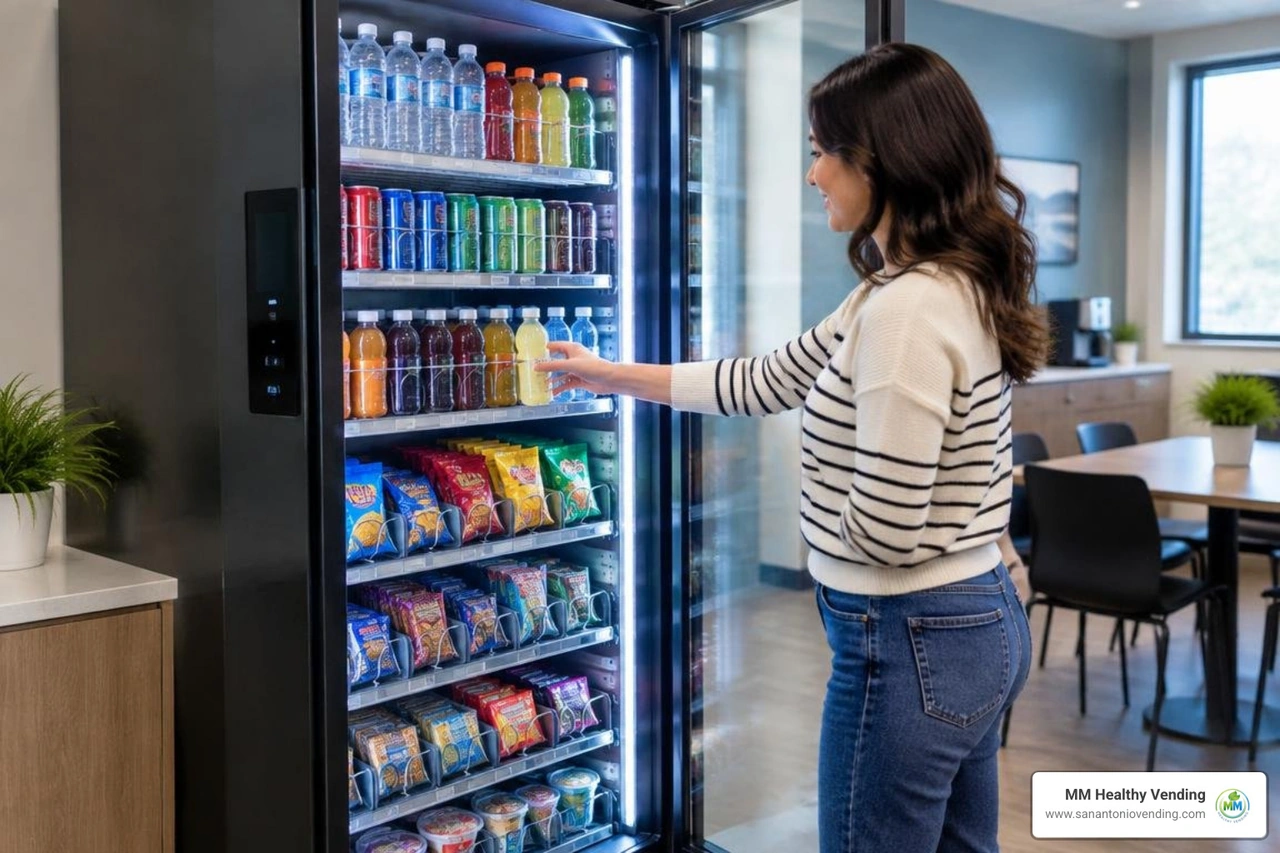
The Evolution of the Cooler Vending Machine: Traditional vs. Smart AI Coolers
A cooler vending machine is a smart, open-door refrigerated unit that lets employees grab fresh food and drinks and pay automatically, which is why employers are switching from traditional coil machines. Modern commercial facilities across Texas—from bustling manufacturing plants to high-density corporate offices—are leaving the friction of old-style vending behind. Workplace refreshments have shifted from rigid mechanical boxes toward open, interactive grab-and-go retail setups. Today's modern self-service vending machines leverage intelligent hardware and internet-of-things (IoT) software to provide frictionless grab-and-go convenience.
| Feature | Traditional Coil Machine | Smart AI Cooler |
|---|---|---|
| Product Access | Drop-chute behind glass coils | Open-door, grab-and-go reach-in |
| Packaging Limits | Rigid cans and standard bags only | Fresh salads, wraps, bottles, fruit, odd shapes |
| Payment Options | Cash, coins, basic magnetic card swipes | Tap-to-pay credit, Apple Pay, Google Wallet, NFC |
| Inventory Tracking | Manual counts on-site | Real-time cloud telemetry and auto-restock alerts |
| Vending Failures | Dropped merchandise, motor jams, stuck items | Zero drop mechanisms; items taken directly by hand |
| Visual Appeal | Cluttered spirals with limited product visibility | Bright LED presentation mimicking high-end retail |
How Modern Cooler Vending Machine Visual Recognition Prevents Theft
A common concern when business owners first see an open-door cooler is loss prevention. If the door unlocks, what stops someone from grabbing three drinks and paying for only one?
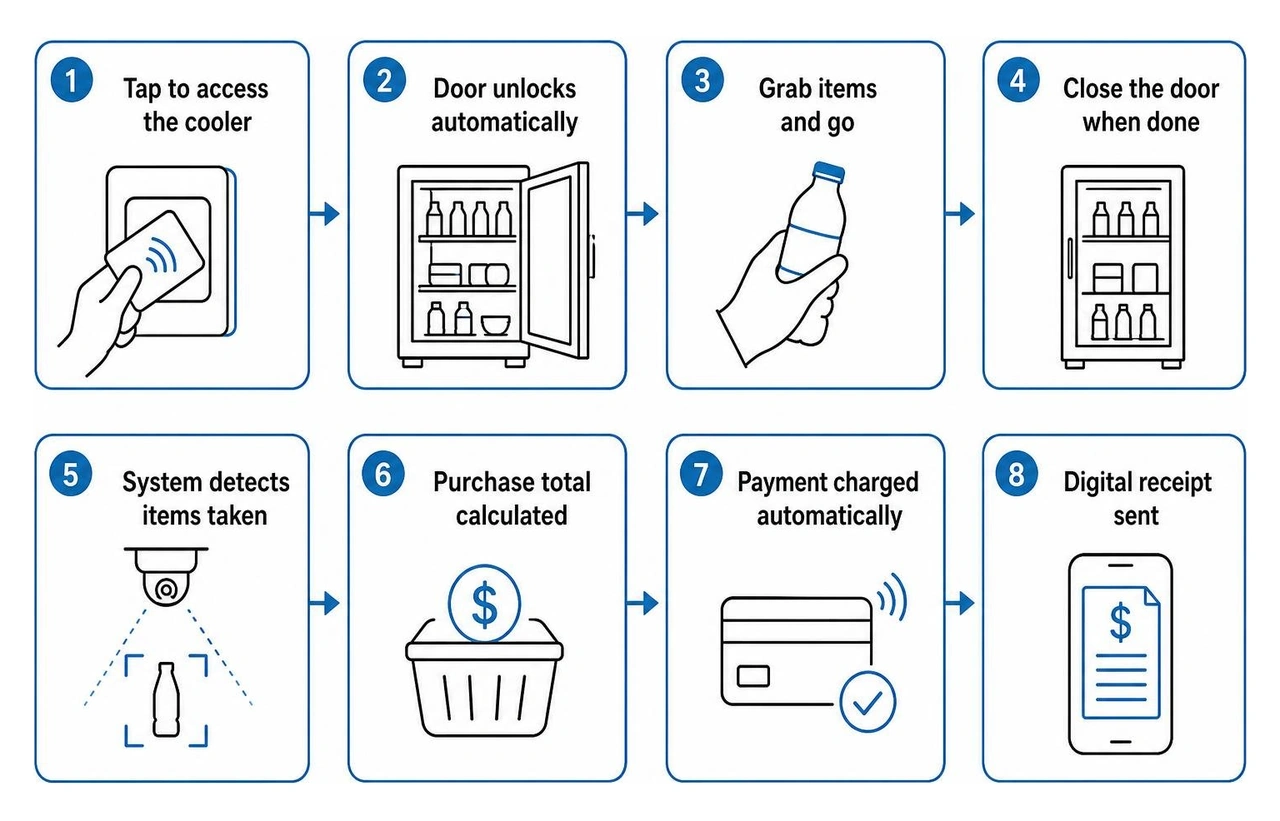
The answer lies in advanced computer vision and multi-sensor telemetry. Modern AI-powered smart vending systems use high-definition cameras combined with shelf load sensors. When an employee taps their payment method, the electronic lock releases and the system records the baseline state of every shelf.
As items are removed, the optical algorithms identify precisely which products left the unit by matching physical dimensions, packaging graphics, and weight differentials against a master product database. With visual recognition models achieving up to 99% accuracy, the cooler instantly calculates the cart total. Once the consumer closes the door, the unit re-engages the electronic lock and bills the pre-authorized card automatically. This eliminates the shrink risk of traditional honor-box snack bars while maintaining the speed of a modern retail checkout.
Beverage-Only vs. Combo Snack and Cooler Vending Machine Formats
Every facility has distinct layout constraints and demographic demands. Merchandising flexibility allows operators to tailor internal shelving configurations to match exact workplace shifts:
- Beverage-Only Configurations: Ideal for fitness centers, logistics hubs, and warm operational environments where hydration is the primary demand. These units maximize internal column space to house hundreds of sparkling waters, cold-brew coffees, energy drinks, and functional juices.
- Combo Snack and Drink Setups: When square footage is limited to a single footprint, adjustable multi-tier shelving accommodates cold beverages on lower racks alongside fresh sandwiches, yogurts, protein packs, and fruit cups on upper tiers.
By adjusting shelf heights and column dividers, businesses can configure their refreshment layout to prevent overcrowding while optimizing their physical breakroom footprint. Employers evaluating their floor plans can review deploying AI smart coolers to determine whether a dedicated drink cooler or a combo fresh-food unit delivers the best mix for their team.
Key Technical Specifications: Capacity, Cooling, and Cashless Payments
Commercial automated retail equipment must handle heavy usage while maintaining precise internal temperatures. Unlike residential refrigerators, commercial smart coolers use commercial-grade aluminum frames, reinforced double-pane tempered glass doors, and high-torque electronic locking latches that withstand hundreds of door cycles each day.
Evaluating these components helps facility managers project foot-traffic capacity, energy efficiency, and overall 24-hour vending operating costs.
High-Capacity Storage and Temperature Control Efficiency
Storage volume dictates how often a machine requires service. Large-format commercial smart vending units feature modular storage capable of holding up to 864 containers across 12 adjustable shelves. A unit filled with up to 828 beverages (combining 500ml bottles and 330ml cans) allows high-traffic environments—such as distribution centers in Boerne, Schertz, or Seguin—to operate smoothly through multi-shift schedules without mid-day stockouts. Modular gravity-feed shelving also allows quick adjustments between tall energy drink cans, protein shakes, and packaged meal containers.
Keeping that volume cold requires robust cooling mechanics. Advanced commercial units rely on forced-air circulation systems that maintain an even 32°F to 50°F range from the top tier to the bottom deck. High-efficiency R290 eco-friendly hydrocarbon refrigerants provide superior thermodynamic efficiency while meeting current commercial environmental benchmarks.
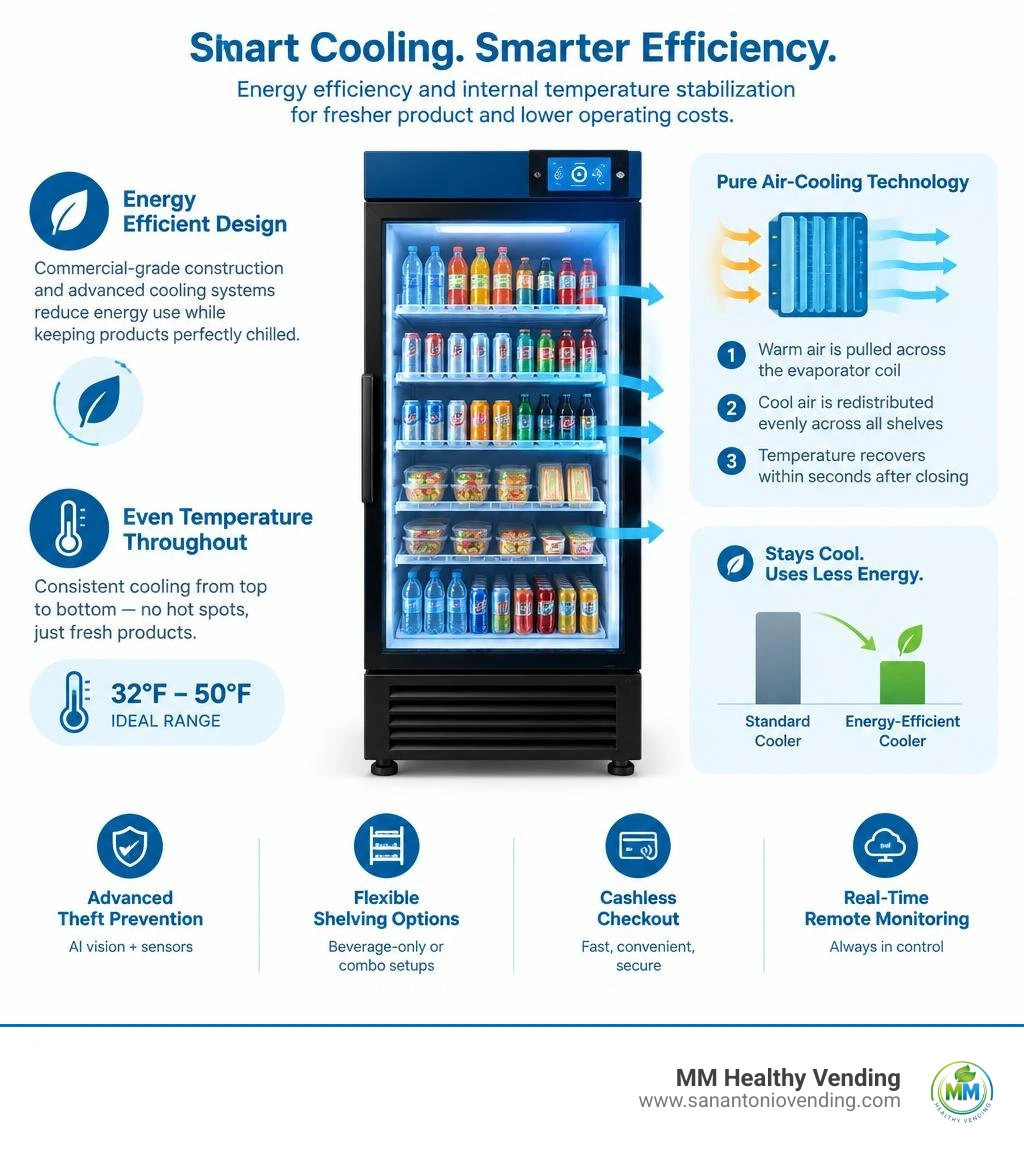
Pure air-cooling technology pulls warm ambient air across an insulated evaporator coil and redistributes it evenly across every shelf layer. This design prevents hot spots, recovers target temperatures within seconds after the door closes, and preserves the shelf life of fresh food items. Built-in electronic health locks automatically engage if power loss or mechanical failure causes internal temperatures to rise above food safety thresholds for extended periods. To explore compressor configurations, temperature parameters, and operational run-times, check out our smart cooler technology guide.
Cashless Checkout and Real-Time Remote Monitoring
Modern consumers rarely carry cash. In high-traffic corporate and public environments, cashless payment adoption now accounts for over 70% of all automated retail transactions.
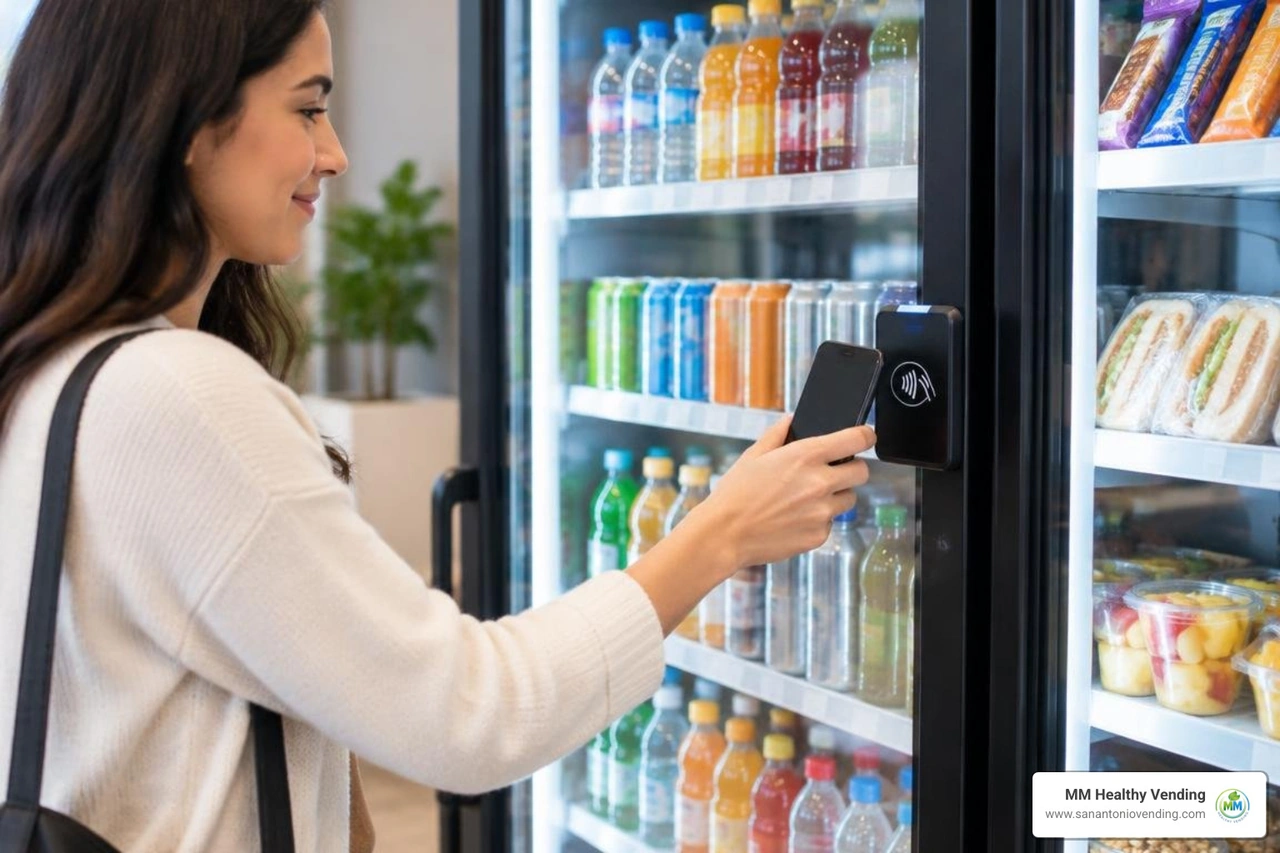
Smart coolers come factory-equipped with encrypted credit card readers supporting:
- Contactless EMV chip cards
- Mobile wallets (Apple Pay, Google Pay, Samsung Pay)
- Near-Field Communication (NFC) badges and campus cards
Behind the payment screen, built-in dual 4G LTE and Wi-Fi telemetry units broadcast sales data to a central cloud management hub. This automated telemetry tracks live inventory counts, alerts field technicians to sudden temperature fluctuations, and flags product restocking needs before shelves run bare. In addition, real-time analytics allow managers to analyze purchase trends, peak shopping hours, and best-selling product categories.
Installation Requirements and Compliance Standards
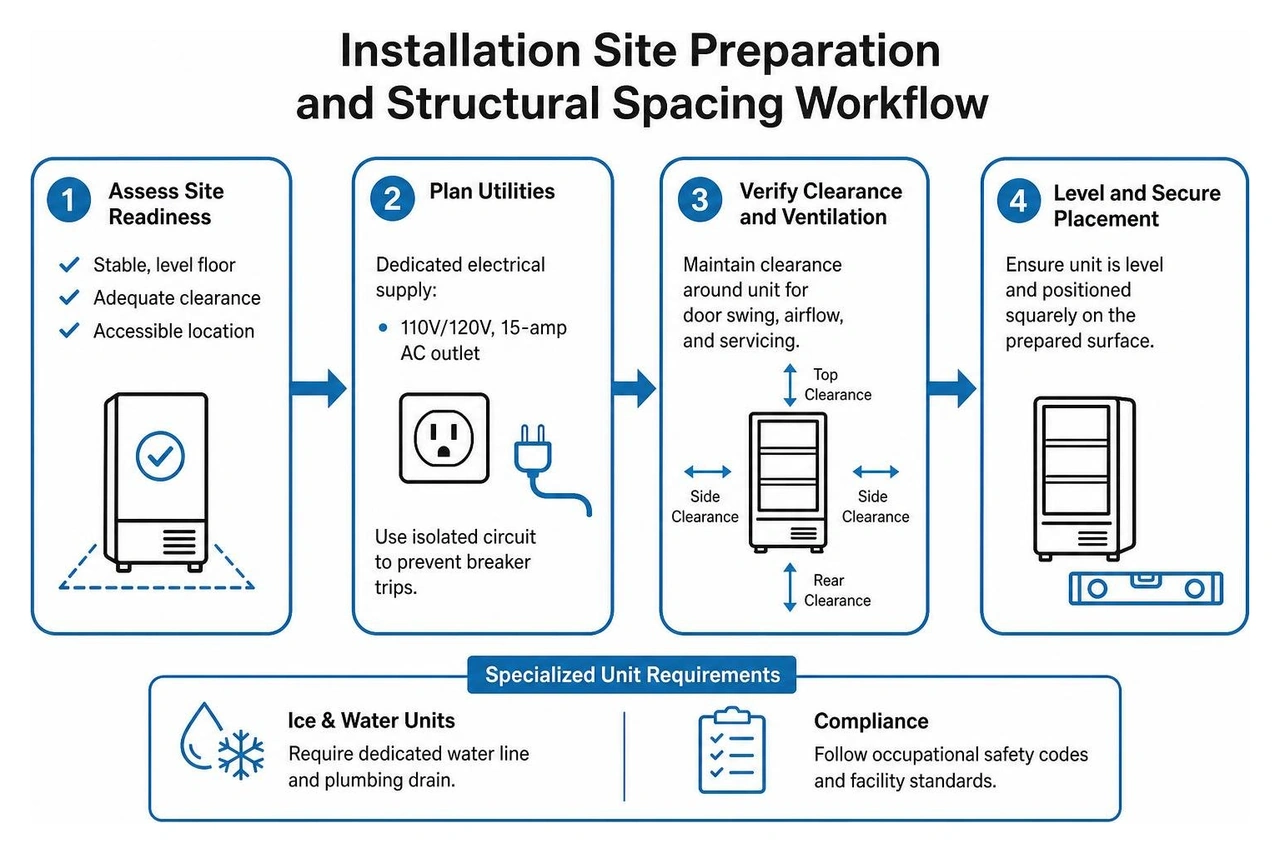
Integrating automated refreshment stations into your facility requires proper site preparation. Planning electrical distribution, floor space, and structural leveling ensures long-term machine reliability and compliance with occupational safety codes. Following structured site assessments and routine AI cooler maintenance keeps units operating at peak efficiency.
Electrical, Plumbing, and Space Considerations
Most commercial AI smart coolers are designed for standard plug-and-play operation, requiring a dedicated 110V/120V, 15-amp AC outlet. Placing the unit on an isolated circuit prevents breaker trips caused by compressor startup surges.
For specialized ice and water vending units, utility needs differ significantly:
- Water Connection: Requires a dedicated 3/4-inch cold-water line with a manual shutoff valve.
- Filtration: Reverse osmosis or multistage carbon filtration systems ensure water purity and prevent mineral scaling.
- Power Requirements: High-output commercial ice makers often demand a 220V/240V single-phase electrical drop to run dual freezing compressors.
- Space and Ventilation: Standard coolers need at least 3 to 4 inches of rear and side clearance for heat dissipation. Units must be installed on a level, solid surface with pathways configured to meet ADA accessibility standards.
Scheduling regular checkups through a certified preventative vending machine service protects internal refrigeration coils and keeps airflow clean.
Safety Certifications
Commercial refreshment equipment must comply with strict public health, sanitation, and electrical safety standards. When selecting a machine for your facility, look for the following verified marks:
- NAMA Certification: The National Automatic Merchandising Association sets strict sanitation benchmarks for food-contact surfaces, temperature lockouts, and consumer hygiene.
- ETL Listed Mark: Verifies that the equipment complies with North American safety standards established by Intertek.
- UL 541 Standard: The benchmark for commercial refrigerated vending machines, ensuring structural fire safety, high-pressure refrigeration containment, and electrical grounding reliability.
- Energy Star Ratings: Certifies that commercial refrigeration compressors and LED illumination systems minimize utility draw and reduce operational environmental impact.
Frequently Asked Questions About Smart Vending
How does grab-and-go AI checkout work?
The customer presents a credit card, debit card, or mobile device at the card reader to unlock the cooler door. As they browse, optical sensors and load-cell weight triggers monitor which items are removed. Once the door closes, the system identifies the selected items, matches them to the inventory registry, charges the pre-authorized payment method, and re-engages the lock within seconds.
What utilities are required to install a smart cooler?
A standard indoor smart cooler requires a level indoor surface, a standard 110V/120V dedicated 15-amp electrical outlet, and either a local Wi-Fi connection or cellular 4G LTE coverage. Units that sell fresh or packaged beverages do not require plumbing lines or specialized drainage.
How does remote telemetry assist with inventory restocking?
Every transaction updates the central inventory database over secure cellular or local networks. When stock drops below a set threshold, the management software generates a predictive pick-list for route drivers. This eliminates guess-work, minimizes unnecessary service visits, and ensures popular items are replenished before they run out.
Conclusion
Switching to modern smart cooling technology transforms the workplace refreshment experience. By eliminating stuck coils, dropped food items, and cash-only friction, employers give their workforce an upgraded, retail-quality amenity that supports healthy habits and daily productivity.
At MM Healthy Vending, we deliver zero-cost, fully managed smart coolers, micro-markets, and automated refreshment solutions across San Antonio, New Braunfels, Boerne, Schertz, Seguin, Helotes, Alamo Heights, and the Southside. With our 2-hour local service response, you get an upgraded breakroom experience without maintenance overhead or operational headaches. Explore our comprehensive workplace refreshment services today to discover the ideal automated retail setup for your team.
You might also like...
More articles like the one you've read to keep you up-to-date on all things vending in San Antonio

Why San Antonio businesses choose us
Premium service, local expertise, cutting-edge technology
AI-powered smart coolers
Advanced computer vision technology for seamless, cashless transactions. Just grab what you need and go.
cashless
24/7 service
Round-the-clock support with an average 2-hour response time for any issues.
Local & trusted
Family-owned business proudly serving San Antonio since 2024
Ready to upgrade your breakroom?
Join hundreds of San Antonio businesses enjoying free, premium vending soutions