
AI Smart Vending Machine Guide: Future-Proofing Your Automated Retail
Discover how an AI smart vending machine boosts speed, cuts shrinkage, and maximizes ROI for your automated retail business.
The AI Smart Vending Machine Is Changing How People Buy On the Go
An AI smart vending machine is a self-contained, automated retail unit that uses computer vision, machine learning, and sensor technology to let customers grab products and walk away — no buttons, no coils, no cashier needed. Instead of selecting items from a menu, shoppers simply tap a card or phone to unlock the door, take what they want, and leave. The machine identifies every item and charges automatically.
If you're looking to buy one or deploy them at your locations, here's a quick breakdown:
| What You Need to Know | Quick Answer |
|---|---|
| How it works | Tap to unlock, grab items, close door, auto-charged |
| Recognition accuracy | 99%+ across most major models |
| Transaction time | Under 30 seconds for multiple items |
| Price range | ~$3,500 to $7,200+ depending on model and capacity |
| Ongoing costs | $30–$50/month platform fee, plus small transaction fees |
| Best locations | Offices, gyms, hospitals, apartments, schools |
| ROI timeline | 6–18 months depending on location traffic |
The numbers back this up. The global smart vending market is projected to reach $14.9 billion by 2028, growing at 15.3% annually. Operators are consistently reporting 3–4x more revenue per location compared to traditional machines — largely because the grab-and-go experience removes friction and gets more people buying.
I'm Manuel Mojica, founder of a 7-figure vending, smart cooler, and micro-market operation based in San Antonio, and I've deployed AI smart vending machines across dozens of commercial locations nationwide through direct distributor partnerships with leading manufacturers. In this guide, I'll walk you through exactly how these machines work, which models stand out, and how to evaluate whether they make sense for your business.

What is an AI Smart Vending Machine and How Does It Work?
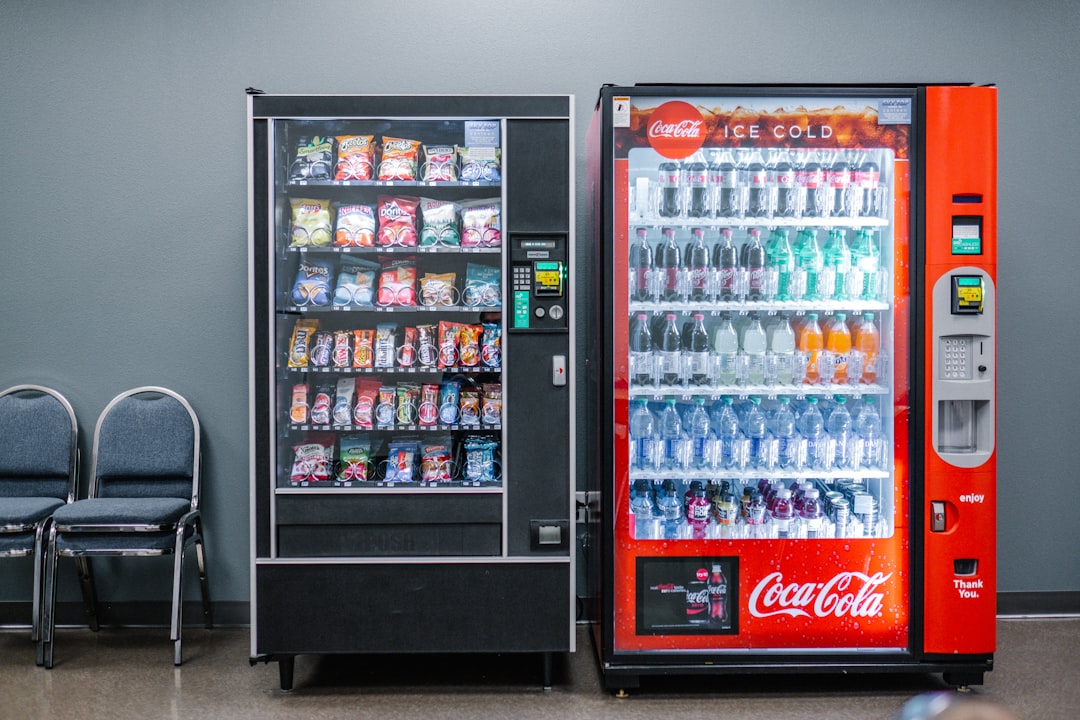
To understand the magic of an ai smart vending machine, it helps to look at how we got here. For decades, the vending experience was defined by mechanical coils, restricted product sizes, and the occasional stuck bag of chips that required a violent shake of the machine.
An ai smart vending machine replaces those mechanical limitations with a combination of high-definition cameras, weight sensors, and machine learning algorithms. Instead of a closed cabinet where products are locked behind a glass pane until a motor drops them, these smart retail coolers operate like a secure, miniature refrigerator.
The customer journey is incredibly simple:
- Tap to Unlock: The shopper taps their credit card, mobile wallet, or scans a QR code at the door.
- Grab and Browse: The door unlocks. The shopper can open it, pick up products, read nutritional labels, and even put items back if they change their minds.
- Close and Go: Once the door closes, the machine automatically calculates what was taken and processes the payment in under 30 seconds.
This frictionless cycle is why many retail experts ask, Are AI Vending Machines the Future? The answer is a resounding yes. By removing the physical barrier between the consumer and the product, these machines satisfy the modern craving for instant, touch-and-feel retail.
How the AI Smart Vending Machine Differs from Traditional Systems
The operational differences between an AI-powered system and Traditional Vending systems are vast. Traditional machines rely on physical coils, conveyor belts, or elevator hands. If a product is packaged in an odd shape—like a square salad bowl or a glass bottle—it either won't fit or risks getting jammed.
An ai smart vending machine features open, adjustable shelving. This means you can stock virtually anything that fits on a shelf: fresh sandwiches, fruit cups, glass beverage bottles, hot meals, and even non-food items like electronics or cosmetics.
Here is a side-by-side comparison of how these systems stack up:
| Feature | Traditional Vending Machines | AI Smart Vending Machines |
|---|---|---|
| Product Delivery | Coils, tracks, or elevator hands | Grab-and-go open shelves |
| Product Variety | Restricted to standard cans, bottles, and slim snacks | Unlimited shapes (salads, fresh meals, fragile glass) |
| Transaction Time | 45–90 seconds per single item | 15–30 seconds for multiple items |
| Moving Parts | Dozens of motors, coils, and drop sensors | Only one moving part (the smart lock) |
| Shrinkage & Theft | Low (locked behind glass) | Extremely low (payment-gated access with video backup) |
| Maintenance | High (frequent coil jams and motor failures) | Low (virtually no mechanical parts to break) |
The Core Technologies: Computer Vision, RFID, and Weight Sensors
To achieve transaction accuracy rates of over 99%, manufacturers use a combination of advanced sensors. In the industry, this is often referred to as a "triple verification system" or hybrid sensing. If you want to see these technologies in action, you can check out real-world tests like I Tried Every AI Vending Machine… Here's the Honest Truth .
Here is how the three core technologies work together:
- Computer Vision and Product Recognition: High-definition cameras (often 1080p dual-camera setups) are mounted inside the cabinet. These cameras use proprietary deep-learning algorithms to recognize products based on their shape, size, color, and branding. When a customer removes an item, the AI registers the visual change instantly.
- Smart Weight Sensors (WeightAI): Some systems embed weight sensors directly into the shelving. Every product has a unique "weight signature." When a shopper lifts a bottle of orange juice, the shelf detects the exact weight reduction and matches it against the database.
- RFID Scanner Technology: For high-value items or complex environments, radio-frequency identification (RFID) tags can be placed on products. The machine's internal scanner reads the tags in real-time as they cross the door frame, confirming exactly what has left the cabinet.
By combining these layers, the machine eliminates errors. If a customer picks up a drink, looks at it, and puts it back on a different shelf, the hybrid system is smart enough to recognize that the item was returned and will not charge the customer's card.

Key Benefits of AI-Powered Automated Retail
For business owners in San Antonio and surrounding areas like Boerne, New Braunfels, and Helotes, deploying an ai smart vending machine offers incredible operational leverage.
Unmatched Transaction Speed and Convenience
In high-traffic environments like hospitals, corporate breakrooms, and university dorms, speed is everything. Traditional vending requires a customer to insert a card, press a code, wait for the coil to spin, retrieve the item, and repeat the process for a second item.
With an AI system, the checkout is completely frictionless. Customers tap their contactless card or mobile wallet (Apple Pay, Google Pay), grab three or four items at once, and walk away. The transaction is processed via secure pre-authorization, capturing funds automatically as soon as the door locks shut.
Advanced Inventory Management and Shrinkage Prevention
One of the biggest headaches for traditional operators is inventory blind spots. We have all experienced the frustration of driving to a location only to find half the machine is sold out.
AI smart coolers connect directly to cloud-based management platforms. These systems provide:
- Real-Time Alerts: Immediate notifications for network drops, temperature changes, or power outages.
- Predictive Restocking: Algorithms analyze sales trends to tell you exactly what to pack in your truck before you leave the warehouse.
- Smart Lock Security: The heavy-duty magnetic lock remains engaged until a valid payment is pre-authorized. If someone tries to force the door, dual security cameras record the session.
- GDPR & Privacy Compliance: Advanced models feature built-in face-blurring technology with 99%+ accuracy, protecting customer privacy while still providing operators with clear video evidence in the event of a payment dispute.
These features make smart coolers a highly secure alternative to open-access Micro Markets, where inventory shrinkage from theft can occasionally impact profits.
Top AI Smart Vending Machine Models and Specifications
If you are looking to purchase or lease an ai smart vending machine, there are several high-quality models available on the market today. Many of these units are engineered with premium hardware, eco-friendly refrigerants, and robust insulation.

Let's look at the leading models designed to fit different spaces and volume needs.
Compact and Mid-Sized AI Smart Vending Machine Options
For smaller offices, boutique gyms, and apartment lobbies, compact smart coolers offer high capacity without taking up a massive footprint. Many of these models are sourced through leading innovators like HAHA Vending-AI Vending Machines Inventor & Supplier .
- HAHA Mini 360: This is an ideal entry-level smart cooler. It features a compact design that fits roughly 245 drinks. With a base price of $3,499.00, it is highly affordable and perfect for locations with limited space.
- HAHA Plus 440: Step up in size with the Plus 440, which fits approximately 324 drinks and is priced at $3,850.00. It offers a great balance of footprint and capacity for mid-sized offices.
- HAHA Pro 542: A true workhorse for medium-to-high traffic locations. It holds roughly 406 drinks across 6 adjustable shelves, features a 19.1 cubic foot capacity, and is priced at $4,699.00. It consumes a highly efficient 2.65 kW·h/24h.
Large-Capacity and Specialized Freezer Models
For maximum volume, high-traffic transit hubs, or locations where you want to sell frozen meals and ice cream, larger specialized units are required.
- HAHA Ultra 1200: This double-door giant is designed for high-volume corporate headquarters, school dorms, and lounge areas. It boasts a massive 42.4 cubic foot capacity, holding up to 828 bottles across 12 adjustable shelves. It is priced at $7,199.00 and is built to handle heavy daily use.
- HAHA Freezer 550: If you want to sell frozen treats, ice cream, or microwaveable frozen meals, this dedicated freezer unit is the perfect fit. It holds roughly 468 items, maintains sub-zero temperatures, and is priced at $4,999.00.
- FV680 AI Smart Vending Machine: Engineered for premium performance, this 680-liter (24 cu. ft.) large-capacity autonomous fridge features a cassette quick-swap refrigeration module and eco-friendly R290 refrigerant. It supports a 6-layer shelving system and is fully compatible with local fulfillment partners like Texas Vending Equipment for seamless delivery and setup.
If you want to explore how these models can be customized for your workspace, check out our dedicated page on AI Smart Coolers.
Costs, Pricing Models, and ROI for Operators
Operating an ai smart vending machine involves balancing upfront hardware costs with ongoing software subscriptions. However, because these machines generate significantly higher sales, the payback period is often much faster than traditional equipment.

Understanding the Total Cost of Ownership
When budgeting for an AI vending system, operators must plan for a few ongoing costs beyond the initial machine purchase:
- Base Hardware Cost: Expect to invest between $3,500 and $8,000 for standard smart coolers, while advanced dual-door or freezer systems can range up to $25,000+.
- Mandatory SaaS Subscription: To run the AI vision algorithms and cloud dashboard, manufacturers charge a monthly fee. This typically ranges from $30 to $49 per month per machine.
- Transaction Fees: Credit card processors and platform providers charge transaction fees. Some platforms charge a flat fee (e.g., $0.07 per transaction) in addition to standard credit card processing rates (typically 2.5% to 3%).
- Upgrades & Warranties: Optional upgrades include touch-display card readers (around $795) and extended multi-year parts and labor warranties to protect your investment.
Calculating Your Return on Investment (ROI)
Because customers can touch, feel, and easily purchase multiple items in one transaction, smart coolers regularly outpace traditional machines.
Let's look at a conservative financial projection:
- Average Item Price: $6.00 (premium sandwiches, salads, energy drinks, healthy snacks)
- Daily Transactions: 15 items sold per day
- Monthly Gross Revenue: $2,700
- Product Cost (COGS at 40%): $1,080
- Operating Costs (SaaS, processing, power): $150
- Monthly Net Profit: $1,470
With a machine purchase price of $4,500, the payback period is roughly 3 to 4 months in a high-performing location. Even in moderate-traffic locations, operators typically see a full return on investment in 6 to 12 months.
Frequently Asked Questions About AI Vending
How accurate is AI product recognition, and what happens if an item is misidentified?
Modern AI smart coolers achieve 99%+ accuracy under standard lighting and stocking conditions. In the rare event that an item is misidentified, the cloud platform flags low-confidence transactions for a "human-in-the-loop" review. Operators can review the dual 1080p video session (with faces automatically blurred for privacy) to verify exactly what was taken and correct the charge before the customer is billed.
Do customers need a special mobile app to use these machines?
No. While some manufacturers offer optional loyalty apps, they are absolutely not required. Customers can complete transactions using standard credit/debit cards, Apple Pay, Google Pay, or by scanning a QR code on the machine's display.
What happens to the machine during a power outage or internet failure?
For security, the smart locks are designed to be Fail-Secure. If the power goes out, the door remains locked to prevent theft, and the refrigeration system seals tightly to preserve food safety. If the internet drops but power remains, the machine will temporarily disable door opening to prevent unauthorized access, caching all local video and transaction data until connectivity is restored.
Conclusion
The ai smart vending machine represents a massive leap forward in automated retail. By combining open-access convenience with high-security AI tracking, these systems make it easier than ever to sell fresh food, premium beverages, and diverse product lines.
At MM Healthy Vending, we make upgrading your breakroom entirely risk-free. We provide free vending machines, micro markets, and AI coolers to businesses throughout the San Antonio area—including Helotes, Alamo Heights, Boerne, New Braunfels, Schertz, and Seguin.
Our unique value proposition is simple: zero-cost, fully managed solutions backed by our rapid 2-hour local support. We handle the delivery, installation, stocking, and maintenance at absolutely no cost to your business.
Ready to bring the future of grab-and-go convenience to your workplace? Contact us today to schedule a free consultation, or learn more about our cutting-edge AI Smart Coolers to find the perfect fit for your team.
You might also like...
More articles like the one you've read to keep you up-to-date on all things vending in San Antonio
Why San Antonio businesses choose us
Premium service, local expertise, cutting-edge technology
AI-powered smart coolers
Advanced computer vision technology for seamless, cashless transactions. Just grab what you need and go.
cashless
24/7 service
Round-the-clock support with an average 2-hour response time for any issues.
Local & trusted
Family-owned business proudly serving San Antonio since 2024
Ready to upgrade your breakroom?
Join hundreds of San Antonio businesses enjoying free, premium vending soutions