
Oak Vending Machine Breakdown: History, Top Models, and Replacement Parts
Discover the history, top models, and replacement parts for your Oak vending machine in this complete collector's guide.
What to Know About an Oak Vending Machine
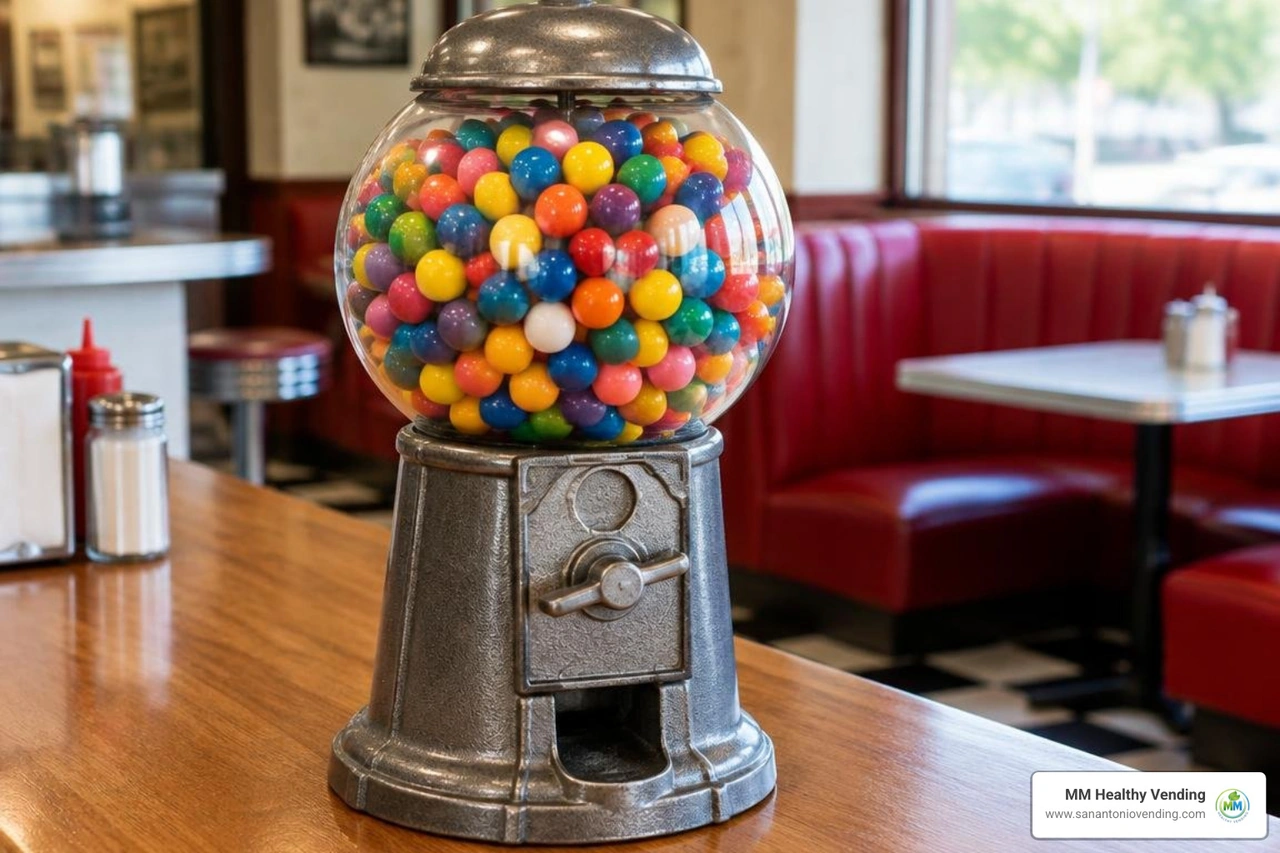
An Oak vending machine is a durable bulk vendor made for small products such as gumballs, candy, nuts, bouncy balls, or toy capsules. The best-known version is the Oak Acorn: a compact, coin-operated machine with a cast-metal base, clear globe, rotary handle, and locked top or base. For buyers and owners, the key questions are simple: identify the model, check that the coin mechanism and globe are intact, and confirm that replacement parts are available before restoring or placing it.
Oak's Acorn line became a familiar part of mid-century countertop vending. The Acorn debuted in 1949 and changed little over decades of use, which helps explain why many machines are still repairable today. Vintage examples are collectible, while later Oak Vista and Model 450-style units are more practical for low-cost bulk vending setups.
In this guide, you will learn how to identify major Oak models, refill and empty them, troubleshoot common mechanical issues, source parts, and understand realistic collector pricing.
I am Manuel Mojica, a commercial vending operator and founder of a nationwide vending education community. My experience with modern route equipment, service planning, and mechanical vending hardware helps put the classic oak vending machine in context for both collectors and facility managers.
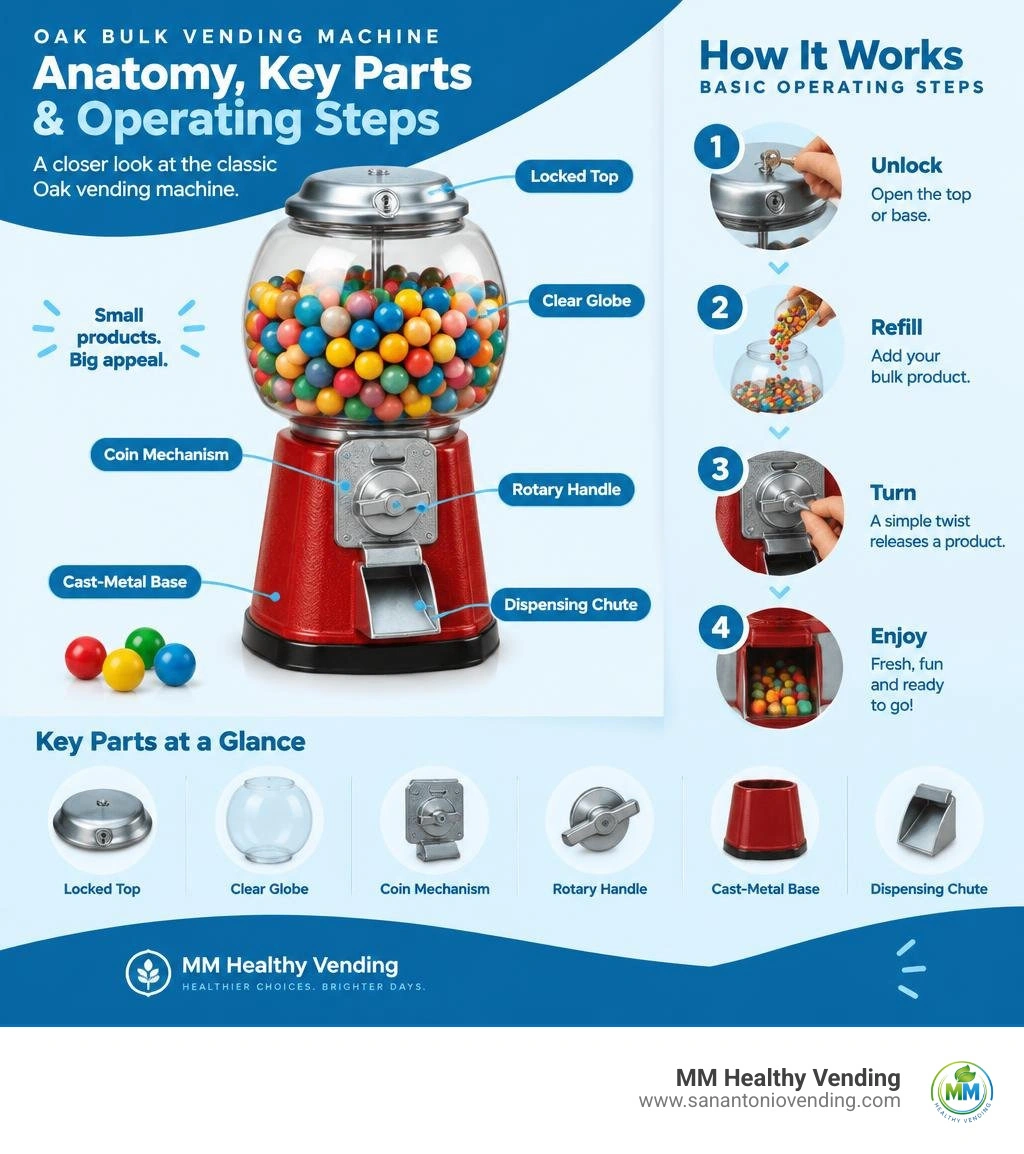
Know your oak vending machine terms:
History of the Oak Manufacturing Company and the Acorn Line
The story of the bulk vending industry in mid-century America cannot be told without highlighting the Oak Manufacturing Company. Established in 1940, the manufacturer dedicated its engineering efforts to building virtually indestructible coin-operated dispensers. While early commercial vendors relied on fragile sheet metals or heavy cast iron, Oak refined a production formula using industrial-grade zinc die-casting and precision gear systems.
According to Oak Manufacturing Co. historical records, the company introduced approximately 20 distinct coin-operated machines over its manufacturing lifespan. The turning point came in 1949 when Oak unveiled its flagship product: the Acorn bulk vending machine. Designed specifically for high-turnover route operations, the Acorn offered an unheard-of level of modular interchangeability. Operators could switch out coin mechanisms, swap candy dispensing wheels for gumball rollers, or replace a broken globe in minutes without stripping down the entire machine.
The machine's rugged engineering earned it a reputation as being "built like a tank." Route operators quickly realized that an Acorn unit could withstand rowdy arcade crowds, busy barbershop waiting areas, and grease-laden bowling alleys without suffering mechanical failure. This structural integrity allowed Oak to dominate the small-scale mechanical vending market through the late 1940s, 1950s, and well into the late 20th century.
Evolution of the Classic Oak Vending Machine
The core design of the Oak Acorn remained largely unchanged for decades, a testament to its initial engineering excellence. The foundation of the machine relies on a heavy die-cast zinc body topped with a distinct, tiered lid secured by a threaded center rod.
One of the most recognizable hallmarks of an authentic vintage Acorn is its spring-loaded coin return and product discharge flap, embossed clearly with the words "THANK YOU" alongside the company’s signature acorn logo. This polite flap served a dual purpose: it protected the internal chute from pests and debris while providing tactile feedback to the patron after a turn of the handle.
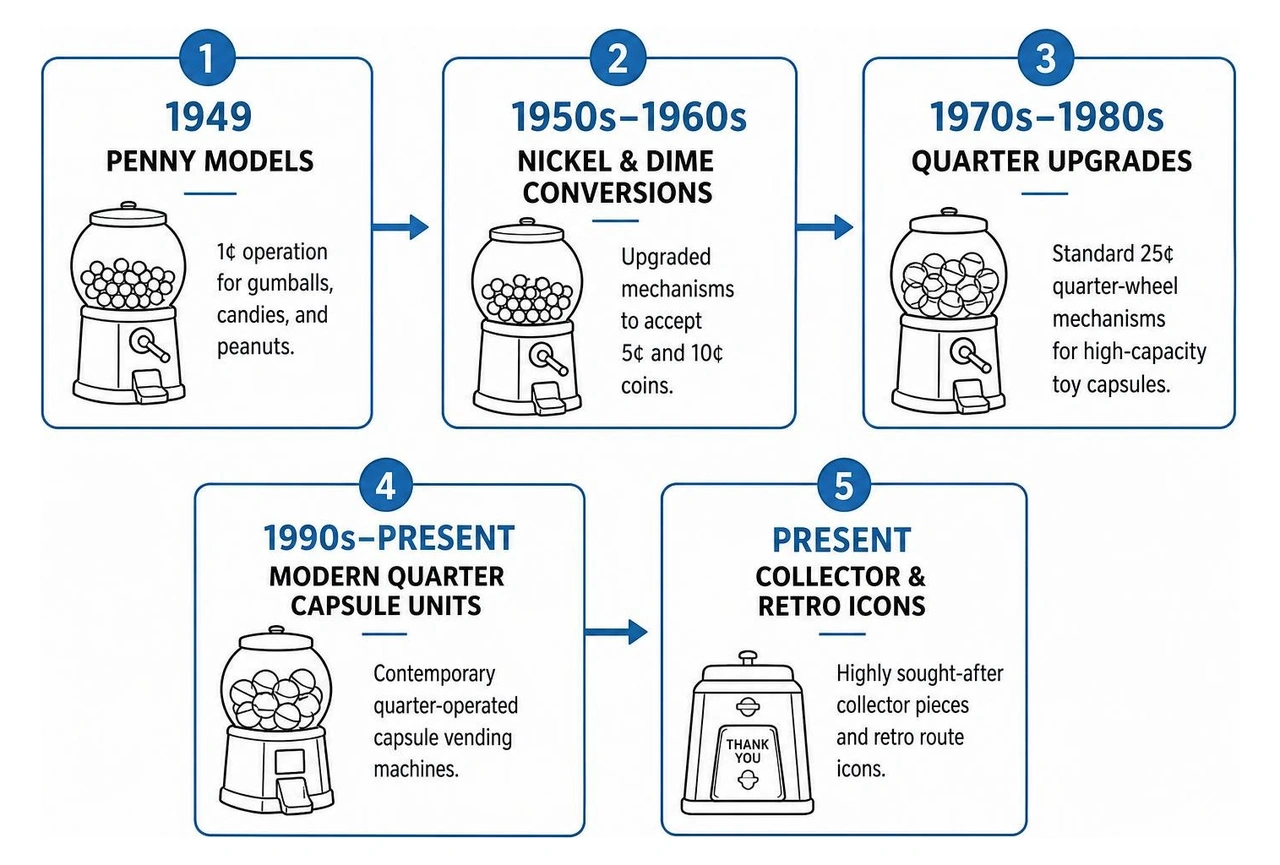
As inflation shifted vending economics across the 20th century, Oak’s mechanical modularity proved invaluable:
- Penny Operation (1¢): Mid-century units launched primarily with 1-cent mechanisms, vending single gumballs, a handful of Boston Baked Beans, or Spanish peanuts.
- Nickel & Dime Conversions (5¢ / 10¢): Throughout the late 1950s and 1960s, operators upgraded carrier wheels to accept nickels and dimes without having to replace the zinc outer housing.
- Quarter Upgrades (25¢): By the late 1970s and 1980s, standard quarter rotary mechanisms became the norm for high-capacity toy capsule vending.
Cultural Significance in Mid-Century Route Vending
Long before computerized snack centers and cashless card readers lined breakrooms, the Oak Acorn sat at the center of American retail culture. Positioned prominently on diner counters, next to checkout lanes in corner grocery stores, and outside neighborhood pharmacies, these machines captured spontaneous impulse spending.
Bulk vending was a cornerstone of commercial enterprise. In high-traffic retail environments, bulk candy and gumball dispensers generated rapid turnover, yielding steady, passive profits for local route operators. The tactile experience—inserting a shiny coin, hearing the crisp mechanical click of the rotary wheel, and catching a handful of fresh confections—created a lasting nostalgic aesthetic that collectors and retro enthusiasts celebrate today.
Top Oak Vending Machine Models and Collector Values
Because Oak hardware was built for commercial longevity, hundreds of thousands of units survived decades of service. Today, the collector market for Oak machines remains vibrant, ranging from budget-friendly hobbyist projects to pristine, museum-grade restorations.
Standard collector valuations generally range between $40 and $300+, depending directly on rarity, body condition, mechanical integrity, and the presence of original decals or glass globes. Auction records show that Oak Acorn units maintain a consistent median sale price of around $150.00, with historical average sales settling near $131.95.
| Model / Variant | Production Era | Standard Globe Type | Original Coin Denomination | Approximate Market Value |
|---|---|---|---|---|
| Oak Acorn 1¢ Countertop Nut | Late 1940s–1950s | Round Glass | 1 Cent (Penny) | $90 – $160 |
| Vintage Acorn 5¢ Gumball | 1950s–1960s | Glass (Clear or Tinted) | 5 Cents (Nickel) | $120 – $220 |
| Oak Acorn 10¢ / 25¢ Bulk Vendor | 1960s–1970s | Glass / Early Polycarbonate | 10¢ / 25¢ | $100 – $180 |
| Oak Vista Style Capsule Vendor | 1970s–Present | Square Acrylic | 25 Cents (Quarter) | $45 – $85 |
| Oak Model 450 (or A&A PO450) | 1980s–Present | Polycarbonate / Acrylic | 25¢ / 50¢ / $1.00 | $40 – $75 |
| Mint Restored 1950s Acorn | c. 1950 | Original Embossed Glass | Varied (1¢ to 10¢) | $250 – $300+ (¥44,400) |
Vintage Acorn Gumball and Nut Dispensers
The classic round-globe Acorn is the holy grail for traditional coin-op collectors. Early editions from the late 1940s and 1950s featured polished cast-metal bases paired with blown or pressed glass globes, often displaying rare regional advertisements such as Ohio Gum decals.
Historic auction listings, such as a 1-cent Acorn nut dispenser auction which fetched $90.00, demonstrate the steady baseline interest in original countertop hardware. Specialized vintage retailers often list fully preserved vintage 1950s Oak gumball dispensers for upwards of $300 USD (¥44,400), especially when they retain their original vibrant red enamel, pristine chrome-plated coin entry lever, and unbroken glass.
Vista Series and Modern Model 450 Units
As route operations expanded in the 1970s and 1980s, Oak developed the Vista Series and the Model 450. These machines transitioned from round glass globes to high-impact square acrylic and polycarbonate panels. The square footprint allowed operators to mount multiple units tightly side-by-side on commercial steel racks, maximizing retail floor space.
Today, brand-new or lightly used Oak Vista-style capsule vendors can easily be acquired for around $74.99, while secondary models like the Red Oak Model 450 trade on surplus markets for approximately $41.99. These models remain popular for small business breakrooms, family fun centers, and hobbyists building home game rooms.
For commercial facility managers seeking modern, full-scale beverage and snack solutions rather than vintage mechanical toys, exploring contemporary San Antonio vending machines ensures employees and guests have access to healthy refreshments, fresh foods, and modern payment systems.
Guide to Maintenance, Refilling, and Coin Removal
One of the reasons the Oak platform survived for over seven decades is the sheer simplicity of its mechanical architecture. With no circuit boards, refrigeration lines, or electrical wiring, routine maintenance involves purely mechanical upkeep and regular sanitization.
Step-by-Step Guide to Refill an Oak Vending Machine
Refilling an Oak Acorn or Vista model takes less than two minutes once you understand the central locking mechanism.
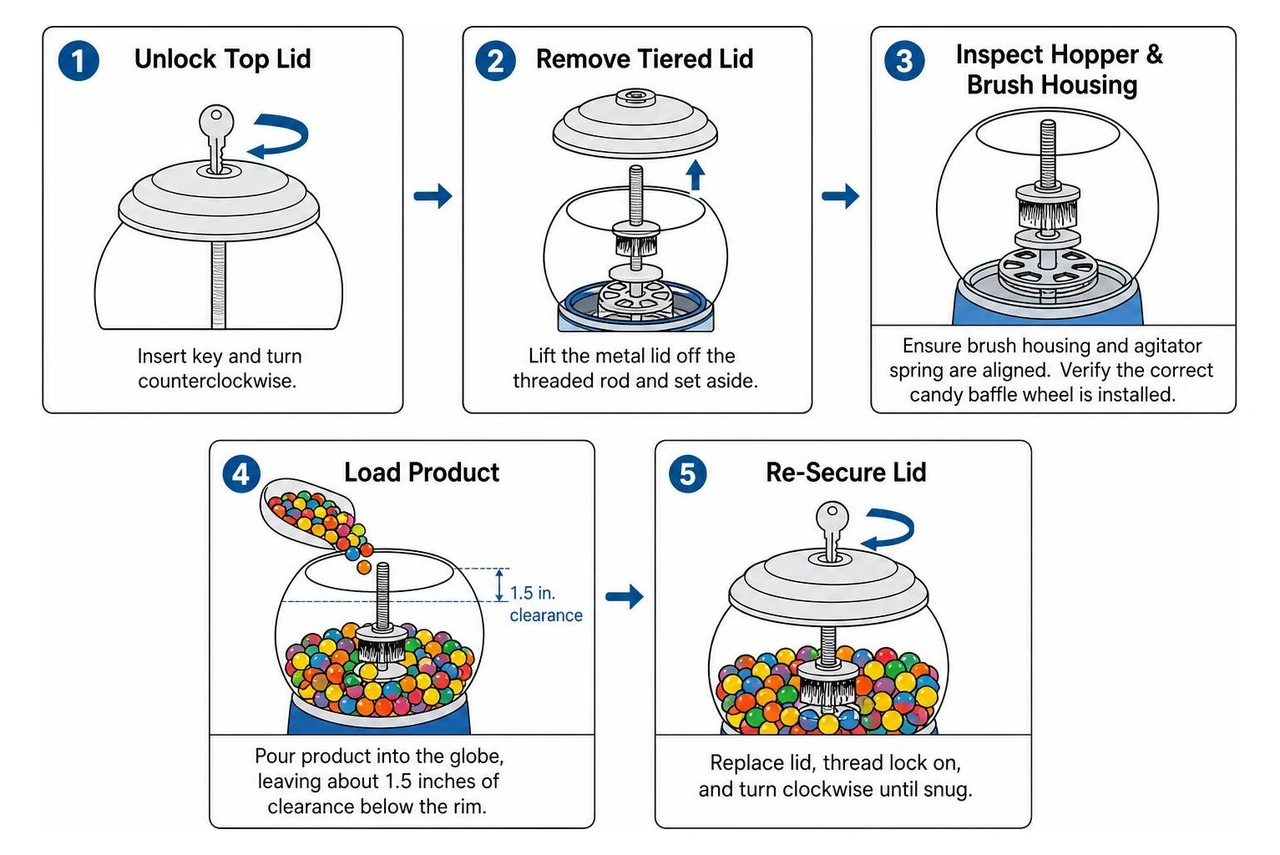
- Unlock the Top Lid: Insert the proper barrel key (frequently keyed to code B102 on vintage models) into the top lock cylinder. Rotate counterclockwise until the lock releases from the threaded center rod.
- Remove the Tiered Lid: Carefully lift the metal lid off the threaded rod and set it aside on a soft surface to prevent scratching the enamel.
- Inspect the Hopper & Brush Housing: Before pouring in fresh product, look inside the globe. Ensure the adjustable brush housing and agitator spring are properly aligned over the dispensing wheel. If you are switching from 1-inch gumballs to small candy (such as M&Ms or Runts), verify that the appropriate candy baffle wheel is installed.
- Load the Product: Pour your fresh product into the globe, leaving roughly 1.5 inches of clearance below the rim to allow the lid to seat firmly.
- Re-Secure the Lid: Replace the top lid over the center rod, thread the lock back on, and turn clockwise until snug. Avoid overtightening, as excessive torque can crack a vintage glass globe.
Accessing the Base and Emptying Coins
Unlike modern commercial snack machines that feature drop-down slide doors, the classic Oak bulk vendor collects coins directly inside its cast-metal base reservoir below the product hopper.
To collect revenue from your Oak machine:
- Unlock and remove the top lid and globe assembly.
- Lift the inner hopper and coin mechanism frame straight up off the central threaded rod.
- The base chamber acts as the collection tray where quarters, dimes, or pennies settle after each turn. Scoop or tip the coins into your collection bag.
- Check the coin chute and rotary carrier for sticky residue or foreign objects (such as slugs, paper clips, or bent coins) before reassembling.
For business owners managing complex, full-size commercial equipment alongside novelty hardware, professional vending machine service ensures all equipment remains clean, calibrated, and compliant with local health standards.
Sourcing Replacement Parts and Restoring Vintage Units
Restoring a vintage oak vending machine is one of the most rewarding projects for coin-op hobbyists. Because Oak manufactured parts with high interchangeability, you can easily source replacement components to bring a barn-find Acorn back to life.

Identifying Essential Replacement Components
Before ordering parts, inspect your machine to determine which items require replacement versus simple cleaning:
- Lock & Key Sets: Most classic Acorn units utilize a standard top lock threaded onto a 1/4-inch or 5/16-inch center rod. Replacement barrel lock sets (often matching historic B102 key codes) are widely available.
- Globes (Glass vs. Acrylic): Vintage units originally used round glass globes. If your glass is chipped or missing, you can replace it with authentic reproduction glass or opt for shatterproof acrylic globes for high-traffic environments.
- Agitator Springs: Located on top of the dispensing wheel, this small metal spring sweeps back and forth as the handle turns, preventing gumballs or toy capsules from jamming in the hopper neck.
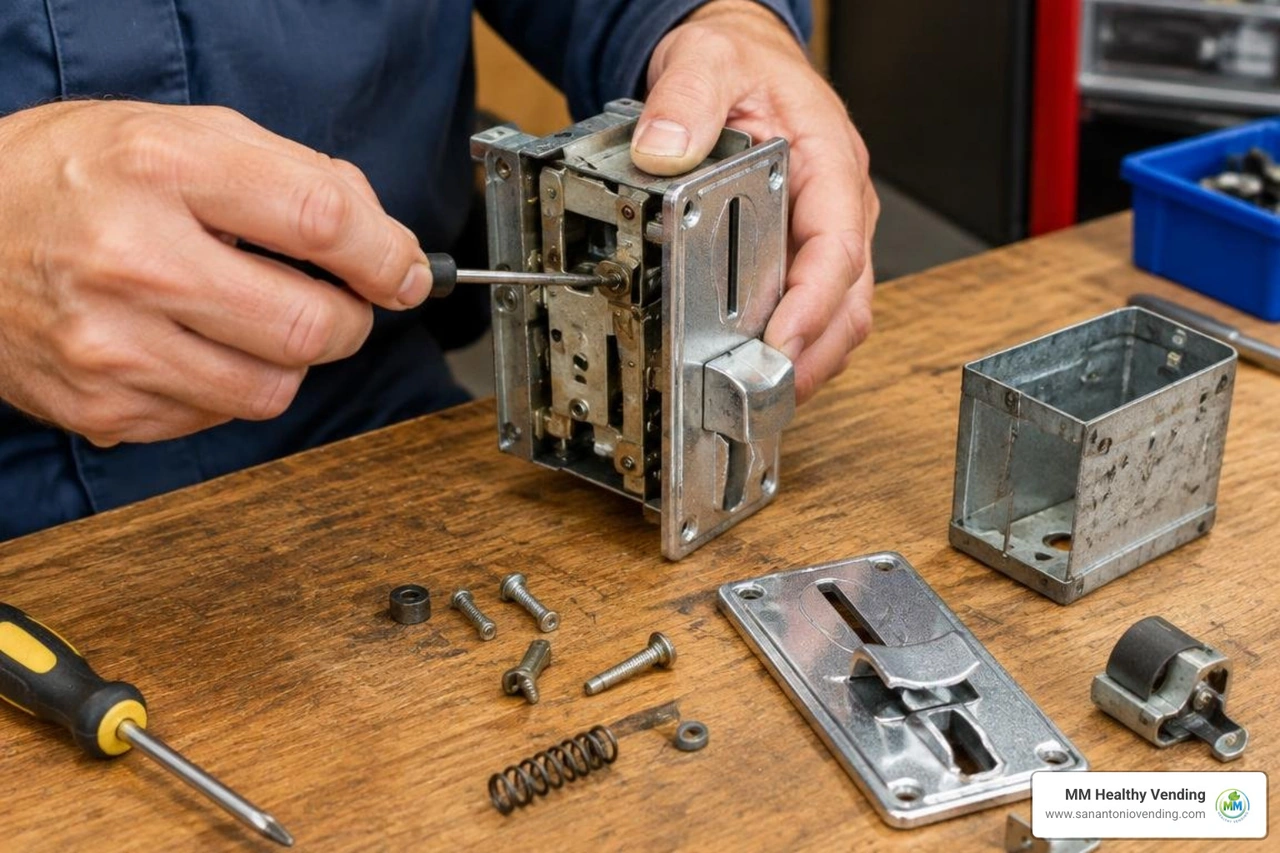
- Rotary Coin Mechanisms: If the coin dog or ratchet spring is worn out, the handle may spin freely without accepting coins, or jam completely. Replacement coin wheels are available for 1¢, 5¢, 10¢, 25¢, and free-play tokens.
- Gaskets and Washers: Rubber or felt base gaskets sit between the glass globe and the metal base/lid. Replacing brittle, dried-out gaskets prevents product moisture damage and protects the glass from metal-on-metal stress cracks.
Best Practices for Strip-Down Restoration
When executing a full restoration of an antique Oak vendor, follow these professional refurbishment techniques:
- Disassembly & Stripping: Completely strip all zinc castings, removing the coin mechanism, flap, and rod. Submerge painted metal parts in a gentle chemical stripper or use fine walnut-shell media blasting to remove decades of old paint without pitting the zinc base.
- Body Prep and Powder Coating: Avoid cheap aerosol spray paints for the base and lid. For maximum durability and a factory-correct finish, apply a food-safe powder coat in classic post-office red, deep cobalt blue, or vintage canary yellow.
- Chrome & Hardware Polishing: Soak the coin mechanism, handle, center rod, and "THANK YOU" flap in an ultrasonic cleaner with mild degreaser. Polish chrome parts using fine aluminum oxide paste to remove light oxidation and restore a mirror shine.
- Mechanical Calibration: Lubricate the moving teeth of the rotary gear mechanism using food-grade silicone grease or graphite powder. Never use WD-40 or heavy petroleum grease, as these attract sugar dust and candy residue, creating a sticky paste that eventually jams the mechanism.
If your facility has outgrown small mechanical dispensers and requires high-capacity breakroom solutions, modern vending machines in San Antonio offer smart inventory tracking, touchless payments, and extensive snack and beverage selections.
Frequently Asked Questions About Oak Vending Hardware
How can you identify an authentic vintage Oak Acorn model?
Authentic vintage Oak Acorn units feature distinctive casting marks on the underside of the metal base or inside the hopper wall, usually reading "Oak Mfg. Co. Inc. Los Angeles, Calif." Additionally, check the product delivery flap: original Acorns feature an embossed "THANK YOU" across the flap with a raised acorn logo centered directly above the lettering. Original machines also feature a solid, threaded center rod rather than side latches.
Can vintage Oak coin mechanisms be converted to modern coin denominations?
Yes. One of the greatest advantages of Oak engineering is modularity. You can convert an antique 1-cent or 5-cent rotary mechanism to accept modern 25-cent quarters by swapping the internal coin carrier wheel and dog ratchet. Alternatively, you can install a "free-spin" wheel (or grind down the stop dog) so the machine dispenses treats without requiring coins, making it ideal for home game rooms and office breakrooms.
What products can be dispensed using standard Oak dispensing wheels?
Oak machines accommodate a wide variety of bulk products by adjusting or replacing the dispensing wheel:
- Gumball Wheel: Calibrated for standard 850-count (1-inch) gumballs, 27mm bouncy balls, or 1.1-inch round toy capsules.
- Bulk Candy Wheel: Features adjustable pie-shaped baffles designed to vend portion-controlled servings of hard candy (Runts, Skittles, M&Ms, or Mike and Ikes).
- Nut Dispensing Wheel: Designed with shallow compartments and protective agitators specifically sized for Spanish peanuts, cashews, or pistachios without crushing the product.
Conclusion
The enduring legacy of the Oak vending machine stands as a testament to American industrial craftsmanship. From its debut in 1949 through decades of commercial route operation, the Oak Acorn proved that thoughtful engineering, durable materials, and modular design create hardware that lasts generations. Whether you are an antique collector restoring a piece of mid-century Americana or an enthusiast placing a retro gumball machine in your home office, Oak dispensers remain the gold standard in mechanical vending.
While vintage bulk dispensers bring undeniable charm and nostalgia to any setting, today's busy workplaces require modern, automated refreshment solutions to keep teams energized throughout the workday.
At MM Healthy Vending, we provide San Antonio and surrounding Texas businesses—including New Braunfels, Boerne, Schertz, Seguin, Helotes, Alamo Heights, and Southside—with state-of-the-art, fully managed workplace refreshment services. We deliver modern, energy-efficient vending machines, micro markets, and smart AI coolers with zero equipment cost, zero maintenance fees, and responsive 2-hour local support.
Upgrade your business breakroom with modern refreshment technology by exploring our zero-cost MM Healthy Vending workplace refreshment services today.
You might also like...
More articles like the one you've read to keep you up-to-date on all things vending in San Antonio


Why San Antonio businesses choose us
Premium service, local expertise, cutting-edge technology
AI-powered smart coolers
Advanced computer vision technology for seamless, cashless transactions. Just grab what you need and go.
cashless
24/7 service
Round-the-clock support with an average 2-hour response time for any issues.
Local & trusted
Family-owned business proudly serving San Antonio since 2024
Ready to upgrade your breakroom?
Join hundreds of San Antonio businesses enjoying free, premium vending soutions