
A Operator's Guide to Smart Cooler Technology and Revenue Growth
Discover how AI vending machine benefits boost revenue, cut theft, and optimize operations with smart cooler technology and real-time analytics.
AI Vending Machine Benefits: Better Stock, Faster Shopping, Less Guesswork
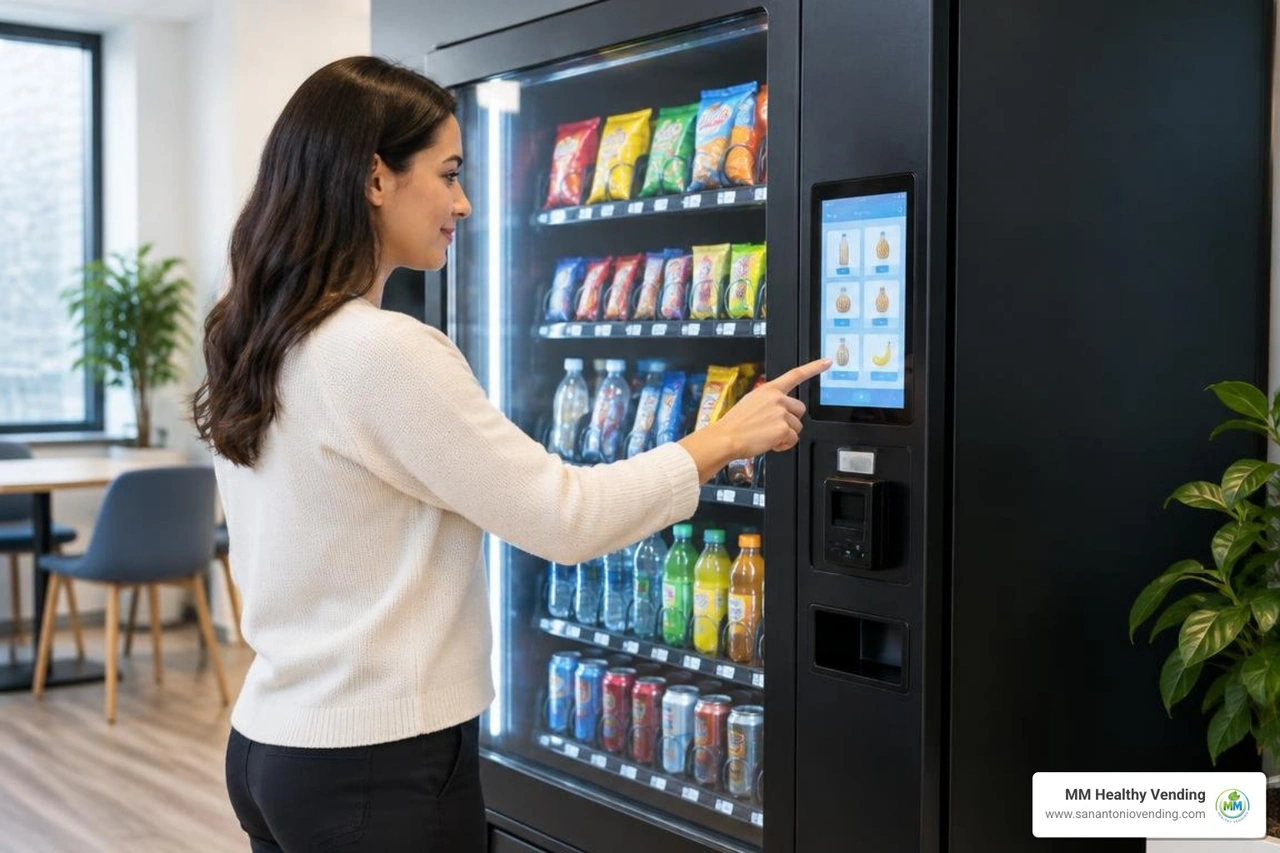
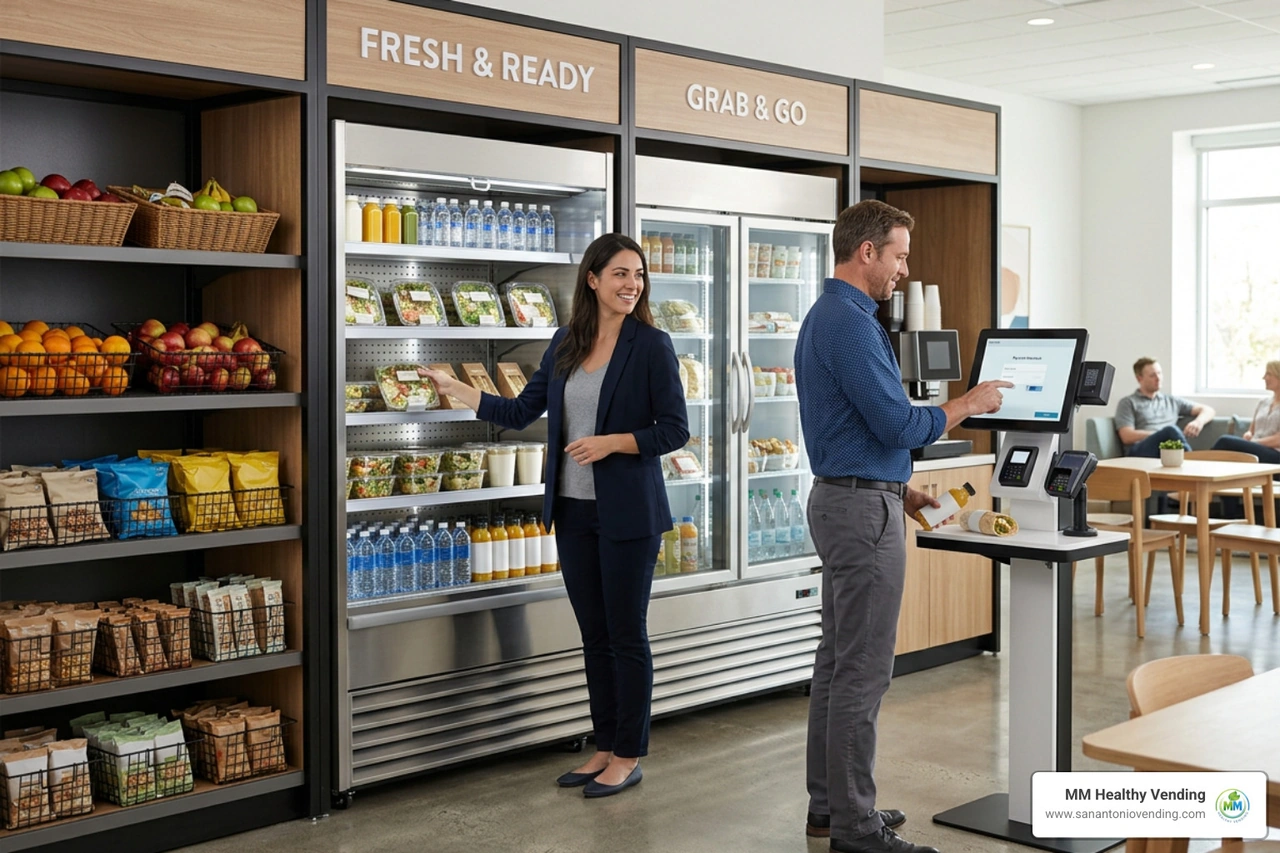
AI vending machines can help keep popular items in stock, make checkout faster, and cut wasted restocking trips. Smart coolers use cameras or sensors to track what shoppers take. Sales data then helps operators spot low stock and choose products that fit the location. For an office manager, the practical benefit is a more reliable breakroom with less time spent chasing a vendor.
The payoff still depends on the location. A busy office may benefit from a grab-and-go cooler, while a smaller site may do just as well with a simpler connected machine.
I'm Manuel Mojica, founder of MM Healthy Vending. I've built and managed vending, smart cooler, and micro-market routes, and I'll use that hands-on experience to explain which AI vending machine benefits matter most when you evaluate a workplace solution.

Understanding the Shift: Traditional vs. Smart Vending Technology
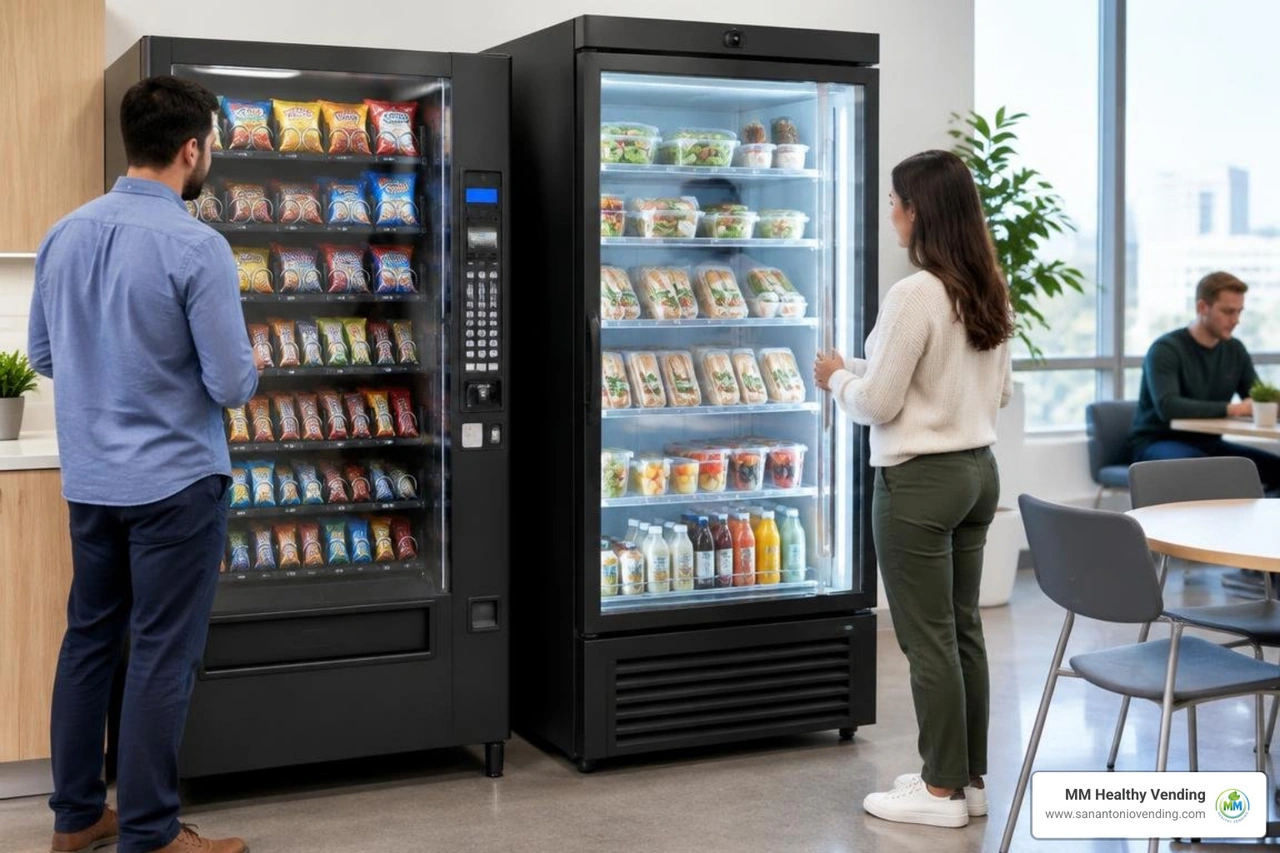
The vending industry is undergoing its most significant structural shift in decades. For generations, automated retail relied on mechanical coils, bill acceptors, and coin changers. If a bag of chips snagged on a metal spiral, the customer kicked the glass, filed a complaint, and walked away frustrated. Today, artificial intelligence, edge computing, Internet of Things (IoT) sensors, and high-resolution cameras have fundamentally altered that dynamic.
In our comprehensive smart cooler guide, we break down how modern unattended retail operates as a connected digital storefront rather than a mechanical box. Smart vending leverages sophisticated telemetry to communicate continuously with cloud servers, providing real-time data on every individual transaction, temperature fluctuation, and inventory level.
The global intelligent vending machine market in 2026 is valued between $13.4 billion and $19.8 billion, with industry analysts projecting it to exceed $50 billion by the mid-2030s. This rapid adoption is driven by consumer demand for frictionless retail and operator demand for higher profit margins. Where traditional machines limit consumer choices to rigid shelf configurations, smart coolers allow for flexible product shapes—such as glass kombucha bottles, fresh salads, gourmet wraps, and artisanal sandwiches—without the risk of dropping or crushing items.
| Feature / Criteria | Traditional Coil Machine | Touchscreen Smart Vending | Grab-and-Go AI Cooler |
|---|---|---|---|
| Typical Hardware Cost | $3,000 – $6,500 | $8,000 – $18,000 | $18,000 – $35,000 (Mid-tier) |
| Product Form Factor | Rigid (cans, bags, uniform bottles) | Semi-flexible (shelves + elevators) | Complete flexibility (meals, fresh fruit, glass) |
| Checkout Mechanism | Pre-pay, press code, wait for drop | Touchscreen selection, tap to pay | Tap card/app, open door, take item, walk away |
| Average Transaction Time | 20 – 40 seconds | 15 – 25 seconds | 5 – 10 seconds |
| Shrink / Loss Rate | 5% – 8% (theft, drop failures) | 2% – 4% (sensor verification) | Under 1% (computer vision & weight audit) |
| Average Ticket Size | $1.75 – $2.50 | $2.50 – $4.00 | $3.50 – $6.50+ |
Hardware Types: From Retrofits to Vision-Based Coolers
Navigating smart retail hardware requires understanding the three main categories available today:
- Retrofitted Traditional Machines: These are existing glass-front or coil machines equipped with aftermarket telemetry units, cashless card readers, and cloud-connected motherboards. While they provide basic sales reporting and remote inventory counts, they remain constrained by mechanical spirals and slow transaction speeds.
- Touchscreen Smart Kiosks: Purpose-built automated merchandising units featuring large interactive digital screens. Consumers browse nutritional information, view ingredient lists, and purchase multiple items in a single digital cart. Internal robotic elevators or drop sensors dispense the chosen products safely.
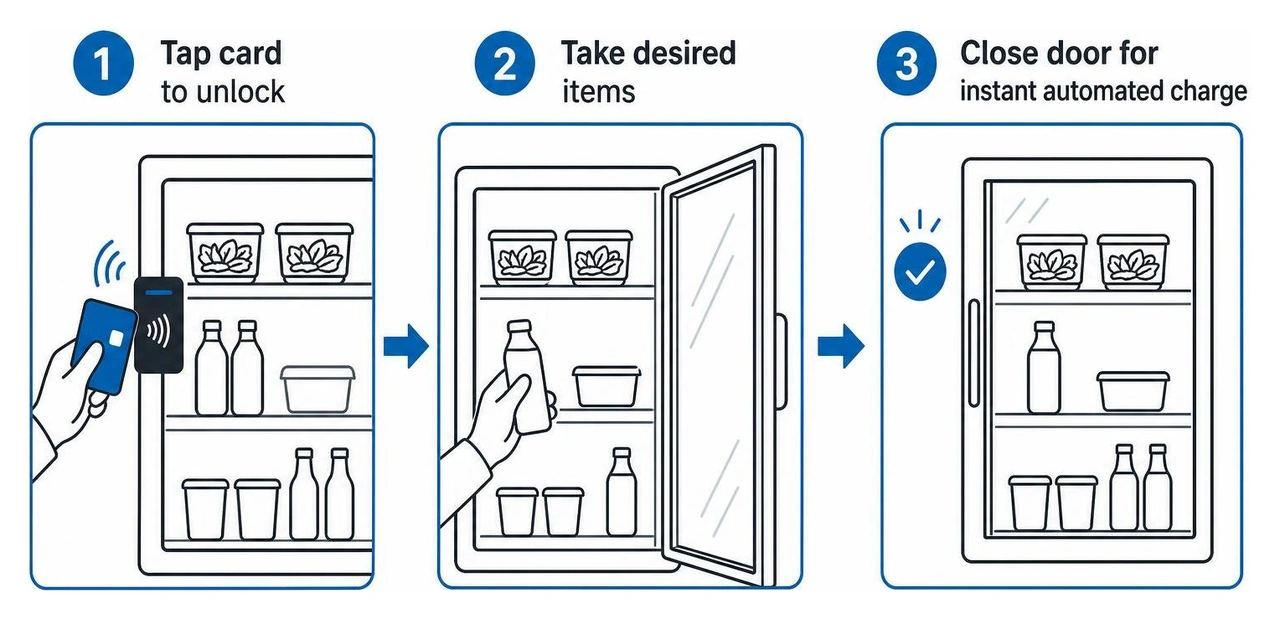
- Camera-and-Sensor Grab-and-Go Coolers: The pinnacle of modern unattended retail. These units utilize advanced technical mechanics of computer vision combined with high-precision shelf weight sensors (load cells). Customers tap a credit card or mobile wallet to unlock the glass door, inspect items physically, take what they want, and simply close the door. The AI vision system instantly identifies the removed items and charges the customer automatically.
Core AI Vending Machine Benefits for Modern Operators

Upgrading to smart retail technology transforms unit economics. Because the customer experience mimics taking an item out of a home refrigerator, friction disappears. This tactile experience drives a 35% to 50% revenue increase per location compared to legacy coil units. When customers can pick up a bottle, read the label, and put it back without penalty, they are significantly more likely to purchase premium items.
For operators curating high-end selections, modern smart snack vending allows for real-time adjustments based on buying habits, seasonal demand, and foot traffic patterns.
Operational and Financial AI Vending Machine Benefits
The operational advantages of smart vending extend across the entire supply chain:
- Drastic Shrink Reduction: Traditional vending machines experience theft, vandalism, and drop-mechanism fraud resulting in loss rates of 5% to 8%. Vision-enabled AI smart coolers require an initial pre-authorization payment hold before the door unlocks, dropping inventory loss rates to under 1%.
- Predictive Inventory Management: Cloud dashboards eliminate blind restocking visits. Operators no longer pack trucks with guesswork inventory; real-time telemetry generates precise pack-lists, reducing route labor by 5 to 8 hours per week per route.
- Dynamic Pricing Algorithms: Smart machines allow operators to adjust prices remotely. You can offer automated discounts on fresh salads nearing their expiration date to eliminate food waste, or implement peak-demand pricing during major events.
- Proactive Maintenance Alerts: Internal temperature sensors and diagnostic algorithms notify support teams the moment a compressor underperforms, keeping food safe and preventing costly inventory spoilage as outlined in our guide to AI cooler maintenance.
Customer Experience and Retention AI Vending Machine Benefits
Customer preferences have shifted irreversibly toward digital-first, low-friction interactions:
- Widespread Cashless Adoption: In 2026, cashless payments account for roughly 63% of all unattended retail transactions. AI smart coolers support Apple Pay, Google Wallet, tap-to-pay credit cards, and mobile app integrations, cutting checkout times by up to 50%.
- Personalized Merchandising and Cross-Selling: Touchscreens and connected apps can suggest complementary items based on historical purchase data. If a customer frequently purchases a protein shake on weekday mornings, the system can prompt a discounted snack bar pairing, driving average ticket values from $1.78 up to $4.50–$6.00.
- Reliable Workplace Amenities: Employees no longer have to leave the building for a fresh lunch. Installing dedicated workplace AI cooler solutions keeps staff engaged, satisfied, and energized on-site.
Financial Blueprint: Revenue Projections, Costs, and Payback Timeline
A well-placed AI vending machine grosses between $2,500 and $8,000 per month, yielding a clean net profit of $700 to $2,500 per month after accounting for cost of goods sold (COGS), processing fees, and software subscriptions. In premium multifamily residential buildings, operators report a 2.3x revenue uplift—jumping from $1,400 monthly with a traditional machine to over $3,200 monthly with an AI grab-and-go cooler.
Because average transaction sizes are substantially higher ($3.50 to $6.00 compared to legacy cash-centric vending), the payback timeline accelerates rapidly. A standard AI smart fridge paying for itself within 4 to 8 months, compared to 12 to 18 months for a traditional coil machine.
To understand how operating costs impact your bottom line, consider our analysis of AI vending machine business economics.
| Financial Metric | Traditional Vending Machine | Mid-Tier AI Smart Cooler | High-Traffic Premium AI Unit |
|---|---|---|---|
| Monthly Gross Revenue | $1,200 – $1,800 | $2,500 – $4,500 | $5,000 – $8,000+ |
| Cost of Goods Sold (COGS ~45%) | $540 – $810 | $1,125 – $2,025 | $2,250 – $3,600 |
| Payment Processing Fees (3-5%) | $36 – $90 | $75 – $225 | $150 – $400 |
| Cloud Software & IoT Telemetry | $10 – $20 | $30 – $60 | $60 – $120 |
| Average Monthly Net Profit | $350 – $600 | $800 – $1,600 | $1,800 – $2,800 |
| Initial Hardware Investment | $3,500 – $5,500 | $5,500 – $12,000 | $18,000 – $30,000 |
| Average Payback Timeline | 12 – 18 Months | 4 – 8 Months | 6 – 12 Months |
Calculating Total Cost of Ownership and Hidden Expenses
While the revenue potential of smart retail is substantial, sustainable profitability requires accounting for operational overhead:
- Merchant Gateway Fees: Cashless transactions incur payment processing fees, typically 2.5% to 5% plus a small per-transaction flat fee ($0.05 to $0.15).
- Cellular IoT Connectivity: Real-time computer vision processing and cloud telemetry require reliable 4G/5G SIM card connections, costing $10 to $30 per machine per month.
- SaaS Platform Licenses: AI vision algorithms and remote fleet management dashboards carry software subscription fees ranging from $30 to $120 per month depending on the hardware provider.
- Depreciation and Hardware Amortization: Quality smart coolers offer a functional lifespan of 8 to 10 years, supported by over-the-air (OTA) software and algorithm updates.
Understanding these underlying costs is essential when assessing the value of an intelligent vending machine.
Maximizing Placement ROI: High-Yield Locations vs. Low-Traffic Pitfalls
Technology alone does not guarantee high returns; foot traffic quality and location demographics remain critical. The best automated hardware will underperform if placed in a breakroom with only 15 workers.
To hit the break-even threshold quickly, operators should target locations with at least 150 to 300 daily captive visitors who have disposable income and limited access to immediate off-site dining.
Prime High-Yield Locations:
- Class A Corporate Offices & Tech Hubs: White-collar workplaces prioritizing wellness, fresh food, and premium cold brew coffee see high transaction frequencies and average ticket sizes exceeding $5.50.
- Healthcare Facilities & Hospital Units: 24/7 staff shifts, emergency room waiting lounges, and restricted overnight food access create non-stop demand.
- Luxury Multifamily Residential Buildings: Tenants appreciate 24/7 lobby convenience for grab-and-go pantry staples, healthy snacks, and beverages.
- Higher Education Campuses: Student unions, athletic complexes, and library study halls consistently generate high volume during afternoon and late-night study hours.
Low-Traffic Pitfalls to Avoid:
- Offices with under 50 employees operating on flexible hybrid schedules (1–2 in-office days).
- Unsecured public areas without adequate cellular coverage or power infrastructure.
- Sites with short-term leases (contracts under 18 months may not cover hardware and deployment costs).
Smart facility managers are continually maximizing office efficiency with smart convenience solutions to elevate workplace satisfaction without operational strain. Globally, smart retail growth patterns confirm that locations offering curated, fresh micro-meals reliably capture steady daily market share.

Frequently Asked Questions About Smart Vending
How much revenue does an AI vending machine generate per month?
An AI vending machine typically generates between $2,500 and $8,000 in gross monthly sales when installed in a high-traffic location such as a corporate office, healthcare center, or upscale apartment community. After deducting inventory costs, merchant processing fees, and telemetry software subscriptions, operators typically see a monthly net profit between $700 and $2,500 per unit. Revenue lifts of 35% to 50% over traditional vending machines are common due to higher average ticket sizes ($3.50–$6.00) and the ability to sell fresh, premium products.
How do AI smart coolers prevent theft and inventory loss?
Smart coolers eliminate traditional theft methods through a multi-step verification process. Customers must present a valid credit card, debit card, or mobile payment method to initiate a pre-authorization hold before the electronic door latch unlocks. Inside the cabinet, high-resolution computer vision cameras track items as they are moved or removed, while high-precision weight sensors on each shelf confirm the exact weight change. When the door closes, the system audits the removed items and charges the card immediately, keeping overall shrink rates under 1%.
What happens to an AI vending machine during an internet outage?
Most commercial-grade smart vending machines include offline fallback capabilities. When local cellular or Wi-Fi connectivity drops, the onboard controller queues transaction data locally within encrypted edge storage. The machine continues to manage door access, record sensor and camera inputs, and maintain cooling. Once connectivity is restored, the local edge device securely syncs transaction batches with the central cloud dashboard to process payments and update inventory records without data loss. Outages lasting longer than 24 hours can be configured to restrict access to prevent authorization backlogs.
Conclusion
The shift toward intelligent automated retail is redefining convenience. For property managers, business owners, and human resource directors, upgrading to smart cooler technology provides tenants and staff with healthy, restaurant-quality refreshments 24 hours a day, while eliminating maintenance headaches and empty shelves.
At MM Healthy Vending, we make upgrading your breakroom straightforward. We provide zero-cost, fully managed smart coolers, micro-markets, and healthy vending solutions to qualified businesses throughout San Antonio, New Braunfels, Boerne, Schertz, Seguin, Helotes, Alamo Heights, and Southside. Our team handles complete installation, stocking, product curation, and remote telemetry monitoring, supported by our 2-hour local service response guarantee.
Ready to modernize your breakroom with intelligent grab-and-go refreshments? Explore our fully managed workplace refreshment services to schedule your site assessment today.
You might also like...
More articles like the one you've read to keep you up-to-date on all things vending in San Antonio
Why San Antonio businesses choose us
Premium service, local expertise, cutting-edge technology
AI-powered smart coolers
Advanced computer vision technology for seamless, cashless transactions. Just grab what you need and go.
cashless
24/7 service
Round-the-clock support with an average 2-hour response time for any issues.
Local & trusted
Family-owned business proudly serving San Antonio since 2024
Ready to upgrade your breakroom?
Join hundreds of San Antonio businesses enjoying free, premium vending soutions