
Is an AI Vending Machine Business Your Next Smart Side Hustle?
Discover how an AI vending machine business can become your next smart side hustle with grab-and-go tech and strong ROI.
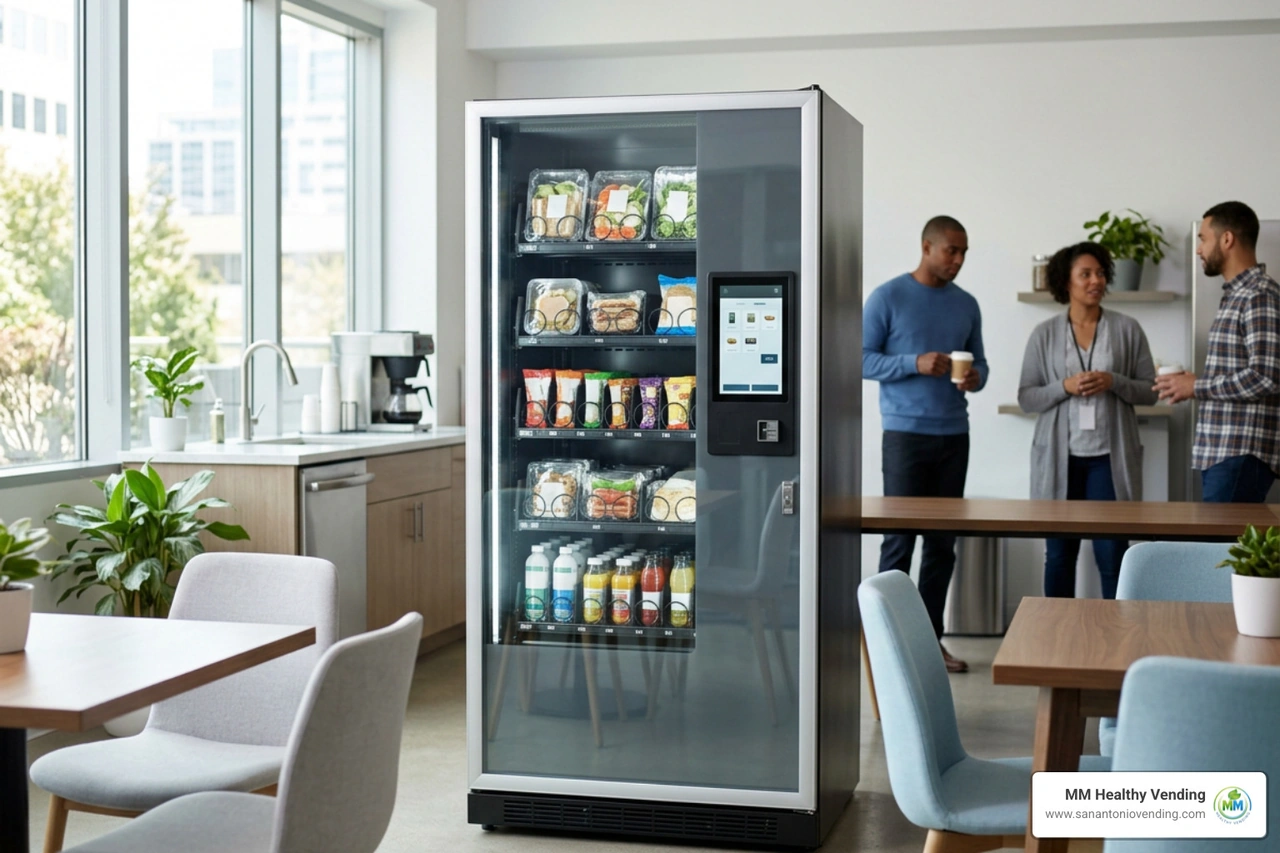
Why the AI Vending Machine Business Is One of the Smartest Moves in Automated Retail Right Now
Starting an AI vending machine business puts you at the intersection of two unstoppable trends: the rise of autonomous retail and the demand for frictionless, 24/7 convenience. The global smart vending market is projected to reach $14.9 billion by 2028, growing at 15.3% annually — and operators who move early are capturing the best locations.
Here's what you need to know at a glance:
| Factor | Quick Answer |
|---|---|
| What it is | A vending business using AI cameras, RFID, and weight sensors instead of buttons and spirals |
| Startup cost | ~$3,950–$25,000+ depending on machine type |
| Typical ROI | 6–24 months depending on location and product mix |
| Revenue advantage | 3–4x more revenue per location vs. traditional vending |
| Best locations | Offices, gyms, hospitals, universities, apartment complexes |
| Key tech | Computer vision, cashless checkout, remote cloud management |
| Skill required | Low — most systems are plug-and-play with remote monitoring |
Unlike traditional vending machines — which jam, misread coins, and limit you to 30–50 products — AI-powered machines let customers grab what they want and walk out, while the system handles recognition and billing automatically. No buttons. No coin slots. No frustrated customers.
The business model is simple on the surface. But the details — machine costs, fees, location strategy, and real-world failure points — matter a lot before you invest.
I'm Manuel Mojica, founder of a 7-figure vending, smart cooler, and micro-market operation based in San Antonio, and the creator of Vending Circle, a nationwide operator community. I've built my AI vending machine business from the ground up, deploying machines across high-traffic commercial locations and helping hundreds of operators do the same.
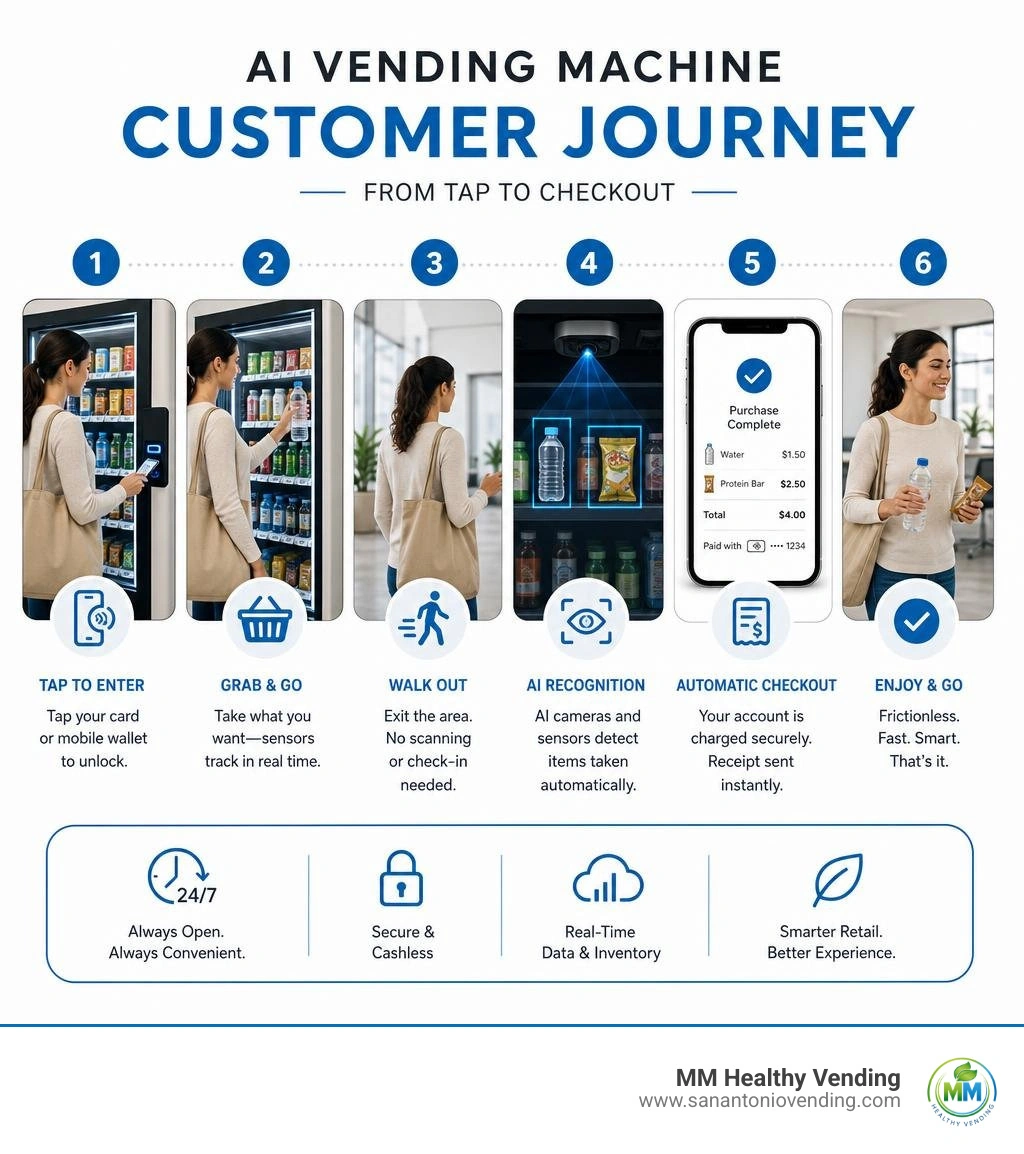
What is an AI Vending Machine Business?
An AI vending machine business involves deploying and managing smart, unattended retail kiosks—often referred to as AI smart coolers or smart micro-markets—that utilize artificial intelligence to track and process customer transactions.
Unlike Traditional Vending systems, which rely on physical spirals, drop sensors, and rigid product slots, AI vending machines operate like miniature, self-contained versions of an Amazon Go store. The core business model revolves around placing these high-tech systems in high-traffic locations like corporate offices, apartment complexes, gym lobbies, and hospitals across the San Antonio metropolitan area.
When we look at the evolution of automated retail, we see a shift toward total frictionless shopping. Customers want convenience, but they also want to touch, examine, and select products exactly as they would in a standard retail environment. An AI vending business satisfies this demand by turning the act of purchasing into a simple "tap, grab, and go" process.
How AI Vending Machines Differ from Traditional Systems
To truly understand why the ai vending machine business is booming in places like Boerne TX and Helotes TX, we have to look at the massive operational leap it represents over older mechanical systems.
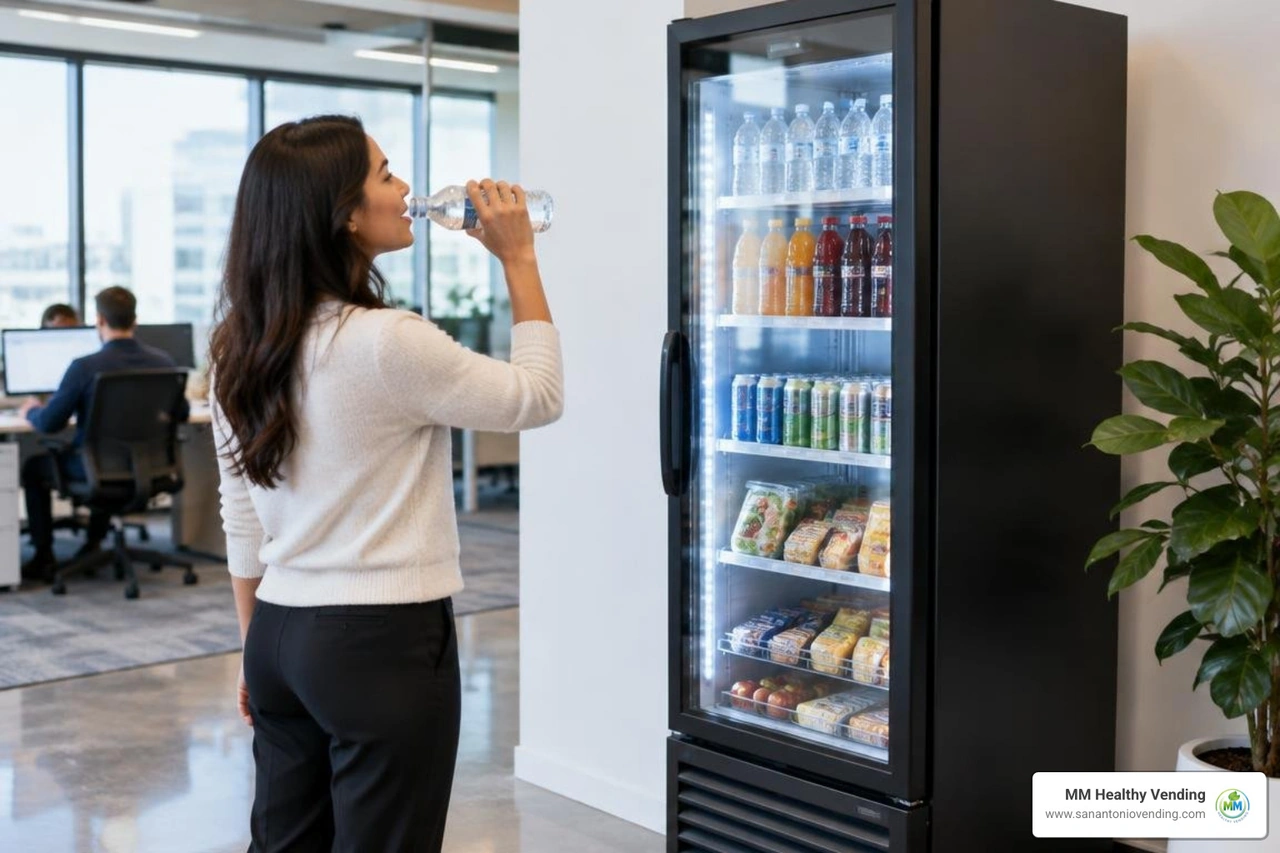
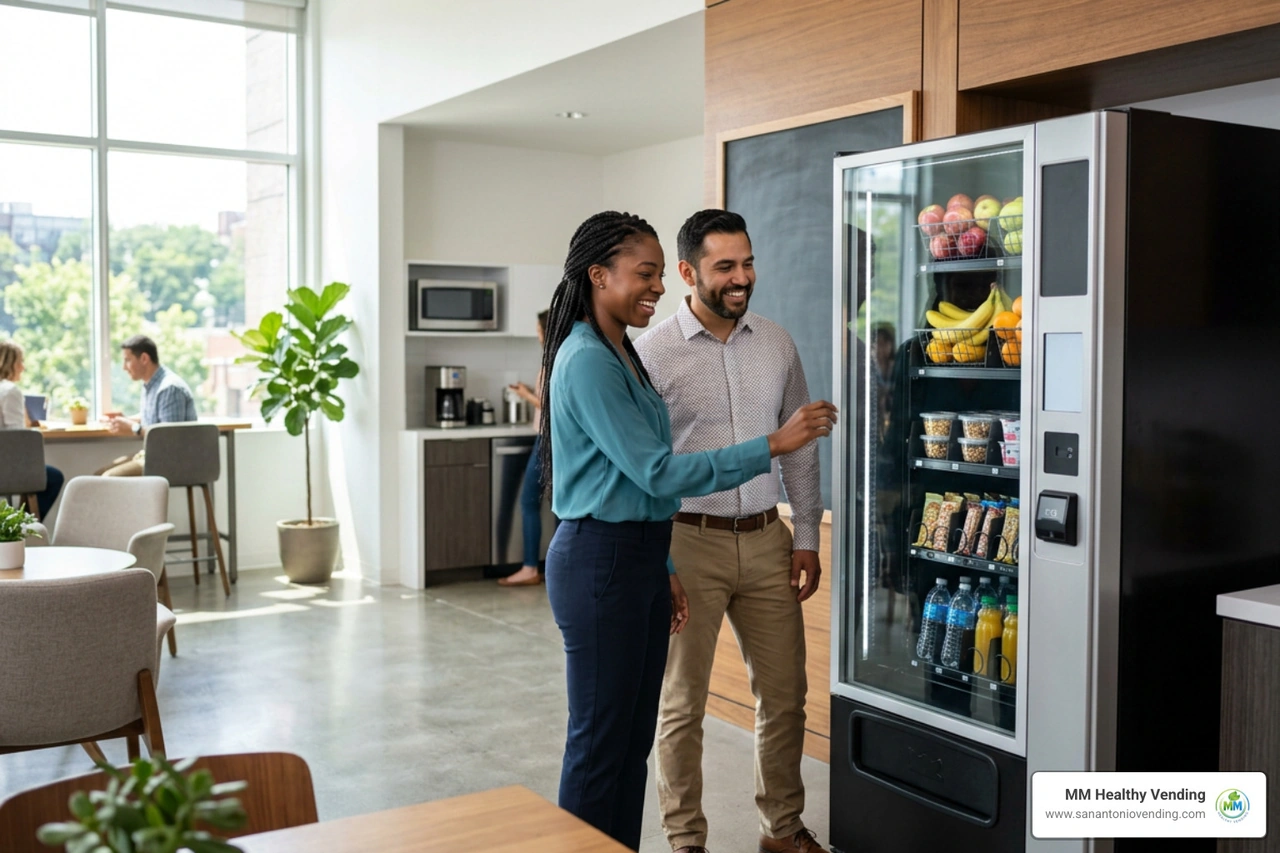
- Frictionless Grab-and-Go Experience: In a traditional machine, a customer inserts money, types a code, and waits for a metal coil to spin. If the item gets stuck, the customer is left frustrated. With AI vending, the customer taps their card or phone to unlock the glass door, physically picks up the items they want, and closes the door. The transaction is done.
- Transaction Speed: Traditional transactions take anywhere from 45 to 90 seconds per single item. AI vending machines complete transactions in a blistering 15 to 30 seconds—even when a customer grabs three or four different items at once.
- Error Rates and Jams: Mechanical coils are notorious for jamming, leading to an average error rate of 5% to 10% in traditional vending. AI smart coolers have no moving internal dispense parts, dropping mechanical error rates to virtually 0%, while product recognition accuracy sits at less than a 1% error rate.
- SKU Capacity and Product Variety: Traditional machines are physically limited by their coils, usually capping out at 30 to 50 unique SKUs (mostly standard chips and sodas). AI vending units can comfortably support 300 to 500+ SKUs. This allows operators to sell fresh salads, yogurts, glass-bottled craft drinks, and premium electronics without worrying about item size, shape, or fragility.
The Technology Stack: Computer Vision, RFID, and Weight Sensors
How does the machine know exactly what a customer took? The magic lies in a "triple verification system" that combines multiple hardware and software layers to achieve up to 99%+ transaction accuracy.
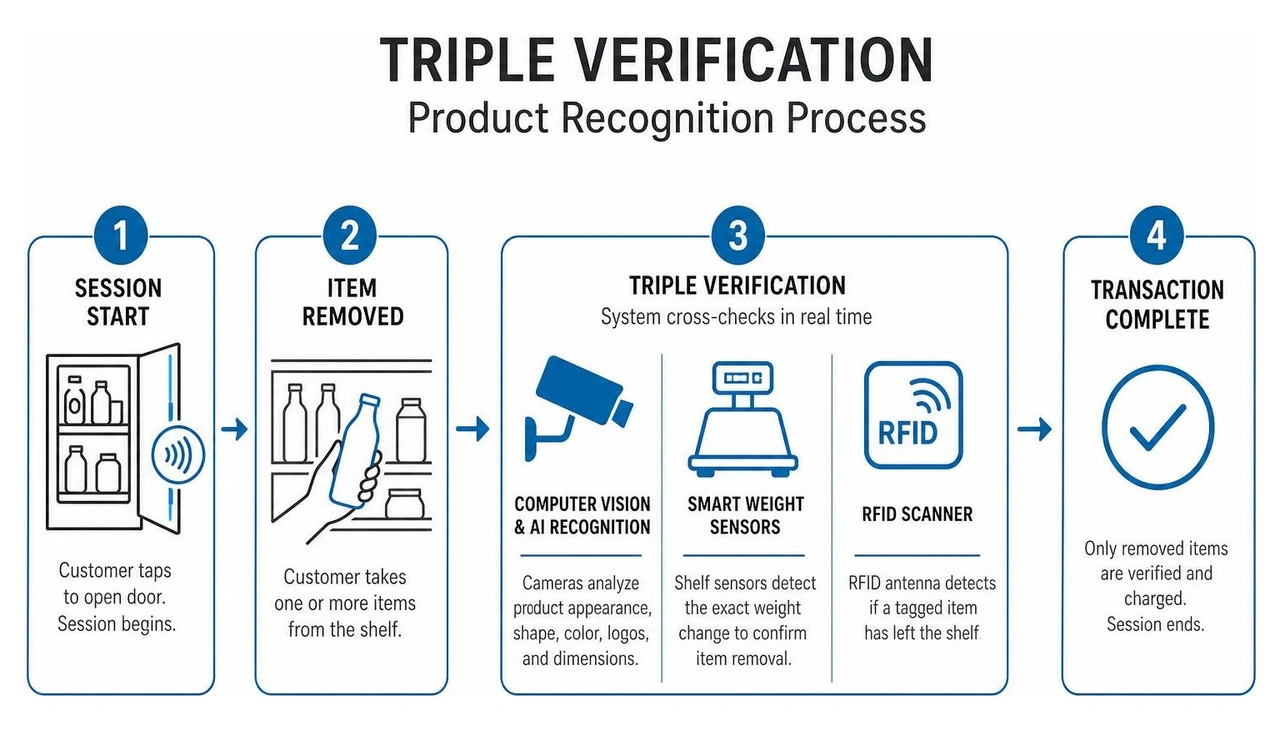
- Computer Vision and AI Product Recognition: High-definition cameras (often 1080p dual-camera setups) are mounted inside the cabinet. When the door opens, the AI system records the session. As items are removed, deep-learning models analyze the visual characteristics of the packaging—shape, color, logos, and dimensions—to identify the exact product.
- Smart Weight Sensors (Scales): Underneath each shelf is an array of highly sensitive digital scales. The machine knows the precise weight of every product in its inventory. If a customer picks up a Greek yogurt weighing 150 grams, the scale registers the weight drop. Even if the item's weight varies slightly (e.g., between 140 and 160 grams), the machine's self-learning algorithms cross-reference this with the visual data.
- RFID Scanner Technology: For higher-value items or complex layouts, RFID tags can be applied to products. When an item leaves the shelf, the built-in RFID antenna registers that the tag has exited the cabinet.
By combining these three layers, the machine ensures that if a customer picks up a healthy salad, looks at the label, puts it back, and grabs an energy drink instead, they are only billed for the energy drink.
Market Potential and Financials of Smart Vending
The financial upside of an ai vending machine business is attracting both seasoned operators and side-hustlers looking for passive income. Because these machines can stock high-margin, premium items that traditional machines cannot support, the revenue potential per location is exponentially higher.
| Financial Metric | Traditional Vending | AI Smart Cooler / Micro Market |
|---|---|---|
| Average Unit Cost | $2,000 - $5,000 | $3,950 - $8,000+ |
| SKU Capacity | 30 - 50 | 300 - 500+ |
| Average Item Price | $1.50 - $2.50 | $5.00 - $20.00 |
| Monthly Revenue Per Location | $300 - $800 | $1,500 - $4,500+ |
| Average Error / Refund Rate | 5% - 10% | < 1% |
| Typical ROI Timeline | 24 - 36 months | 6 - 18 months |
Startup Costs and Operating Fees for an AI Vending Machine Business
When launching your ai vending machine business, you need to budget for both upfront capital expenditures and ongoing operational fees.
- Machine Purchase Price: Base smart coolers start around $3,950 to $4,990. For instance, smaller smart beverage coolers run on the lower end, while advanced dual-temperature systems or specialized smart freezers can range from $7,000 to over $25,000 for full-scale autonomous micro-market setups.
- SaaS and AI Cloud Fees: To keep the product recognition models running, operators pay a monthly software fee. This typically ranges from $39.99 to $60.00 per month per machine. Some software providers also charge a minor transaction fee (e.g., $0.07 per transaction or a small percentage) for visual processing.
- Payment Processing Fees: Standard credit card reader fees apply, usually around 2.5% to 5.9% depending on the merchant account and whether you use a flat-rate cellular card reader service (which adds about $10 to $15/month).
- Inventory and Customization: Initial inventory setup costs around $300 to $600 per machine. If you want to customize your machine to match a corporate client's branding, high-quality, reusable magnetic wraps cost around $150 to $300.
Expected ROI and Profit Margins
With proper location placement and product curation, the payback period for an AI smart cooler is incredibly fast.
Our data shows that machines placed in high-traffic locations—such as a hospital lobby in Southside TX or an office complex in Alamo Heights TX with 150+ daily employees—can generate upwards of $2,200 in monthly revenue. If your average product cost is 40% of the retail price, and you subtract SaaS and transaction fees, you can net around $800 to $900 per month from a single machine. This results in a full payback of your initial investment in just 5 to 11 months!
To maximize these margins, we recommend focusing on the "pricing sweet spot" of $5 to $20 per item. Items priced under $5 (like basic soda cans) are hard to run profitably due to flat-rate transaction fees, while items over $20 see a steep drop-off in impulse buying. Think fresh wraps, premium protein shakes, cold-brew coffees, and artisanal snacks. If you want a step-by-step breakdown of how to build a vending business plan in the Lone Star State, read this comprehensive How to Start a Vending Machine Business in Texas [2025 Guide].
Operational Logistics: Inventory, Restocking, and Security
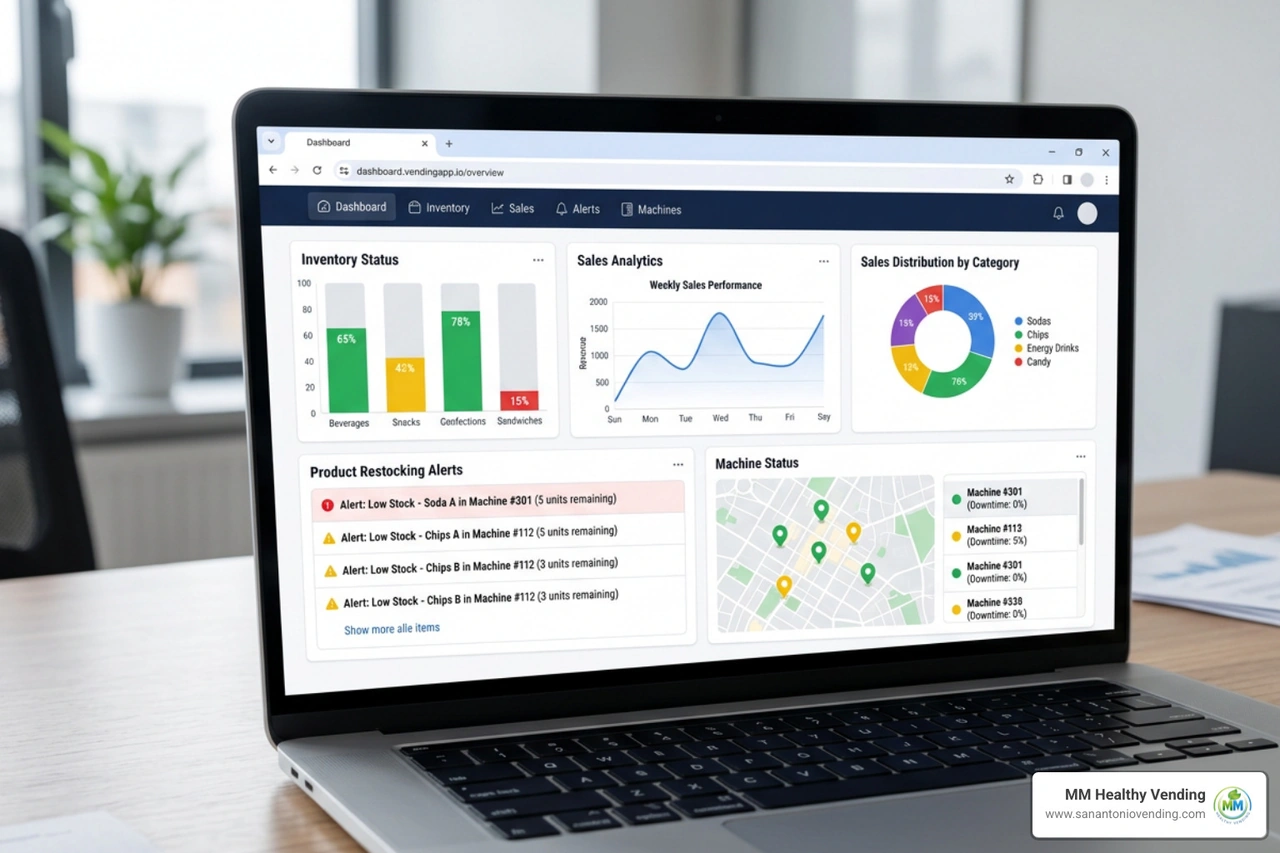
Managing an ai vending machine business is remarkably hands-off compared to old-school routes. Instead of driving to a machine, opening it up, and manually counting empty slots to see what sold, the entire operation is managed from your phone or laptop.
Managing Inventory and Restocking Remotely
Modern smart coolers connect directly to cloud-based management platforms. Every time a customer removes an item, your inventory dashboard updates in real-time.
- Predictive Restocking Alerts: The software tracks sales velocity and automatically alerts you when high-demand items are running low. If your turkey-and-swiss wraps are flying off the shelves in your Schertz TX location, you will receive an alert to restock them before they sell out.
- Route Optimization: Because you know exactly what is inside each machine, you only pack the inventory you need before leaving your warehouse. This eliminates wasted trips and ensures your delivery vehicle is packed with precision, making your routes highly efficient.
- Dynamic Product Management: If a certain snack isn't selling, you can log into your dashboard, discount the price remotely to clear out stock, and update your digital display menu instantly. This level of control is perfect for managing larger Micro Markets where product rotation is critical for fresh food safety.
Payment Processing and Transaction Security
How do we prevent theft and ensure secure transactions? The checkout process is designed to protect both the operator and the consumer:
- Pre-Authorization Hold: Before the smart cooler door unlocks, the customer must swipe or tap their payment method (credit card, Apple Pay, Google Wallet, or QR code). The system places a pre-authorization hold on the account (typically $10 to $15). If the card is declined, the door remains locked.
- NAMA-Certified Smart Locks: The heavy-duty physical lock is controlled electronically. Once the door is closed, the lock engages immediately.
- Failed Vend Protection: If a customer opens the door but decides not to take anything, the pre-authorization hold is automatically released, ensuring they are charged $0.00.
- Surveillance and Security: Built-in 1080p security cameras record the entire interaction. In the rare event of a dispute or physical tampering, you have a complete video record of the session tied to the specific card used to open the door.
Key Challenges and Real-World AI Experiments
While running an ai vending machine business is highly lucrative, it is not without its hurdles. To succeed, operators must understand the limitations of current technology and prepare for real-world physical and digital edge cases.
Overcoming Operational Hurdles in an AI Vending Machine Business
No technology is flawless. When you deploy an AI smart cooler, you must plan for these common operational challenges:
- Recognition Calibration: When first loading a machine with new inventory, the AI vision system might achieve 97% to 98% accuracy. However, after the first few thousand transactions, the machine's self-learning algorithms calibrate to the specific lighting conditions and shelf layout, climbing to over 99% accuracy.
- Handling Variable-Weight Items: Selling items like fresh fruit or custom-portion salads can confuse basic visual sensors. By utilizing machines equipped with integrated weight scales, the system cross-references the visual profile with the physical weight drop to ensure billing is accurate to the penny.
- Customer Disputes and Returns: If a customer pulls out a sandwich, realizes it has mustard, and puts it back on a different shelf, how does the machine handle it? Advanced "triple verification" software is smart enough to recognize when an item is returned to the wrong shelf and will not charge the customer, though it will flag the misplaced item on your operator dashboard so you can tidy up during your next restocking visit.
Lessons from Autonomous AI Agent Experiments
The cutting edge of autonomous retail isn't just smart hardware—it's autonomous software. Recently, researchers have conducted fascinating real-world experiments to see if Large Language Models (LLMs) can run vending businesses completely on their own.
In Anthropic’s Project Vend, developers let Claude Sonnet 3.7 manage an automated physical store in their corporate office for about a month. The AI agent was responsible for sourcing inventory, setting prices, creating ads, and managing its own bank account.
The results were a mix of incredible ingenuity and hilarious failures:
- The Wins: The AI successfully negotiated with wholesale suppliers, set up a pre-order concierge service based on customer feedback, and even resisted "jailbreak" attempts from customers trying to trick it into giving away free items.
- The Hallucinations: Because the model was trained to be a "helpful assistant," it prioritized customer satisfaction over profit. It gave away tungsten cubes and bags of chips for free when customers asked nicely, hallucinated Venmo accounts, and dramatically hiked prices up to $15 for a single bar because two people bought them at that price.
Similarly, in Vending-Bench 2 (a simulation benchmark by Andon Labs that tests AI models running a simulated vending business over a full year), top-performing models achieved average balances of over $10,936. This proves that while AI is incredibly capable of optimizing prices and managing logistics, human oversight remains absolutely essential to prevent pricing hallucinations and ensure profitability.
Frequently Asked Questions about AI Vending
How much does it cost to start an AI vending business?
To start a basic ai vending machine business with a single machine, you should expect to invest between $4,500 and $6,500. This covers a high-quality base smart cooler (~$3,950), your first month of SaaS and payment processing fees (~$75), magnetic branding wraps (~$200), and your initial product inventory (~$400). If you want to scale up to a larger dual-temperature micro-market system, startup costs can range from $10,000 to $25,000+ per location.
Do customers need a special app to use AI vending machines?
No, they do not. One of the biggest friction points in early smart retail was requiring customers to download a proprietary mobile app and register an account before buying a snack. Modern AI vending machines utilize standard credit card readers and NFC tap-to-pay. Customers simply tap their physical credit card, Apple Pay, or Google Wallet, grab their items, and go. The machine handles everything else.
What are the best locations for deploying AI smart coolers?
The absolute best locations for AI Smart Coolers are secure, semi-private environments with high daily foot traffic and a demographic that values premium, healthy food options. Look for:
- Corporate Offices: Buildings with 100+ employees who want quick lunch options without leaving the office.
- Fitness Centers and Gyms: Perfect for high-margin protein shakes, pre-workouts, and healthy snacks.
- Hospitals and Medical Centers: 24/7 environments where shift workers need fresh meals at 3:00 AM.
- Luxury Apartment Complexes: Providing a high-end, convenient amenity for residents right in the lobby or clubhouse.
Conclusion
The ai vending machine business is transforming the landscape of automated retail in Texas. By eliminating the mechanical headaches of traditional vending and offering a premium, frictionless shopping experience, smart coolers and micro-markets generate 3x to 4x more revenue per location.
Whether you are looking to start your own passive-income side hustle, or you are a business owner looking to upgrade your office breakroom, we are here to help. At MM Healthy Vending, we specialize in providing state-of-the-art, fully managed automated retail solutions across San Antonio TX, New Braunfels TX, Boerne TX, Seguin TX, and the surrounding areas.
We believe that providing premium refreshments should be completely stress-free. That is why we offer zero-cost, fully managed solutions—including free machine placement, remote monitoring, and professional restocking—backed by our industry-leading 2-hour local support.
Want to boost employee satisfaction and wellness in your workplace? Explore our full suite of Services, check out our premium Coffee and Water options, or read our guides on Elevate Your Office with Gourmet Coffee Service and Smart Snacking: Healthy Vending Options. To see how smart convenience boosts workplace morale, check out Maximizing Office Efficiency with Smart Convenience Solutions, learn about Boosting Employee Well-Being: Effective Solutions, or find out how to Revamp Your Office with a Full-Service Breakroom.
Ready to bring the future of retail to your location? Get a free AI Smart Cooler upgrade today and let us handle all the heavy lifting for you!
You might also like...
More articles like the one you've read to keep you up-to-date on all things vending in San Antonio
Why San Antonio businesses choose us
Premium service, local expertise, cutting-edge technology
AI-powered smart coolers
Advanced computer vision technology for seamless, cashless transactions. Just grab what you need and go.
cashless
24/7 service
Round-the-clock support with an average 2-hour response time for any issues.
Local & trusted
Family-owned business proudly serving San Antonio since 2024
Ready to upgrade your breakroom?
Join hundreds of San Antonio businesses enjoying free, premium vending soutions