
Frozen Drink Machines That Keep Up With Peak Hours
Choose the right frozen drink vending machine for your business to handle peak-hour demand, maximize ROI, and simplify daily operation.
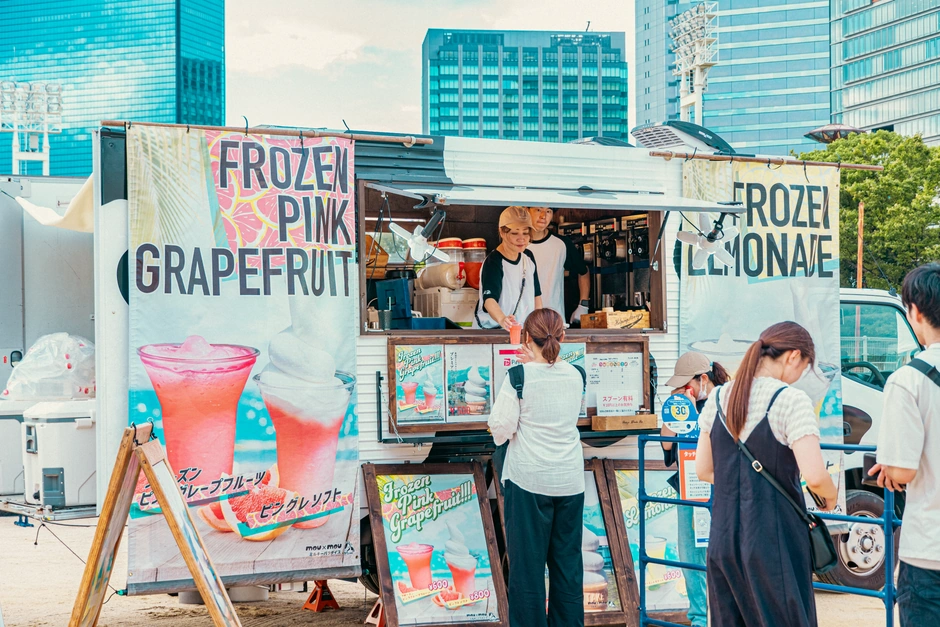
Frozen Drink Machines That Can Handle the Rush
To choose a frozen drink vending machine for business, start with your busiest 15 to 30 minutes. Estimate how many drinks customers will want, then compare each machine's serving capacity, recovery time, flavors, footprint, and power needs. Check how it sells drinks, too: many commercial frozen drink machines are dispensers that need staff, not unattended vending machines.
A machine that keeps drinks ready during a rush still needs a workable plan for refills, cleaning, and local service. Those daily details matter as much as the capacity on a spec sheet.
I'm Manuel Mojica, founder of a San Antonio vending and automated retail operation. My experience with machine placement, route logistics, and service planning shapes this guide to choosing a frozen drink vending machine for business.
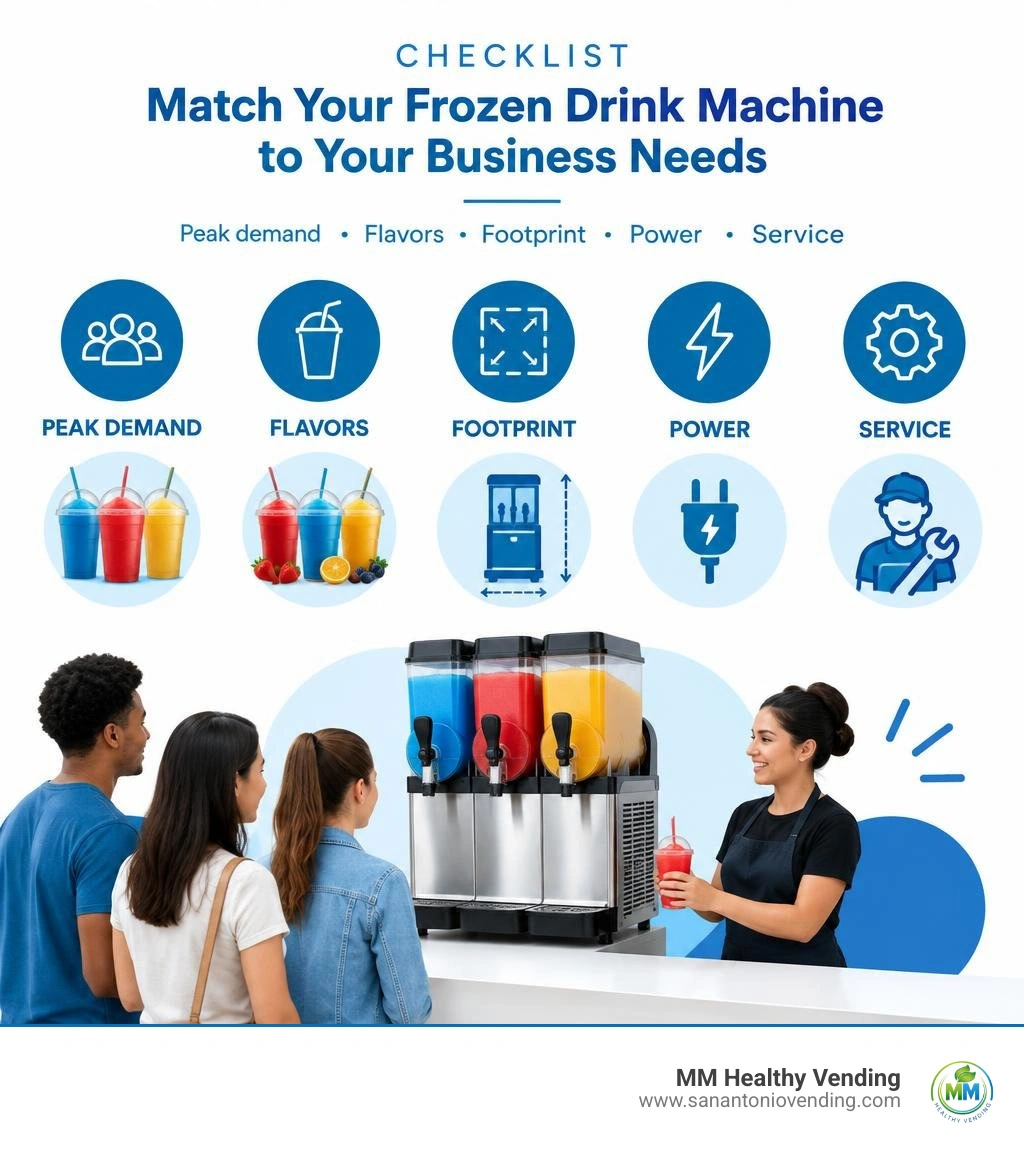
Frozen drink vending machine for business: options for peak-hour demand
Frozen beverage equipment comes in several configurations. The right one depends on how drinks will be served, the rush you expect, and whether you have staff available to operate it.
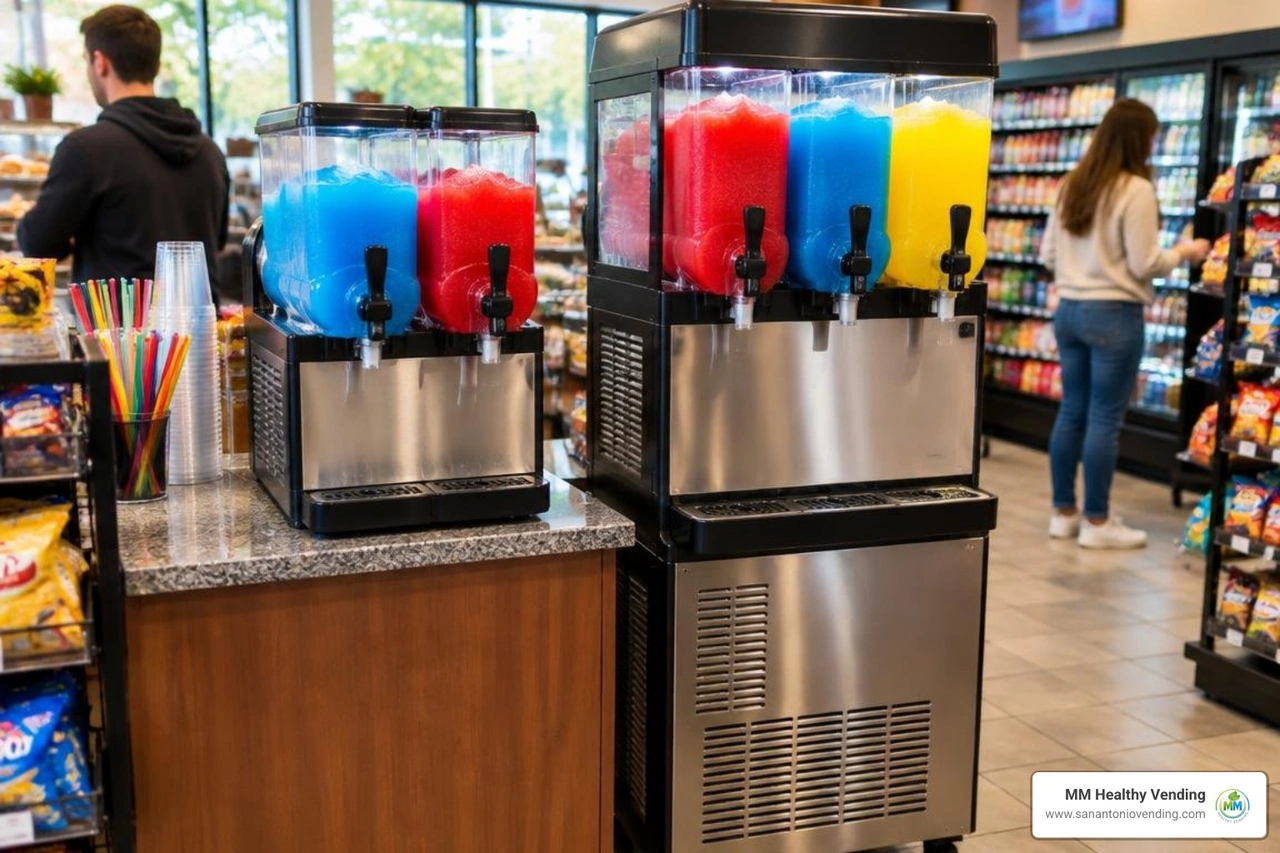
- Countertop dispensers: Sit on a counter and suit businesses with limited floor space and a staffed service point.
- Floor models: Offer a freestanding format, often for higher-volume service or locations with room for dedicated equipment.
- Single- or multi-flavor machines: A single flavor keeps the menu simple; multiple barrels or flavor options provide more variety.
- High-output dispensers: Designed for steady service during busy periods. Check the stated output and recovery time, not just hopper or cylinder size.
- Unattended vending setups: Need more than a frozen beverage dispenser. Confirm the equipment is designed to dispense cups and product, accept payment, and operate safely without staff.
A traditional frozen drink dispenser is not automatically a vending machine. Many are built for an employee to serve each drink. Before buying, clarify whether the machine supports unattended transactions or whether you need a staffed counter.
Cold food vending is different: it stores and dispenses prepared, packaged food that must stay within safe temperature limits. Frozen beverage equipment freezes and agitates a prepared mix. Both need reliable power and restocking, but their product handling, cleaning routines, and food-safety procedures differ.
Frozen carbonated and uncarbonated drinks
Frozen carbonated beverages (FCB) contain carbonation and are often served as frozen soda or a light, slushy drink. Frozen uncarbonated beverages (FUB) do not use carbonation and can include frozen lemonade, cocktails, smoothies, and other frozen mixes. Some equipment is also designed for nitro-infused drinks.
These categories may need different mix delivery and freezing setups. The ingredients matter, too: sugar, alcohol, and dilution all affect whether a recipe freezes and dispenses properly. Check that the model supports the drink you plan to sell and follow the equipment maker's and mix supplier's recipe guidance. Many frozen beverage recipes use a Brix level in the 13 to 18 range, but the right formulation depends on the product and machine.
For a closer look at carbonation and product types, see our frozen carbonated beverage guide. For high-volume equipment, compare a model's stated output, features, and requirements with your expected demand rather than treating one capacity figure as a promise for every setup.
Machine formats and location fit
Countertop equipment can work well at a staffed service counter in a restaurant, convenience store, or entertainment venue. Floor models may suit a larger beverage program with room for equipment and a clear serving area. Multi-flavor choices can help a business offer variety, while a single flavor may be easier to manage in a smaller operation.
In the San Antonio area, a frozen drink program may fit a convenience store, restaurant, cinema, event venue, or other business where customers want a quick treat. Offices and schools may also consider frozen drinks for appropriate events or service periods, but should weigh seasonality, customer demand, and applicable food-safety requirements.
A cold beverage or cold food vending setup may be more practical when customers need packaged refreshments or meals throughout the year. Frozen drinks can attract impulse purchases, but demand may rise and fall with weather, foot traffic, and the season.
Frozen drink machine operating considerations
Frozen drinks can be visually appealing and quick to serve, but daily operations still need attention. Plan for:
- A reliable power supply and suitable ventilation.
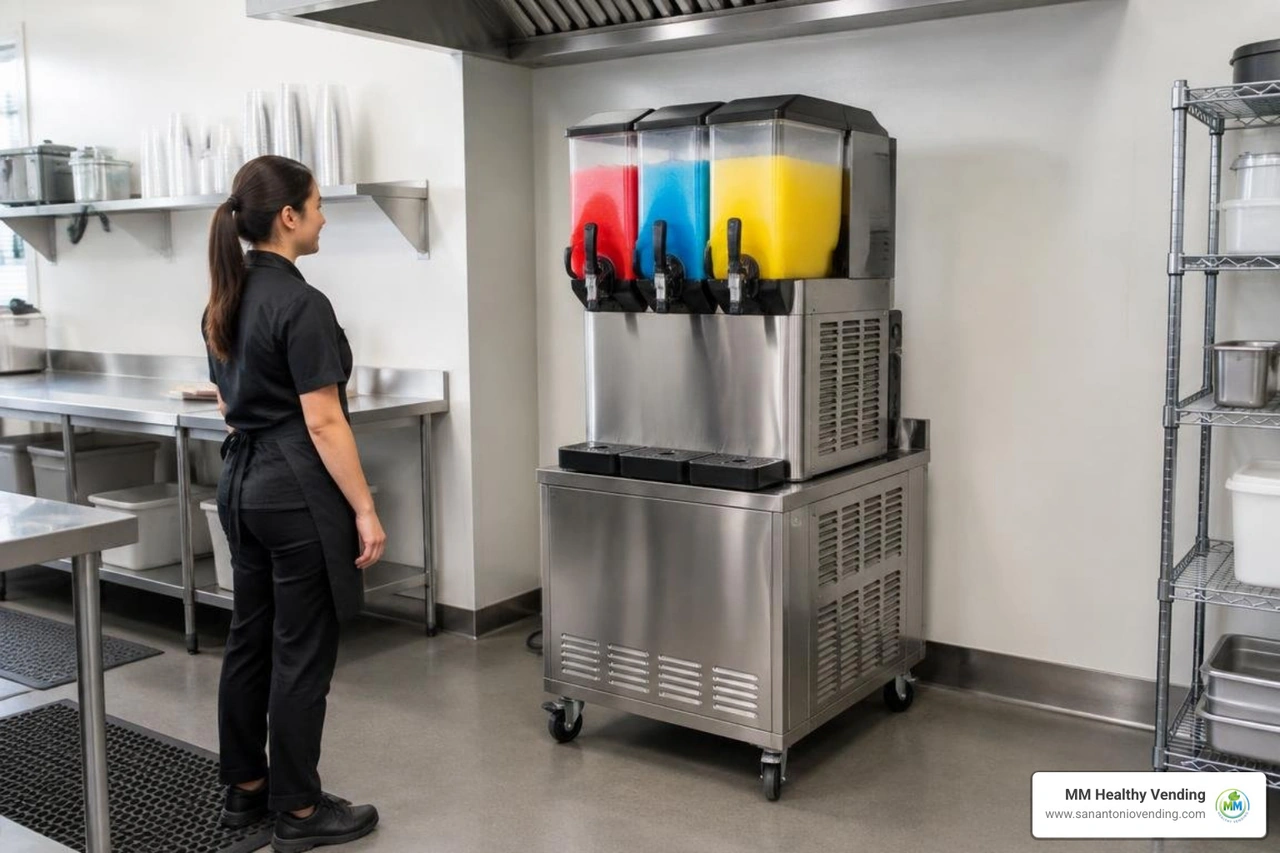
- Enough room for the equipment, serving area, cleaning, and service access.
- Regular mix checks, refills, and inventory rotation.
- Cleaning and sanitizing according to the machine manual and local requirements.
- Staff training, if drinks are served by an employee.
Ingredients and cups take up storage space, and product left unused may become waste if it cannot be held safely under the machine's approved procedures. Estimate sales conservatively, especially when demand is seasonal.
How to choose a frozen drink vending machine for your business
Start with the customer experience and work backward to the equipment. Decide whether a staff member will serve each drink or whether you require a machine designed for unattended vending. Then estimate demand, choose the menu, and check the available space and utilities.
Size a frozen drink machine for business peak periods
Daily sales are not enough to size a machine. Estimate the number of drinks customers may order in your busiest 15 to 30 minutes, along with serving size and the time needed for the machine to recover after a rush.
Compare those needs with the manufacturer's output rating. For example, some high-capacity commercial configurations are rated to dispense up to 5,160 ounces per hour. That is a manufacturer-stated figure, not a guarantee of real-world servings: product recipe, operating conditions, serving size, and demand patterns can affect performance.
Ask how quickly the first batch freezes, how fast the equipment recovers after continuous service, and what happens when a barrel runs low. Some machines are advertised as able to serve the first product within minutes, but timing varies by model and conditions. Review commercial machine sizing and freeze-time guidance for the principle that matters most: size to your rush, not just your daily average.
Features to prioritize in a frozen drink vending machine for your business
Compare models using a practical checklist:
- Flavor count: Select enough options for your menu without adding complexity you do not need.
- Capacity and recovery: Look at continuous output and recovery time together.
- Product consistency: Viscosity controls and reliable mixing help keep drinks at a consistent texture.
- Footprint and access: Measure the full installation area, including space for cleaning and repairs.
- Energy use: Request power information and ask about efficiency features or remote-condensing options.
- Cleaning access: Check how product-contact parts are removed, cleaned, and sanitized.
- Durability and service: Confirm warranty terms, parts availability, training, and local repair support.
- Vending functions: If unattended sales are essential, verify payment acceptance, cup dispensing, product delivery, and monitoring capabilities.
- Site compatibility: Check ventilation, delivery access, and utility requirements before ordering.
A remote condenser may reduce heat and noise in the customer area, but it can require additional installation work. Compare frozen beverage dispenser options against the space, demand, and service plan you actually have.
Costs, ROI, installation, and day-to-day operation
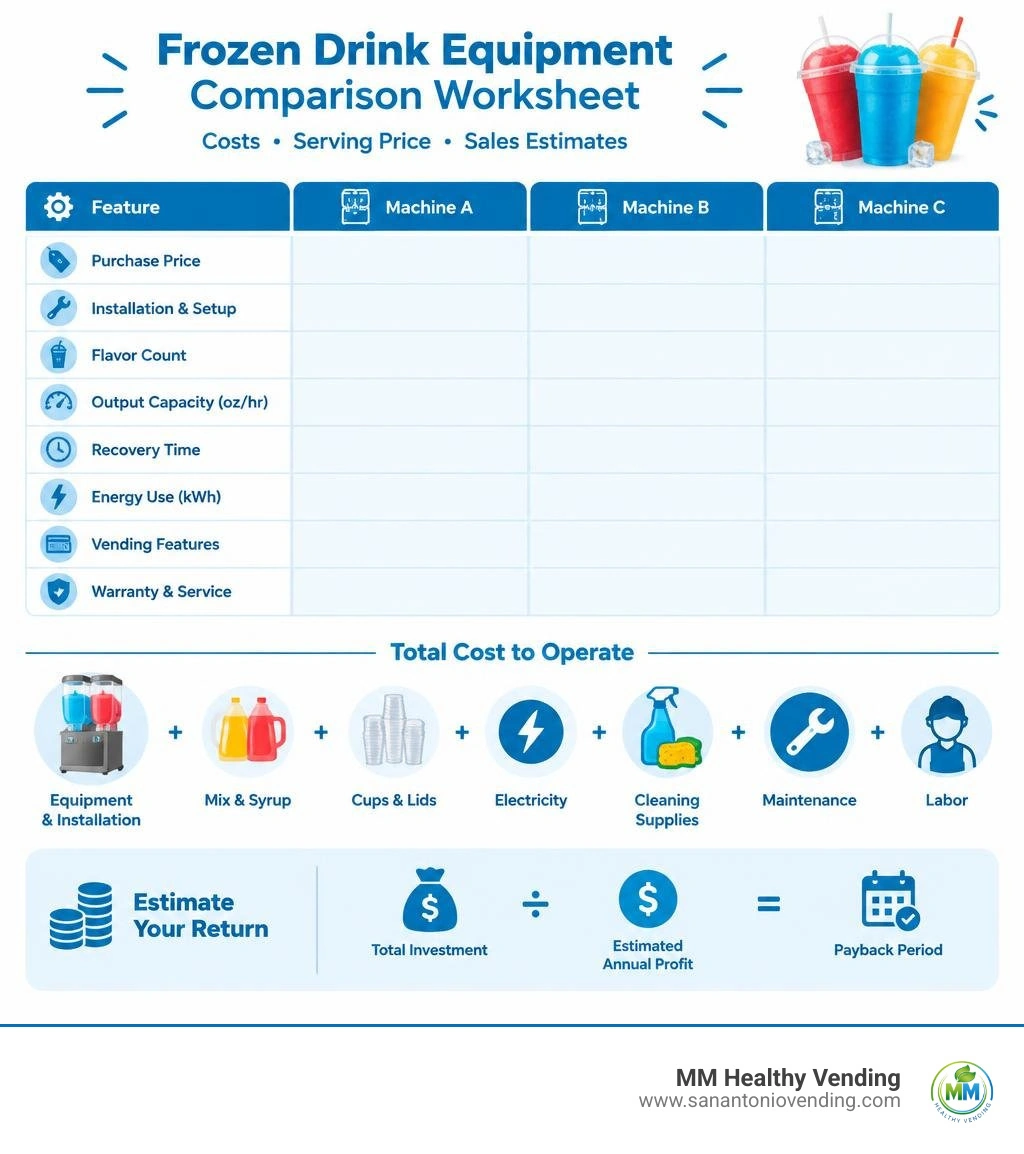
The purchase price is only one part of the budget. Include installation, mix and syrup, cups and lids, electricity, cleaning supplies, maintenance, and labor. If the machine will be unattended, include the cost of payment and vending components, plus time for restocking and monitoring.
Estimate cost and potential return
Commercial machine prices vary with configuration, capacity, and installation needs. Get a complete quote that lists equipment, delivery, setup, and any required electrical or refrigeration work. Ask about lease terms if buying outright is not the right fit.
Estimate your potential return with a simple payback calculation:
Payback period = total startup cost divided by expected profit per month
To estimate monthly profit, start with expected daily sales and serving price. Subtract ingredients, cups, payment fees, labor, utilities, waste, and maintenance. Use conservative sales estimates and account for slower periods. A manufacturer's ROI claim is not a guarantee for your location; your actual results depend on traffic, pricing, operating costs, and demand.
With MM Healthy Vending, our free, fully managed vending solutions apply to the vending services we provide. Do not assume a specialized frozen beverage dispenser is included in a zero-cost placement without confirming the equipment and service scope first.
Check site and power requirements
There is no single electrical requirement for every commercial frozen drink machine. Check the unit's nameplate and installation guide for voltage, amperage, plug type, and whether it needs a dedicated circuit. Have a qualified electrician verify that the location can support the load before installation.
Also check:
- Whether the machine needs a water connection or drain.
- Clearance for airflow, cleaning, and repairs.
- Floor strength and space for delivery and installation.
- Whether a remote condenser or refrigeration line set is required.
- Local permits and food-safety requirements that apply to your operation.
Do not choose an outlet based on appearance or assume a standard household circuit is suitable. Confirm the exact model and site needs before ordering.
Plan cleaning and maintenance
Follow the equipment manual and current local food-safety requirements. In general, plan to clean and sanitize product-contact parts on the recommended schedule, and inspect the dispensing system and auger. Check seals and wear parts, lubricate components as directed, and keep the condenser clean so airflow is not blocked.
If the machine offers refrigerated standby, use it only as approved for that model and product. Follow the manufacturer's directions for holding or discarding mix; do not assume product can stay in the machine overnight. Build cleaning and service time into the schedule so maintenance does not get pushed aside during busy periods.
Our guide to frozen drink dispenser cleaning and operating basics covers practical points to consider when planning daily care.
Frequently asked questions about frozen drink machines
What is the difference between FCB and FUB equipment?
FCB equipment freezes a carbonated mix, commonly for frozen soda or slush-style drinks. FUB equipment handles uncarbonated mixes, which may include frozen lemonade, cocktails, or smoothies. Carbonation and recipe affect texture and freezing behavior, so the machine and mix must be compatible.
What are the main advantages and drawbacks of frozen drink machines?
Frozen drink machines can add menu variety, support quick service, and encourage impulse purchases. High-output equipment can help meet peak demand when it is sized and operated correctly.
The trade-offs are equipment and installation costs, continuous power needs, cleaning, ingredient management, and space. Sales can also vary with season and location. If demand is unpredictable, begin with cautious sales assumptions and a menu that is manageable for your team.
What should a business confirm before buying?
Confirm the peak-period capacity, flavor options, serving format, footprint, and recipe compatibility. Verify power and installation requirements at the site, and ask who will clean, refill, and service the machine. If you expect unattended sales, make sure the system is designed for that use and supports the payment and dispensing functions you need. Finally, check food-safety rules and estimate costs using realistic sales assumptions.
Conclusion
The best frozen drink setup is the one that can serve your busiest period without exceeding your space, power, budget, or team's operating capacity. Compare total costs with conservative sales estimates, and plan for installation, cleaning, and service before you buy.
At MM Healthy Vending, we provide free, fully managed vending machines, micro markets, and AI coolers to businesses in San Antonio and nearby communities, with two-hour local support. Those services are distinct from specialized frozen drink equipment, so confirm the fit before planning a frozen beverage program. You can explore frozen drink dispenser options as part of your research.
You might also like...
More articles like the one you've read to keep you up-to-date on all things vending in San Antonio

Why San Antonio businesses choose us
Premium service, local expertise, cutting-edge technology
AI-powered smart coolers
Advanced computer vision technology for seamless, cashless transactions. Just grab what you need and go.
cashless
24/7 service
Round-the-clock support with an average 2-hour response time for any issues.
Local & trusted
Family-owned business proudly serving San Antonio since 2024
Ready to upgrade your breakroom?
Join hundreds of San Antonio businesses enjoying free, premium vending soutions