
Compare Frozen Beverage Dispensers: Ultimate Cheat Sheet
Compare frozen beverage dispensers for profit, output, and ROI in this cheat sheet on commercial slush and frozen drink equipment.
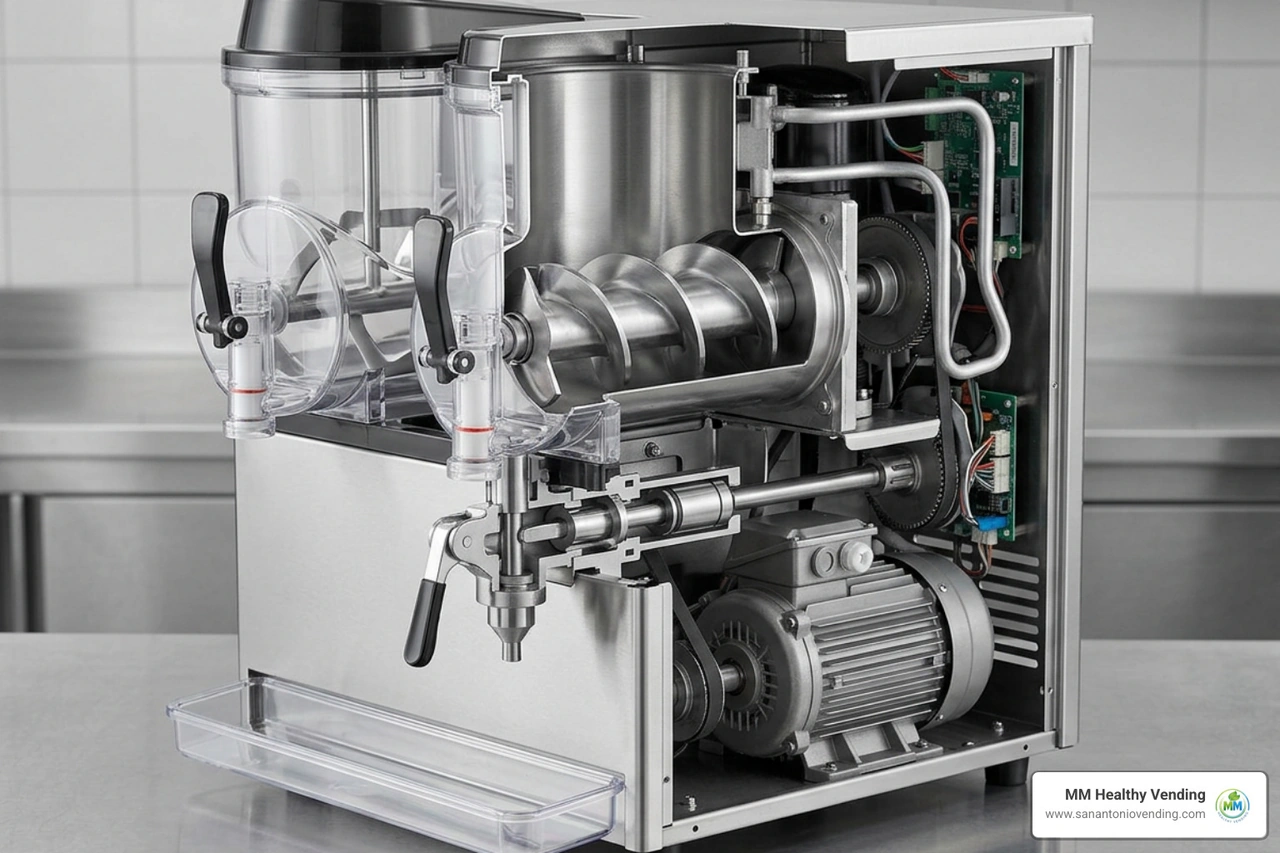
Core Types of Frozen Beverage Dispensers
Selecting the right commercial setup begins with categorizing the drinks you want to pour. Not all machines freeze liquids in the same manner. Sugar levels (measured in Brix), carbonation levels, and alcohol content dramatically influence freezing points and mechanical demands. Pairing the wrong product with an incompatible cooling system results in frozen solid cylinders or flat, soupy cups.
| Category | Typical Drink Types | Freezing & Delivery System | Best Operational Environment | Key Equipment Examples |
|---|---|---|---|---|
| Frozen Carbonated (FCB) | Soda slushies, sparkling granitas, carbonated energy freezes | Sealed pressurized barrel, inline carbonation, continuous pump | Convenience stores, cinemas, theme parks, high-traffic QSRs | FBD 772 / 774 Series |
| Frozen Uncarbonated (FUB) | Lemonades, fruit smoothies, iced coffees, granitas | Open transparent bowl or sealed gravity cylinder, torque monitoring | Cafés, office cafeterias, hospitality breakfast bars | Icetro SSM-280 uncarbonated dispenser |
| Multi-Flavor Injection | Twisted slushies, custom soda blends, seasonal drink lines | Single/dual base freezing barrels paired with external micro-flavor syrup injection | Fast-casual dining, compact retail counters, modern breakrooms | FBD 771 multi-flavor dispenser |
| Commercial Frozen Cocktail | Margaritas, daiquiris, frosé, boozy slush (up to 14%–20% ABV) | Low-temperature high-BTU compressor, heavy-duty scraping auger | Bars, nightclubs, event centers, high-volume entertainment hubs | FBD 772 FC frozen cocktail dispenser, SaniServ 704 high-capacity cocktail machine |
Offering a cold treat creates an instant boost in customer and employee satisfaction, complementing automated chilled drink delivery models that keep modern spaces refreshed throughout the day.
Frozen Carbonated Beverage (FCB) Systems
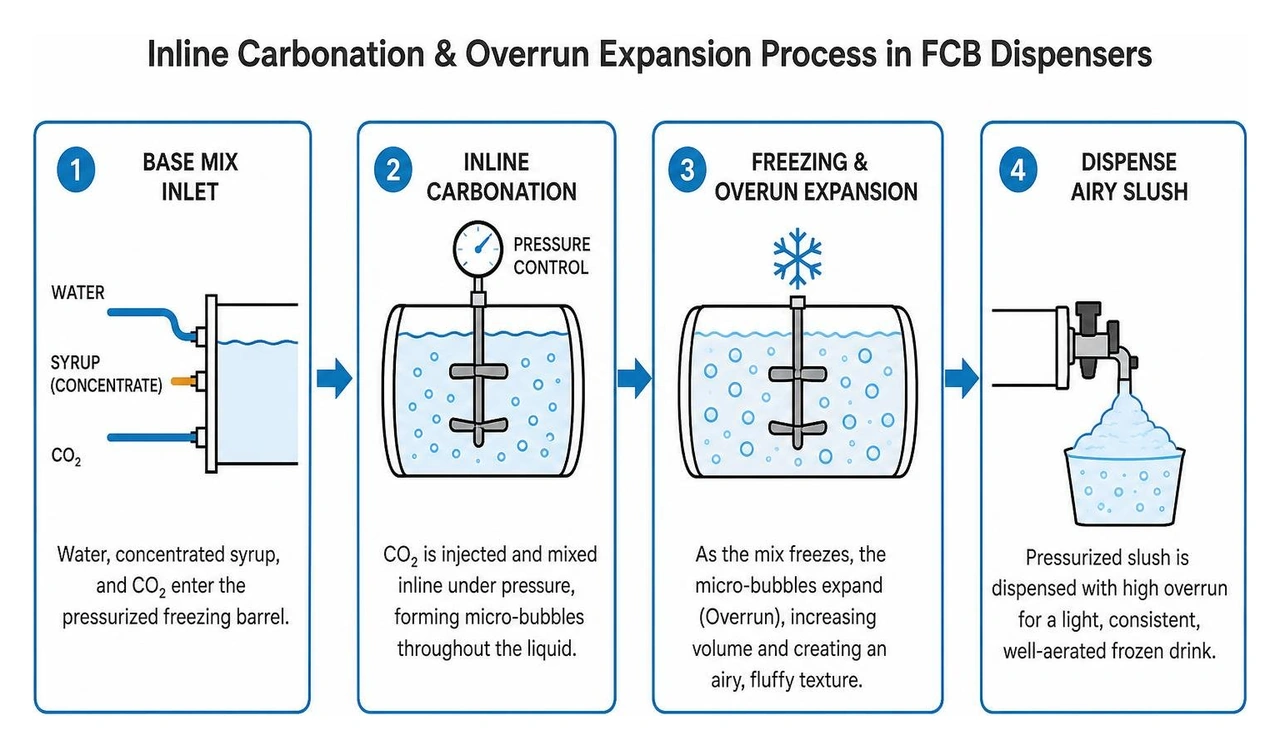
Frozen Carbonated Beverage (FCB) equipment injects CO2 directly into a pressurized freezing barrel along with water and concentrated syrup. This process creates high "overrun"—the percentage of expansion that occurs when gas is incorporated into the liquid base.
Because FCB drinks contain a delicate matrix of micro-bubbles, they yield an airy, fluffy texture that does not separate easily into syrup and ice chips. Modern units utilize inline carbonation controls that automatically calibrate expansion yield. This gas-to-liquid ratio reduces syrup consumption per 16-ounce cup, increasing overall gross profit margins for high-volume convenience retailers and entertainment venues.
Frozen Uncarbonated Beverage (FUB) and Granita Units
Frozen Uncarbonated Beverage (FUB) systems handle dairy mixes, cold brews, citrus lemonades, and pureed fruit blends. Rather than relying on pressurized gas, these machines chill liquid within open-hopper bowls or sealed non-carbonated barrels using heavy-duty rotating augers.
Visual merchandising plays a significant role in this category. Equipment like the Icetro SSM-280 uncarbonated dispenser features transparent 3.2-quart/gallon bowls that let customers watch vibrant slushes churning in real time. Rather than relying solely on temperature probes, reliable FUB units employ torque-sensing technology. When the rotating auger encounters targeted physical resistance, the electronic control knows the slush has reached ideal viscosity, switching off the compressor to prevent freeze-ups and seal wear.
Multi-Flavor and High-ABV Cocktail Equipment
Serving frozen alcoholic beverages introduces unique thermodynamic hurdles. Alcohol acts as a natural antifreeze, causing significant freezing point depression. To bring an 8% to 14% ABV margarita or daiquiri recipe to a smooth, spoonable consistency, equipment requires specialized low-temperature refrigeration loops.
High-output setups, such as the FBD 772 FC frozen cocktail dispenser or the SaniServ 704 high-capacity cocktail machine, use robust 0.85 HP to 2 HP compressors capable of generating up to 28 gallons per hour (over 220 cocktails hourly).
Meanwhile, multi-flavor injection platforms like the FBD 771 multi-flavor dispenser transform a single base cylinder into 16 distinct flavor combinations by shooting concentrated syrups at the dispensing nozzle, saving valuable backbar linear space.
Key Specifications and Performance Factors to Compare
Evaluating commercial dispensers requires looking past the outer stainless steel housing to inspect compressor sizing, mechanical reliability, duty cycles, and recovery rates.
Evaluating Commercial Frozen Beverage Dispensers vs. Consumer Units
In recent years, consumer countertop machines have surged in popularity. For example, the Ninja SLUSHi Twist dual-vessel system provides an impressive home experience, offering 10+ servings per batch across two 72-ounce vessels and handling alcoholic blends up to 20% ABV using compact WhisperChill compressors.
However, commercial environments require non-stop duty cycles that residential appliances cannot sustain:
- Duty Cycle & Continuous Draw: Consumer units freeze a batch and require a full reload and rest period. Commercial dispensers draw continuously from connected Bag-in-Box (BIB) syrup racks or large hoppers, maintaining flow through peak lunch rushes.
- Durability & Materials: Commercial equipment features heavy-gauge stainless steel frames, magnetic drive augers, and commercial-grade seals designed to endure thousands of cycles weekly.
- Serviceability & Compliance: Commercial machines hold NSF and cULus sanitation certifications required by municipal health departments, alongside fast-access service panels for routine maintenance.
In breakroom and commercial facilities, pairing these heavy-duty drink systems alongside enterprise-grade snack and drink machines guarantees reliable performance without constant operational downtime.
Cooling Mechanisms and Energy Efficiency
How a machine expels heat directly impacts your facility's utility bills and air conditioning load:
- Air-Cooled Systems: Draw ambient air through side or rear vents and exhaust warm air into the room. They are straightforward to install but require ample clearance and increase the room's HVAC cooling burden.
- Water-Cooled Systems: Connect to a facility's dedicated cold water line to transfer heat away quietly. They produce no ambient room heat but consume continuous water volume.
- Remote-Cooled Systems: Route refrigerant lines to an outdoor condenser unit on the roof or back wall. This setup achieves maximum draw capacity (up to 6,240 oz/hr on 4-barrel units) while generating zero noise and zero extra heat in the service area.
Advanced refrigeration innovations, such as OptiFreeze and RapidFreeze algorithms, cycle compressors intelligently based on motor torque. Modern setups like the FBD 774 achieve up to 35.6% annual energy savings by optimizing compressor workload without compromising slush quality.
Output Capacity, Footprint, and Recovery Time
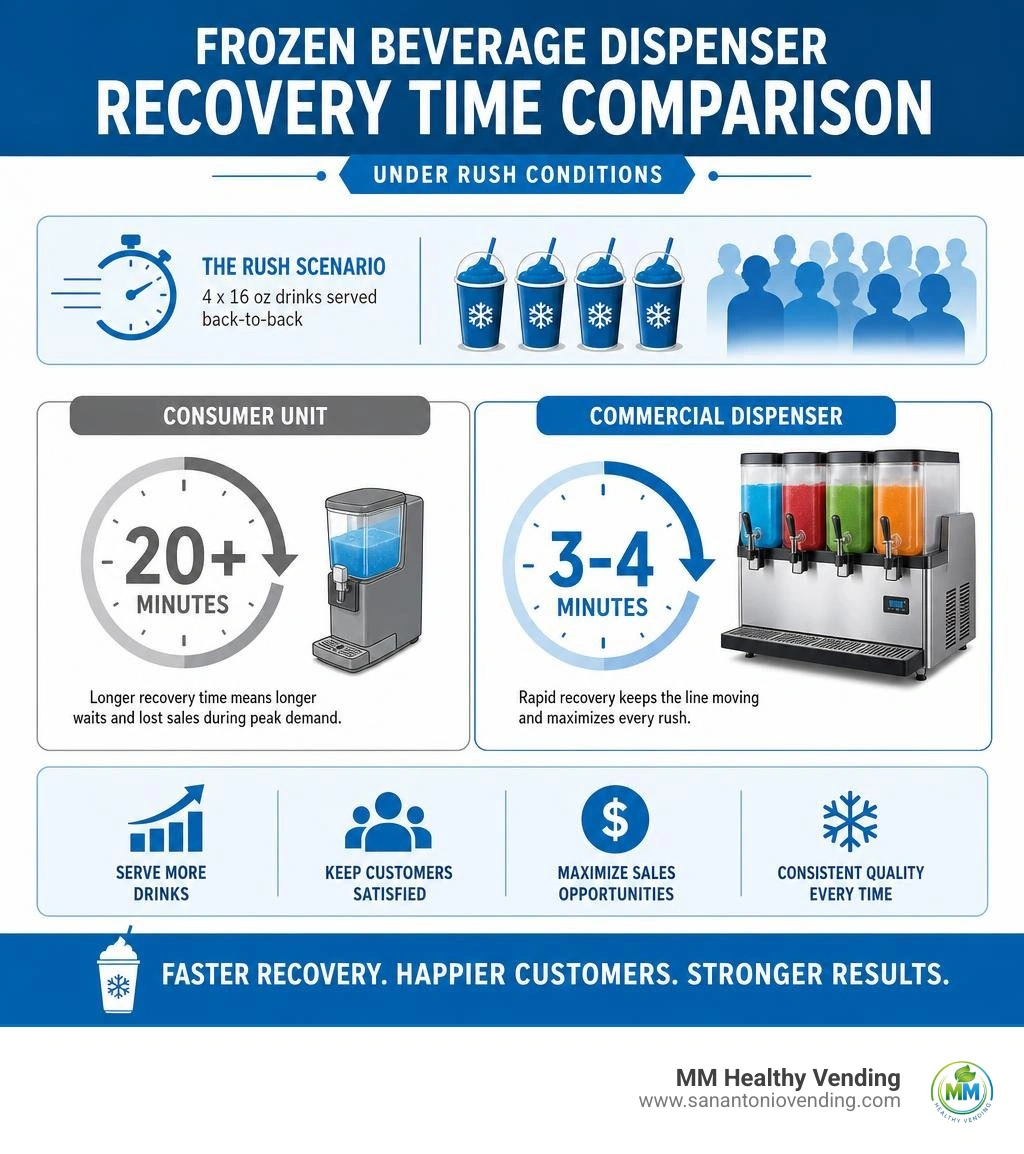
When lines form, recovery time is the ultimate operating metric. If a machine takes 20 minutes to re-freeze after pulling four 16-ounce cups, your sales will stall.
Commercial units like the FBD 772 deliver a continuous draw capacity of 4,500 oz per hour with recovery times as rapid as 3 to 4 minutes. Furthermore, engineering advancements allow multi-flavor dispensers to pack 16 combinations and 3,600 oz/hr throughput into a compact linear counter width of under 17 inches.
Maximizing ROI and Beverage Program Profitability
Frozen drinks remain one of the most profitable categories in the food and beverage industry. With low per-ounce syrup costs, high product expansion via overrun, and premium consumer price points, commercial dispensers regularly achieve a complete return on investment in under 12 months.
Integrating modern cold refreshment programs alongside full break room refreshment services transforms ordinary breakrooms into destinations that boost workplace morale and retention.
Maintenance Best Practices for Frozen Beverage Dispensers
Consistent sanitation preserves drink flavor profiles, protects mechanical components from premature wear, and ensures total food safety compliance:
- Daily Routine: Empty, rinse, and clean external drip trays. Wipe down dispensing spouts and machine surfaces using food-safe sanitizing solutions.
- Weekly Sanitation: Flush open-hopper bowls or execute the automated CIP (clean-in-place) rinse sequence. Inspect product O-rings and lube dispensing plunger valves using sanitary food-grade grease.
- Monthly Checkpoints: Inspect and clean air filters to prevent compressor overheating. Check Bag-in-Box connectors, sanitize syrup lines, and verify proper Brix sugar ratios using an optical refractometer.
- Quarterly/Annual Service: Replace wearable O-rings, scraper blades, and shaft seals. Inspect auger motor torque calibration and schedule certified technician checks for refrigerant pressures.
Sealed systems featuring bypass fluid pumps and fewer mechanical parts dramatically cut labor overhead, ensuring operations run smoothly across high-volume environments like San Antonio workplace refreshments programs.
Revenue Drivers and Operational Cost Factors
To capitalize on frozen beverage margins, operators are upgrading hardware with dynamic merchandising features:
- Interactive Touchscreens & Video Doors: Digital merchandising panels showcase dynamic video clips of churning, icy beverages, capturing attention and boosting impulse buys.
- Multi-Flavor Flavor Shots: Providing customization (such as adding blue raspberry or vanilla to a base cola) elevates menu appeal without requiring extra physical footprint.
- Automated Brix Monitoring: Consistent sugar monitoring prevents over-freezing, protects the mechanical drive motor, and preserves the intended taste profile of every pour.
Frequently Asked Questions About Commercial Slush and Frozen Drink Equipment
How much continuous output can high-volume frozen beverage dispensers produce per hour?
Depending on barrel size, compressor horsepower, and cooling type, high-volume commercial machines deliver continuous draw capacities ranging from 1,800 oz/hr on compact 2-flavor systems to over 6,240 oz/hr on 4-flavor remote-cooled platforms. High-performance models like the SaniServ 704 can produce 28 gallons per hour, which translates to roughly 224 frozen cocktails every 60 minutes.
What is the difference between air-cooled, water-cooled, and remote-cooled systems?
Air-cooled systems vent heat directly into the immediate surrounding room, making them simple to install but demanding adequate clearance. Water-cooled systems utilize running water lines to dissipate heat without warming the kitchen. Remote-cooled configurations run dedicated lines to an exterior condenser outside the building, eliminating indoor heat and mechanical compressor noise while maximizing hourly output.
How do multi-flavor injection dispensers create multiple drink combinations from one unit?
Multi-flavor dispensers use one or two base barrels holding standard neutral or base syrup slushes. When a user selects a specialty drink on the touchscreen, the unit injects concentrated flavor shots directly at the dispensing valve during the pour. This allows a single compact 17-inch machine to offer 16 to 32 distinct flavor combinations without requiring individual freezing barrels for each recipe.
Conclusion
A successful frozen beverage program hinges on balancing drink types, peak hourly draw capacity, spatial constraints, and long-term utility costs. Investing in commercial equipment with durable magnetic drives, rapid recovery cycles, and 7+ year expected lifespans safeguards your investment and keeps customers coming back.
At MM Healthy Vending, we make upgrading workplace and commercial refreshments simple. We provide free vending machines, micro markets, and smart AI coolers with zero capital outlay and full-service local support within 2 hours across San Antonio, New Braunfels, Boerne, Schertz, Seguin, Helotes, Alamo Heights, and the Southside area. Explore our comprehensive refreshment services today to elevate your breakroom experience effortlessly.
You might also like...
More articles like the one you've read to keep you up-to-date on all things vending in San Antonio
Why San Antonio businesses choose us
Premium service, local expertise, cutting-edge technology
AI-powered smart coolers
Advanced computer vision technology for seamless, cashless transactions. Just grab what you need and go.
cashless
24/7 service
Round-the-clock support with an average 2-hour response time for any issues.
Local & trusted
Family-owned business proudly serving San Antonio since 2024
Ready to upgrade your breakroom?
Join hundreds of San Antonio businesses enjoying free, premium vending soutions