
Everything You Need to Know Before Investing in a Corn Snack Machine
Compare industrial extruders, hot-air poppers, and vending units to find the right corn snack machine for your production or office needs.
What Is a Corn Snack Machine, and Which Type Do You Need?
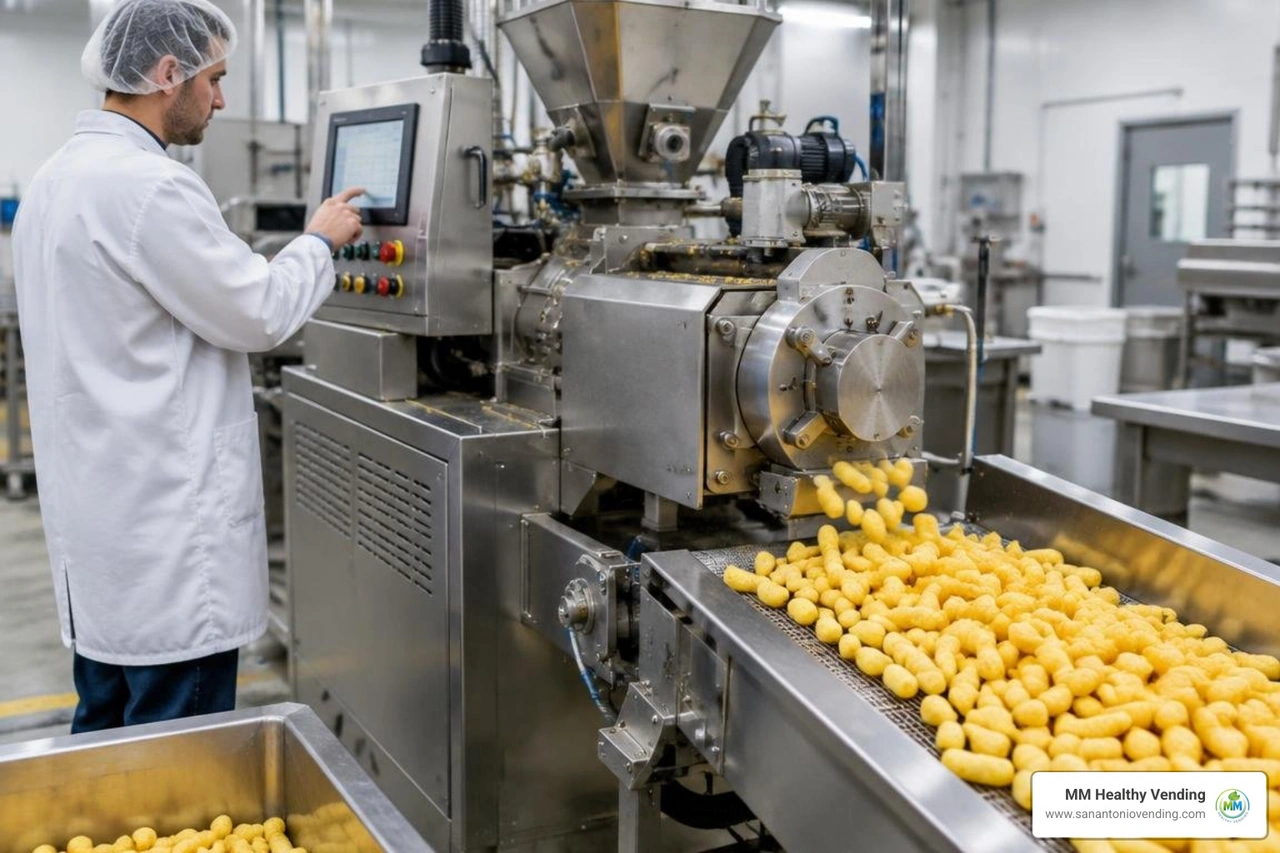
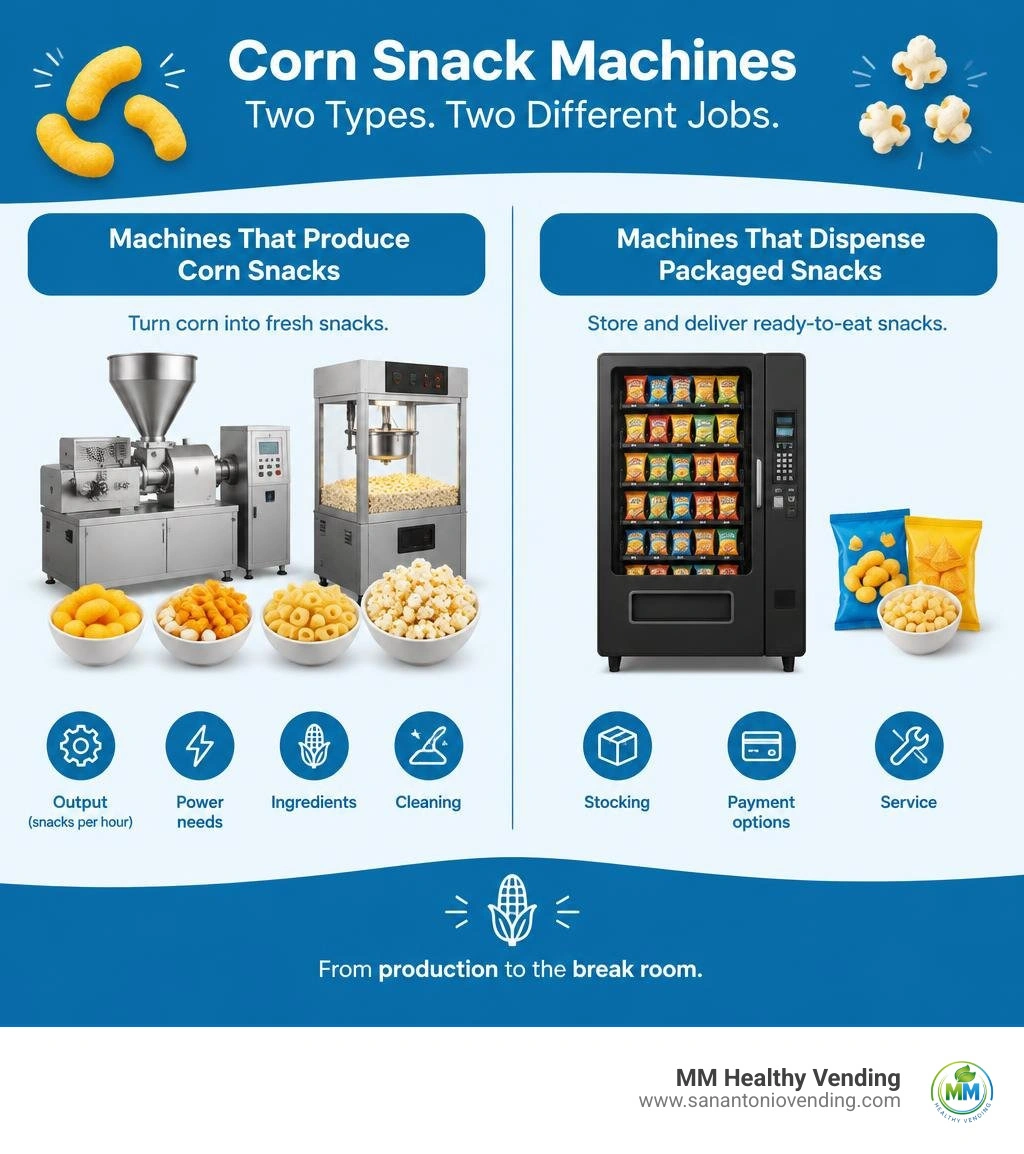
A corn snack machine either makes corn snacks or dispenses them. Extruders turn corn grits into puffs, twists, and tubes. Popcorn makers heat kernels with hot air or oil. Vending machines sell finished, packaged snacks; they do not cook them.
Start with the job you need done. If you plan to make snacks, compare output, power needs, ingredients, and cleaning. If you want to offer corn snacks at a San Antonio workplace, focus on stocking, payment options, and service instead of cooking capacity.
I'm Manuel Mojica, founder of MM Healthy Vending and Vending Circle. My experience with vending equipment and workplace snack service helps me explain where a corn snack machine fits in the path from production to the break room.
Simple corn snack machine glossary:
Understanding Each Type of Corn Snack Machine
Equipment in the snack industry falls into two distinct operational categories: manufacturing hardware and retail dispensing hardware. When evaluating equipment, it is essential to determine whether you need high-volume processing units to cook raw grains, on-demand concession poppers, or commercial delivery systems.
For outdoor venues and large-scale agricultural operations, specialized platforms like commercial roasting and popping equipment process whole ears or raw kernels in massive volumes. In contrast, facilities seeking to sell bagged treats directly to consumers rely on modern retail hardware, as detailed in our comprehensive snack vending machine guide 2026.
| Machine Category | Primary Function | Typical Power Requirement | Target Output / Capacity | Best Use Case |
|---|---|---|---|---|
| Industrial Food Extruder | High-pressure cooking & puffing | 4 kW to 85 kW (220V/380V) | 20 to 150+ kg/h | Commercial snack manufacturing plants |
| Hot-Air Popcorn Popper | Oil-free thermal grain popping | 310 W to 1,100 W (110V/220V) | 60 g per 2 minutes | Concession stands, home use, quick breaks |
| Commercial Snack Vending Unit | Automated inventory dispensing | 100 W to 400 W (110V standard) | 400 to 508+ packaged units | Break rooms, gyms, office corridors |
Industrial Extruder Corn Snack Machine Systems
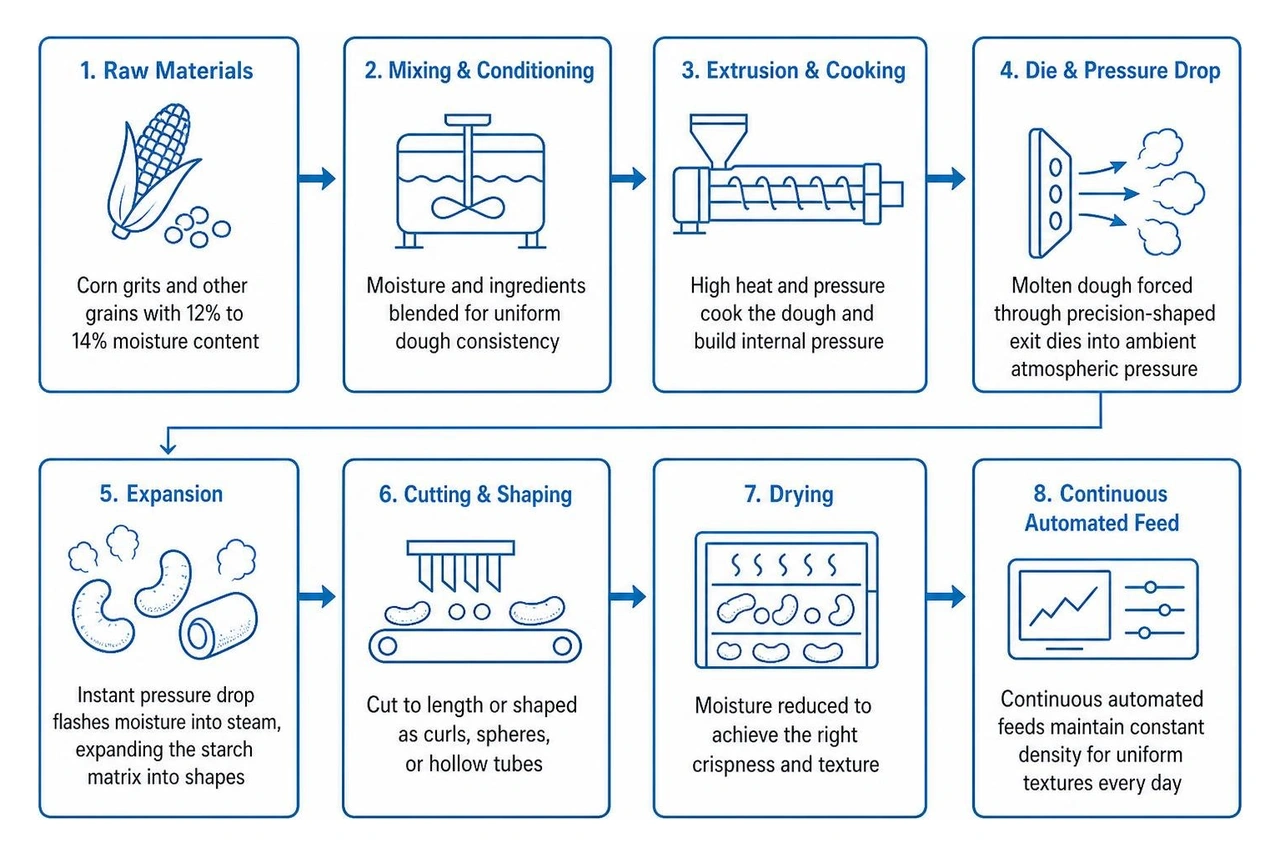
Industrial extrusion machinery transforms coarse corn meal into aerated, crispy snacks through thermomechanical shear. Inside the barrel, a heavy-duty screw rotates under intense friction. As raw corn grits pass through the chamber, mechanical energy converts into heat, superheating moisture within the grain starch without burning it.
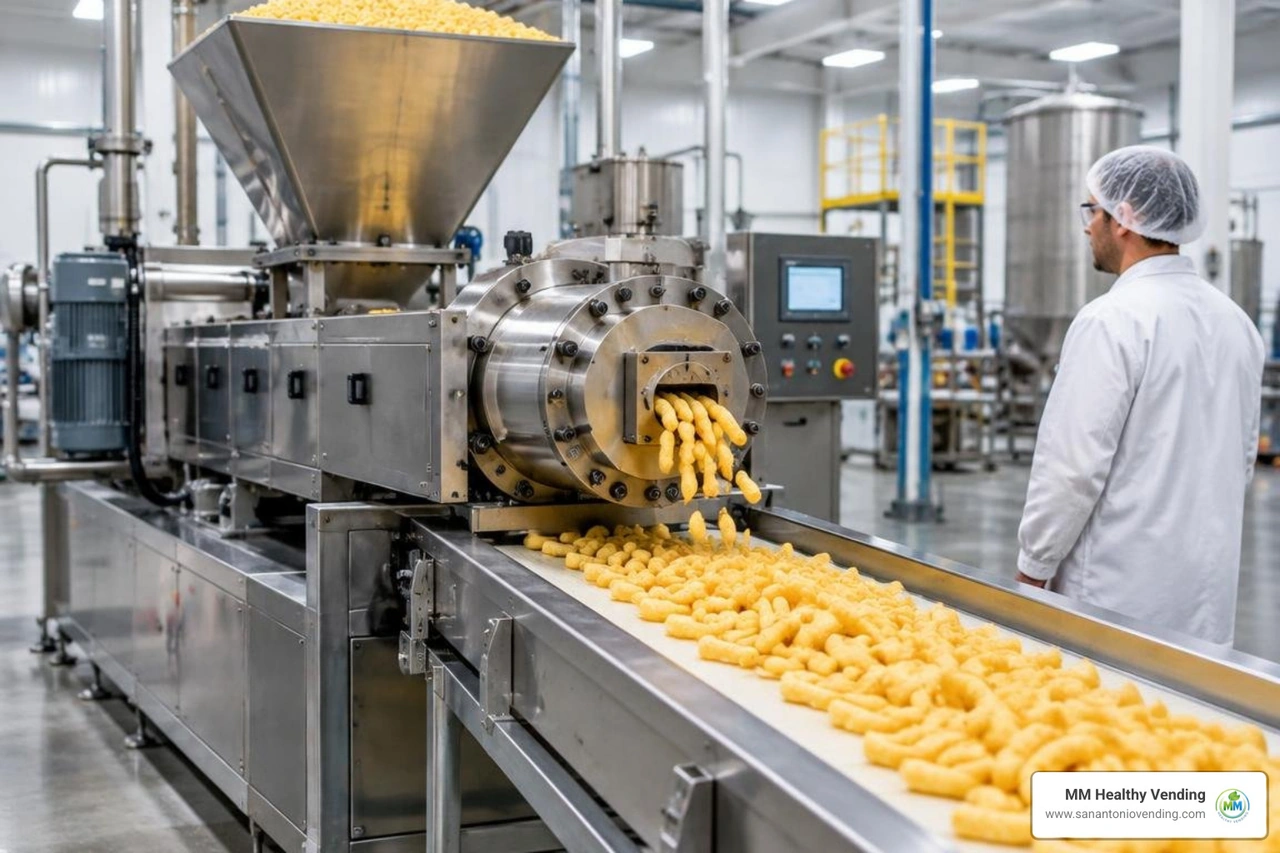
When the molten corn dough gets forced through precision-shaped exit dies, it encounters ambient atmospheric pressure. The instant pressure drop causes trapped moisture to flash into steam, expanding the starch matrix into puffed curls, spheres, or hollow tubes. High-end industrial extruders utilize continuous automated feeds to maintain constant density, creating uniform textures across thousands of pounds of product every single day.
Commercial Dispensing and Office Corn Snack Machine Options
Manufacturing snacks is only half the equation; getting them into the hands of hungry consumers requires reliable point-of-sale equipment. For companies looking to enhance employee perks, implementing dedicated snack machines for offices bridges the gap between commercial food packaging and on-demand breakroom refreshment.
Modern automated vending units eliminate the mess, odor, and safety risks of on-site cooking equipment. These systems incorporate multi-coil shelving, drop sensors to guarantee product delivery, and cashless payment interfaces compatible with credit cards, mobile wallets, and touchless apps. For organizations with dynamic traffic, integrating smart micro markets alongside traditional automated dispensers ensures a seamless supply of fresh corn crisps, baked puffs, and trail mixes around the clock.
Key Specifications: Capacity, Power, and Material Processing
Investing in manufacturing or dispensing equipment requires a close examination of physical specifications. Choosing an underpowered machine leads to motor burnout, while an oversized unit creates unnecessary utility overhead.
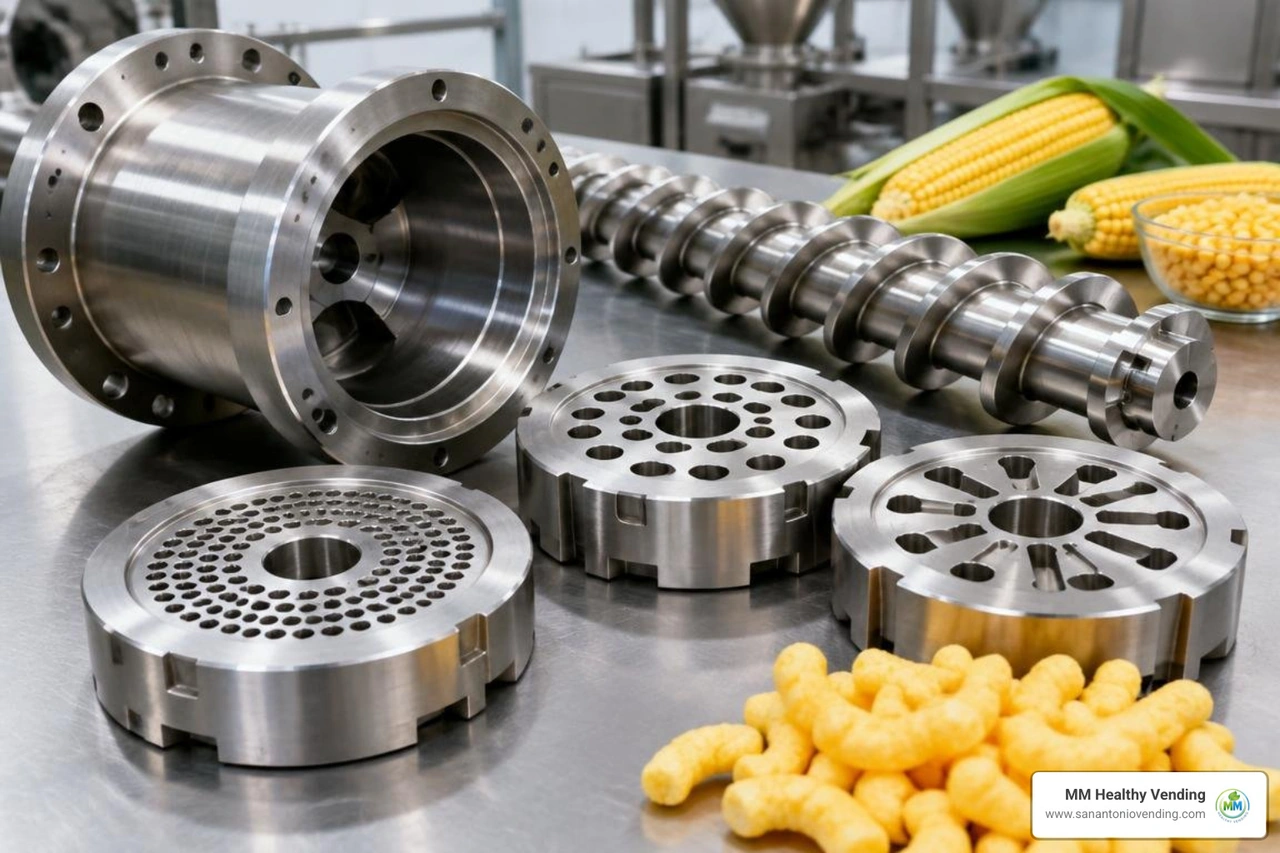
Commercial food processing machinery must be fabricated with 304 food-grade stainless steel across all contact surfaces. This material prevents corrosion from seasoning salts, withstands intensive wash-down cycles, and complies with strict food hygiene standards. High-grade stainless steel barrels and precision-machined alloy screws ensure uniform heat transfer, preventing uneven cooking or mechanical jamming during extended production runs.
Raw Material Compatibility and Extrusion Mechanics
The flexibility of an extrusion system depends entirely on the raw ingredients it can handle. While standard degermed yellow corn grits remain the industry benchmark, modern processing systems can blend multiple grains:
- Corn Grits: The standard base, requiring 12% to 14% moisture content for optimal expansion.
- Broken Rice Flour: Adds a light, melt-in-the-mouth crispness and smooth exterior finish.
- Wheat Flour & Semolina: Enhances structural rigidity for hollow shapes and filling-injected tubes.
- Soybean Meal & Legume Flours: Boosts protein content for health-focused snack brands.
Interchangeable shaping dies mounted at the barrel discharge determine the final visual profile. Operators can swap dies within minutes to switch production from classic round balls to star shapes, fluted sticks, or hollow tubes. For businesses sourcing bulk agricultural products, exploring specialized grain and corn vending systems provides valuable insights into grain handling and bulk distribution mechanics.
Power Consumption and Production Capacity
Power demands scale dramatically with throughput requirements. Understanding electrical requirements ensures your facility’s breaker panels can support the equipment without costly infrastructure overhauls.
- Entry-Level Benchtop Extruders: Weighing under 10 lbs with external 6 to 8 hp engine drives or small 1.5 kW motors, these compact units serve small market vendors producing low-volume novelty snacks.
- Mid-Tier Standalone Extruders: Models like the WM-HXX-40 utilize a 4 kW electric motor on 220V or 380V power, yielding steady outputs of 20 to 40 kg per hour (roughly 44 to 88 lbs/h).
- Automated Industrial Production Lines: Full-scale commercial lines require between 80 kW (for baked snack lines) and 85 kW (for fried snack lines) of installed electrical capacity, producing 100 to 150 kg per hour (220 to 330 lbs/h) of continuous product.
If your primary goal is workplace snack distribution rather than factory-scale processing, checking an up-to-date vending machine price guide 2026 helps balance retail hardware investment against ongoing operational returns.
Cooking Methods and Final Snack Formats
The physical texture, shelf life, and nutritional profile of a corn snack stem directly from its thermal cooking method. Different machines employ distinct physical principles to expand raw starch.
- High-Pressure Thermal Extrusion: Mechanical shear forces starch molecules to gelatinize instantly under heat and pressure. As the dough exits the die, steam flashes off, producing dense, crunchy curls (such as classic Cheetos-style snacks) or airy hollow tubes.
- Oil-Free Hot-Air Circulation: Appliances like the Ariete 2956 or Imaco PO120R utilize 1100W vertical hot-air convection. The swirling air heats moisture inside the kernel hull until it bursts, popping 60 grams of fresh popcorn in under two minutes without added fats.
- Continuous Baking Ovens: Extruded collets pass through multi-tier rotary dryers that bake out residual moisture, resulting in a low-fat, crispy texture that readily absorbs spray-applied seasonings.
- Continuous Deep Frying: Submerging extruded pieces into high-temperature cooking oil imparts a rich flavor profile and an extra-crunchy bite, though it requires dedicated oil filtration systems.
For break rooms focusing on employee wellness, providing air-popped corn and baked corn crisps supports smart snacking healthy vending options without sacrificing crunch or flavor satisfaction.
Choosing Between Standalone Units and Complete Production Lines
Deciding between a standalone extruder and an integrated, multi-stage production line comes down to labor availability, budget, and packaging logistics.
A single standalone extruder requires manual material loading, manual collection of puffed pieces, batch seasoning in standalone tumblers, and separate packaging equipment. While the initial capital outlay is lower, labor demands remain high.
An automated continuous production line links every stage through mechanical conveyors:
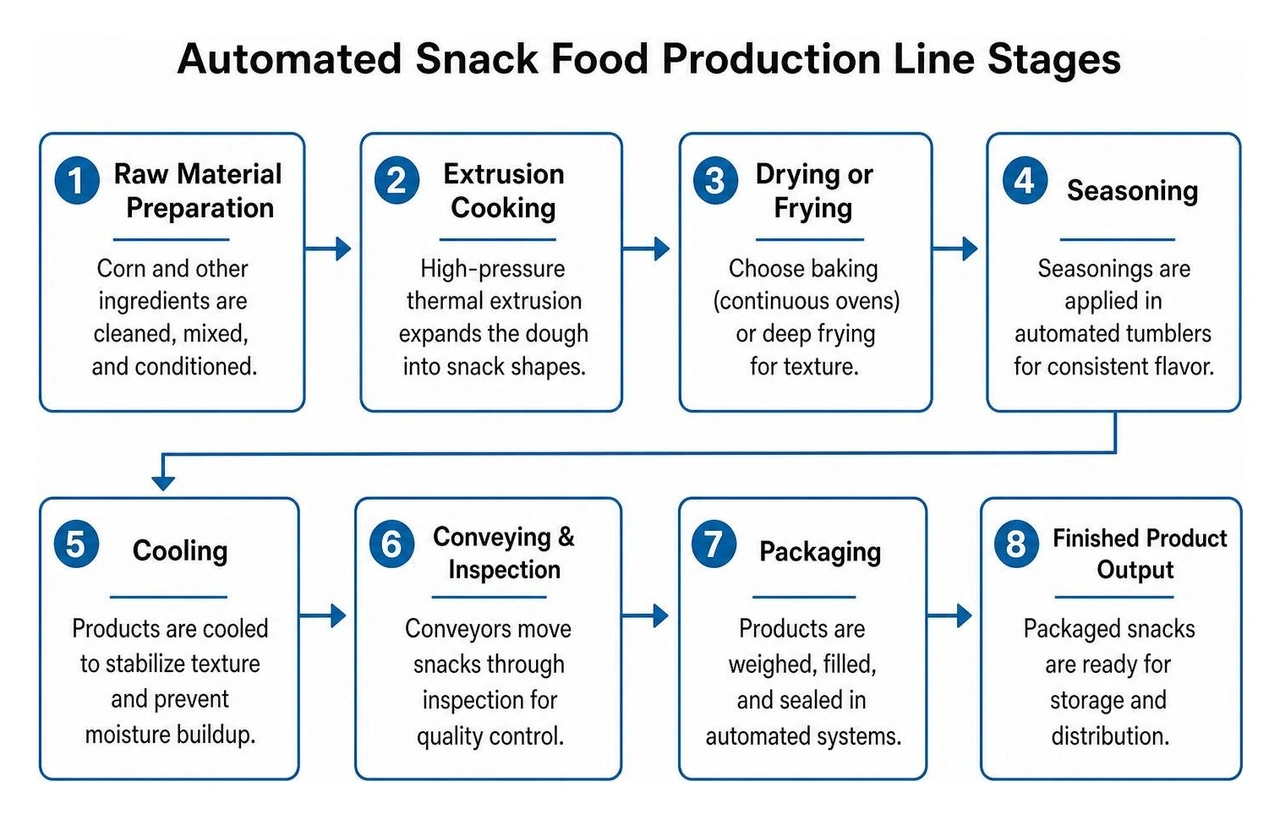
Integrating automated continuous lines drastically reduces labor overhead. A single skilled technician can monitor multiple automated lines, cutting production labor costs by over 30% while maintaining tight quality control over product density and flavor application. To explore how commercial business operations scale automated retail distribution, our business vending machines ultimate guide covers complete fleet planning strategies.
Investment Costs, Warranties, and Technical Support
Equipment costs vary widely across the supply chain depending on automation level, materials, and origin:
- Small-Scale / DIY Units: Compact extruders (such as basic benchtop units) start around $190 USD, serving hobbyists or micro-stall vendors.
- Mid-Tier Commercial Dispensers: Heavy-duty glass-front merchandising machines (like the AP 112 with 508-item capacity) retail around $2,200 USD, offering commercial reliability for years of daily transactions.
- Full Industrial Processing Lines: Commercial extrusion, drying, flavoring, and packaging lines range from $15,000 to over $80,000 USD depending on output capacity and customization.
When purchasing processing machinery, ensure the manufacturer provides at least a 1-to-2-year parts warranty, comprehensive spare parts kits, and factory engineer support for installation and operator training.
Frequently Asked Questions About Corn Snack Equipment
What power requirements are needed for commercial corn puff extruders?
Standalone commercial extruders typically require a 4 kW motor operating on either 220V single-phase or 380V three-phase electrical power. Full industrial production lines featuring automated mixers, screw feeders, continuous baking ovens, and flavoring drums demand 80 kW to 85 kW of total installed power. Always verify your facility’s available amperage and voltage before finalizing equipment orders.
Can a corn snack extruder process other grains like rice and wheat?
Yes. Most modern food extruders handle multi-grain formulations. Broken rice grits, wheat flour, rye, and defatted soybean meal can be blended with corn meal. Operating parameters—specifically feed speed, cutter speed, and raw material moisture content (ideally 12% to 14%)—must be calibrated to match the gelatinization temperature and starch density of the selected grain blend.
How does hot-air popping differ from high-pressure extrusion?
Hot-air poppers (typically operating at 310W to 1100W) use forced convection to heat whole corn kernels until internal steam bursts the outer hull. This process produces whole-grain popped corn without mechanical destruction of the kernel. High-pressure extrusion grinds raw grits into a molten dough under mechanical shear before forcing it through shaping dies, allowing manufacturers to create complex geometry like twists, rings, balls, and hollow tubes.
Conclusion
Whether you are designing a high-capacity snack manufacturing line or looking for a hassle-free way to supply delicious corn snacks to your staff, selecting the right machine comes down to your primary operational goal. Manufacturing requires managing high-voltage power, raw grain sourcing, sanitation protocols, and complex packaging machinery.
If your goal is providing fresh, high-quality snacks to your team in San Antonio, New Braunfels, Boerne, Schertz, Seguin, Helotes, or Alamo Heights without the overhead of purchasing and servicing hardware, MM Healthy Vending is here to help. We provide modern vending machines, micro markets, and smart coolers with zero equipment costs, zero maintenance fees, and guaranteed 2-hour local support. Discover how easy workplace refreshments can be by exploring our complete workplace refreshment and snack services today.
You might also like...
More articles like the one you've read to keep you up-to-date on all things vending in San Antonio


Why San Antonio businesses choose us
Premium service, local expertise, cutting-edge technology
AI-powered smart coolers
Advanced computer vision technology for seamless, cashless transactions. Just grab what you need and go.
cashless
24/7 service
Round-the-clock support with an average 2-hour response time for any issues.
Local & trusted
Family-owned business proudly serving San Antonio since 2024
Ready to upgrade your breakroom?
Join hundreds of San Antonio businesses enjoying free, premium vending soutions