
Why Smart Business Vending Machines Are Taking Over Modern Breakrooms
Discover why smart business vending machines are transforming breakrooms with cashless tech, healthy snacks, and strong ROI for modern workplaces.
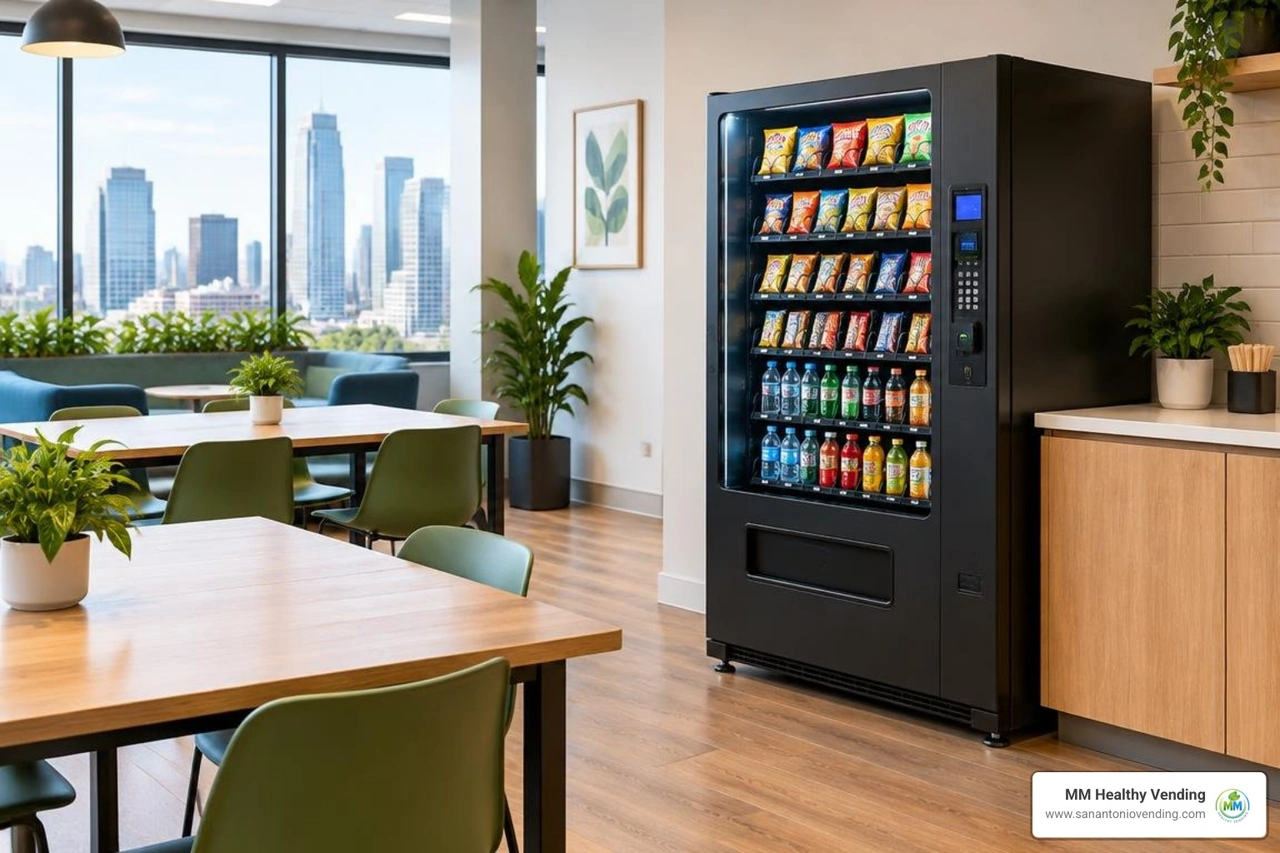
Why Smart Business Vending Machines Fit Modern Breakrooms
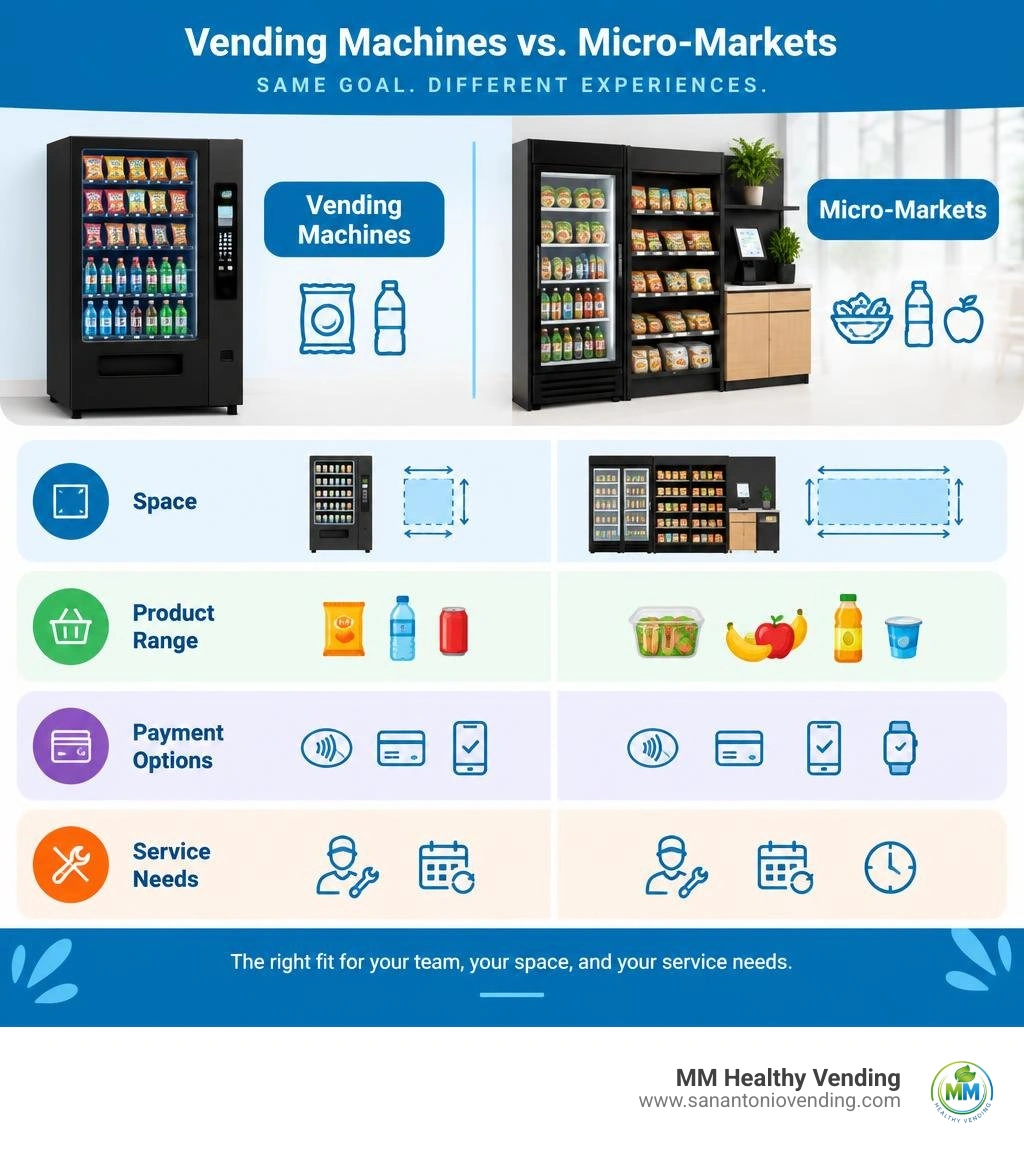
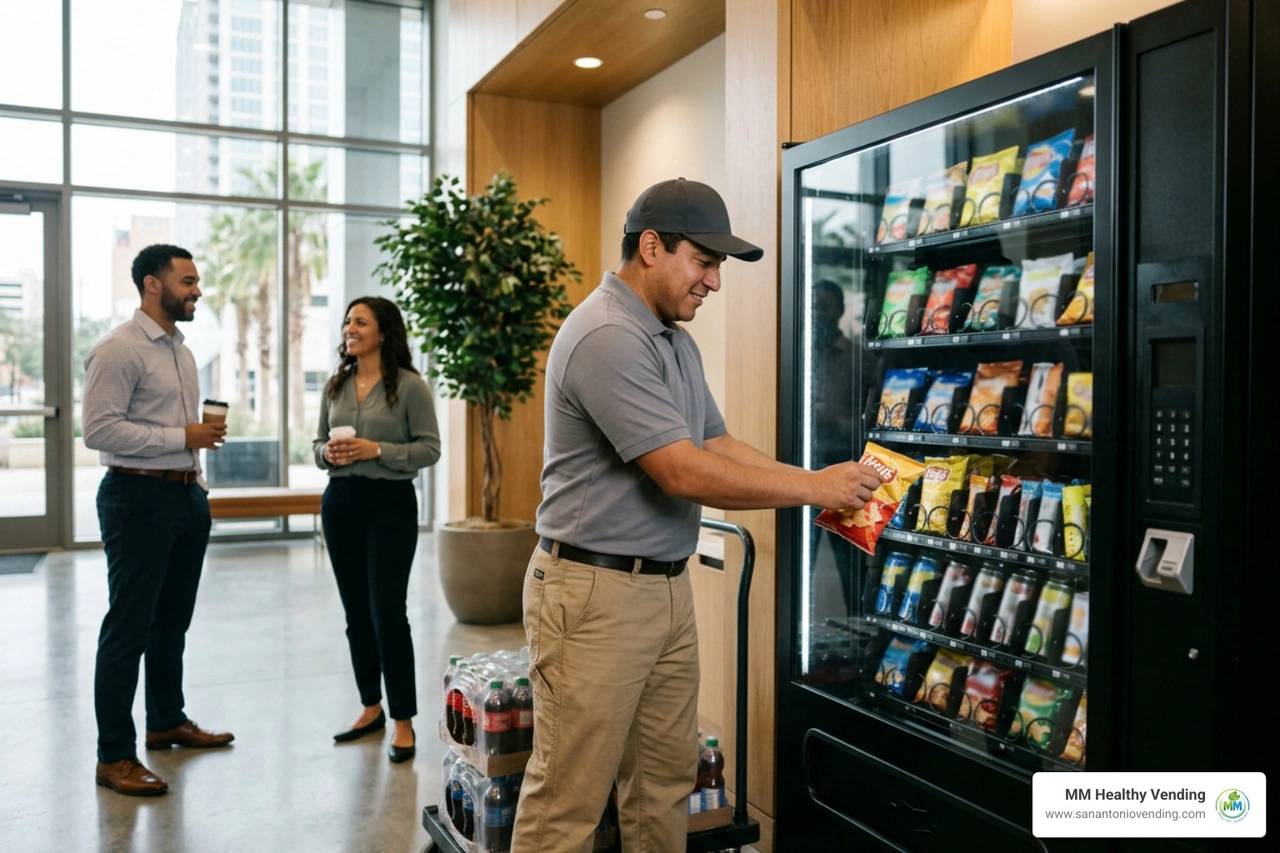
The best business vending machines for a breakroom are the ones that fit your staff, space, and service needs. Compare snack-and-drink machines, refrigerated units, and micro-markets by product choice, cashless payment options, restocking frequency, and response time when something breaks. If you want a low-effort setup, ask whether a local operator will provide and manage the equipment at no cost to your business, and get the terms in writing.
Smart machines can help operators spot low stock before shelves go empty. But for your team, reliable service matters as much as the technology.
I'm Manuel Mojica, and I've built and managed a seven-figure automated retail operation with business vending machines across multiple markets. This guide draws on that work to help you choose a breakroom setup that will serve your staff well.
Business vending machines helpful reading:
Evolution of Breakroom Technology: Modern Business Vending Machines
Workplace breakrooms have transformed dramatically over the past decade. The global automated retail sector reached approximately $25.4 billion in 2023 and is on track to hit $44.8 billion by 2032, expanding at a steady compound annual growth rate of 6.5%. Across the United States alone, more than 4.5 million commercial units generate upwards of $25 billion in annual retail sales.
Gone are the days when breakroom amenities meant an unreliable metal box that jammed on a bag of pretzels or swallowed dollar bills. Today's commercial properties demand sophisticated automated micro-markets, energy-efficient refrigeration, and interactive self-service vending machines that mirror the convenience of modern e-commerce.

Modern hardware integrates touchless interfaces, dynamic displays, and low-draw LED lighting that cuts energy consumption by up to 40% compared to legacy machines. For facilities across San Antonio, New Braunfels, and Schertz, upgrading breakroom hardware isn't just about aesthetics—it creates a frictionless employee amenity that boosts daily workplace morale.
| Feature / Criteria | Traditional Vending Units | Smart Interactive Machines |
|---|---|---|
| Payment Options | Cash and coin only | NFC, Apple Pay, Google Wallet, Credit/Debit, Cash |
| Inventory Monitoring | Manual visual inspection on-site | Real-time cellular telemetry and cloud tracking |
| Product Capacity | Limited standard snack/soda sizes | High-capacity, multi-temperature, diverse SKUs |
| User Interface | Mechanical push buttons | Touchscreens with nutritional menus |
| Energy Consumption | Standard continuous refrigeration | Energy Star certified with eco-mode timing |
| Issue Resolution | Relies on customer complaints | Automated remote alerts for errors/restocks |
Smart Features: Cashless Payments and Real-Time Telemetry
The integration of tap-to-pay functionality represents one of the largest leaps forward in breakroom retail. Adding mobile wallet support and NFC payments to modern snack and drink machines increases gross sales by 15% to 30% compared to cash-only setups. Employees rarely carry paper bills today, and contactless transactions remove friction from impulse purchases.
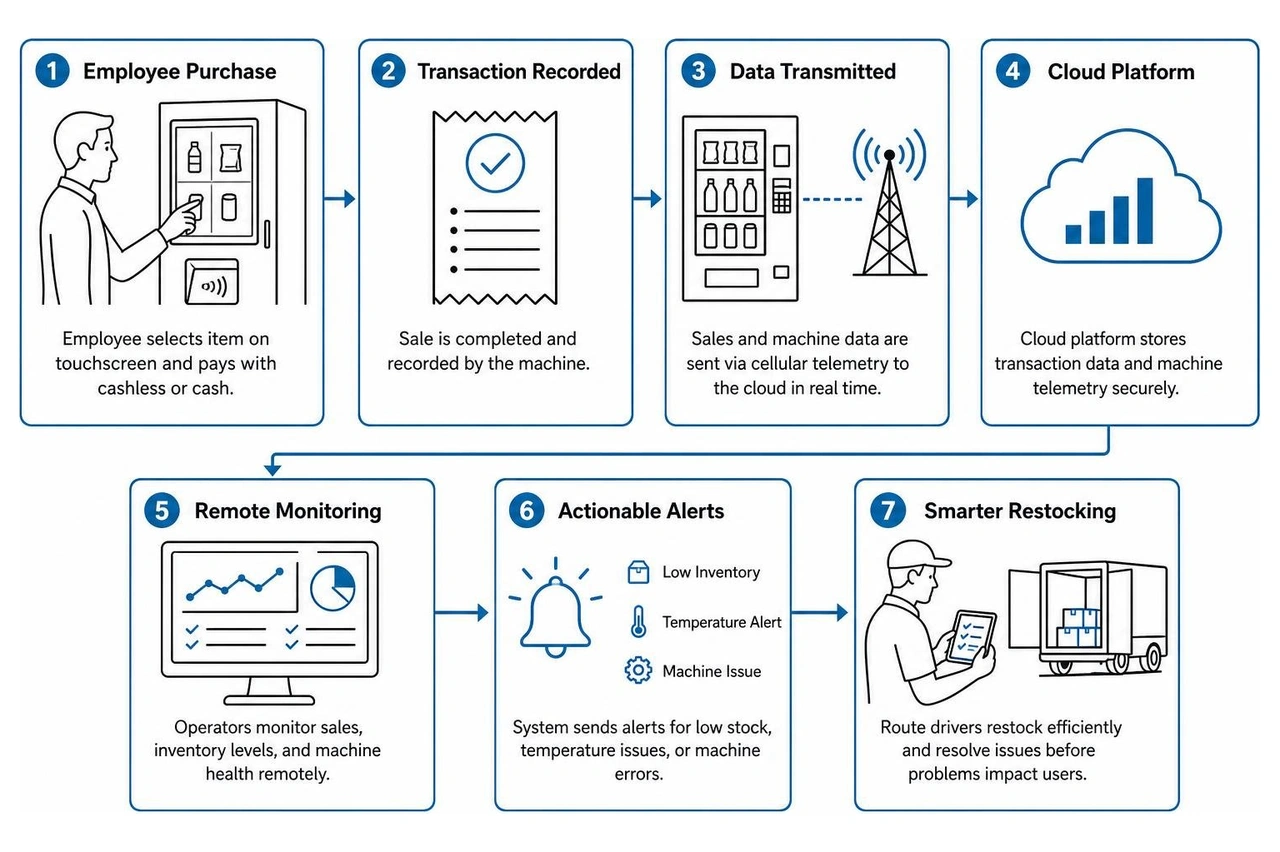
Behind the front glass, real-time telemetry hardware transmits sales data directly to operators via cellular networks. This cloud connectivity allows route drivers to know exactly which items are running low before dispatching a truck. Remote diagnostics also monitor internal compressor temperatures, bill validators, and coin mechs, preventing unexpected downtime and spoiled inventory.
Healthy Snack and Beverage Options for Modern Workplaces
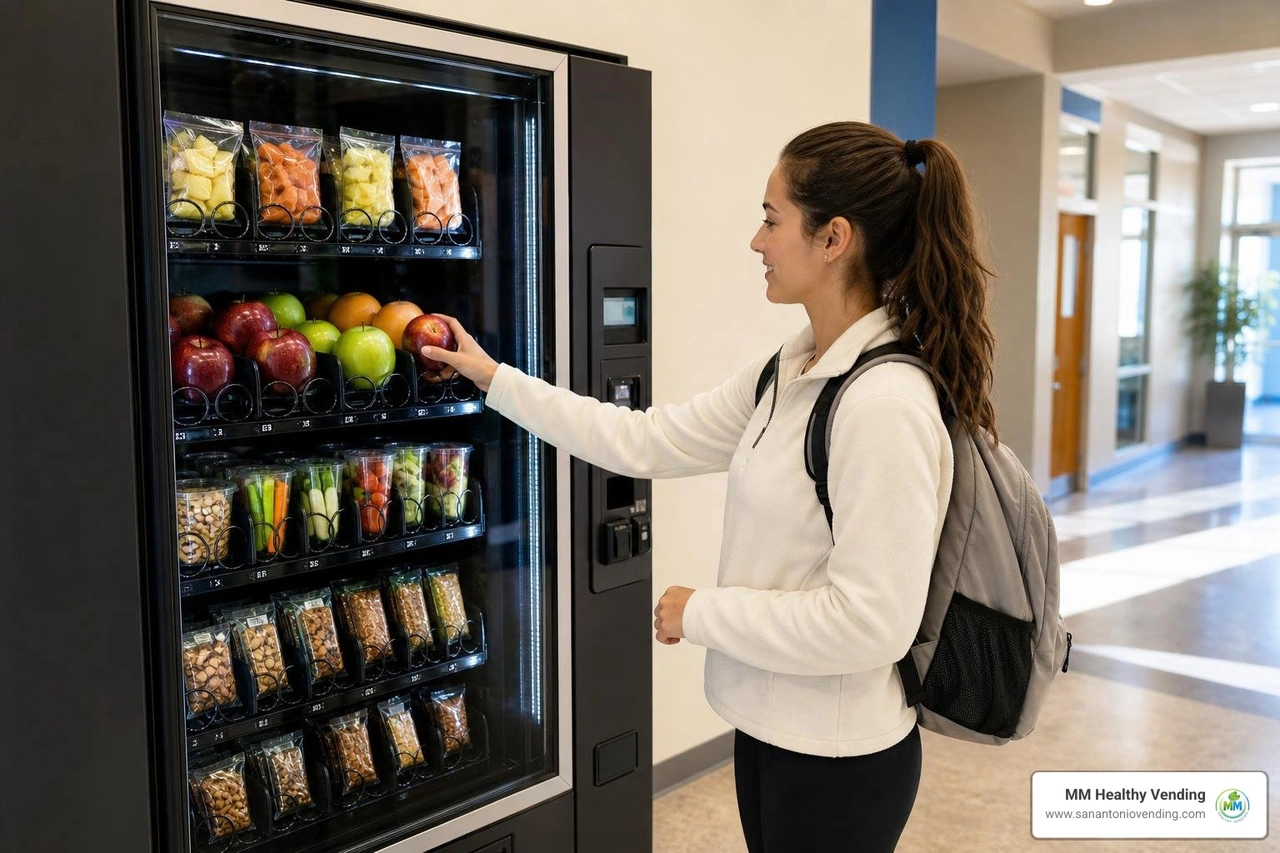
Employee wellness programs have shifted from optional perks to core workplace retention strategies. Healthier snack options have experienced a consistent 20% year-over-year surge in consumer demand, with roughly 40% of corporate employees actively seeking nutritious breakroom selections.
Implementing contemporary corporate vending solutions allows facilities in Boerne and Alamo Heights to balance classic favorites with:
- Cold brew coffees and zero-sugar sparkling waters
- High-protein bars, raw nut medleys, and seed mixes
- Low-sodium, baked, and gluten-free snack alternatives
- Clear nutritional labeling right on the digital display
Providing balanced choices helps keep teams energized without the mid-afternoon sugar crashes common with older, candy-heavy machine setups.
Financial Economics, Revenue Models, and Startup Overhead
Understanding the financial mechanics of automated retail helps facility managers and business owners evaluate service contracts and self-operating models. Our comprehensive best vending machines ultimate guide for 2026 outlines how equipment selection, wholesale sourcing, and local logistical efficiency dictate bottom-line performance.
Cost and Profit Potential of Business Vending Machines
On average, a standard commercial unit generates between $75 and $100 per week in gross revenue, while high-traffic locations—such as bustling distribution hubs in Southside TX or corporate centers in Helotes—routinely earn $300 or more weekly.
The net profit margins for well-managed locations typically range between 10% and 25%, with optimized routes and premium product selections yielding profit margins as high as 40%. While setting up traditional vending routes requires upfront capital, partner-managed programs eliminate capital expense entirely for host employers.
Expense Breakdown and Operational Overhead
Running commercial refreshment hardware involves ongoing operating expenses that must be balanced against retail revenue:
- Hardware Amortization & Depreciation: Commercial-grade refrigerated machines require consistent preventative maintenance to preserve their multi-year operational lifespan.
- Merchant Processing Fees: Cashless debit and credit transactions incur interchange fees, typically ranging from 3.5% to 5.5% per vend.
- Wholesale Sourcing: Product costs generally average 45% to 55% of the retail selling price.
- Route Logistics and Labor: Fuel, vehicle upkeep, and labor for stocking and cleaning are primary overhead costs.
- Shrinkage and Spoilage: Fresh foods and dairy require tighter inventory turns to keep waste below 3%.
Location Strategy, Regulatory Compliance, and Merchandising
A machine's success depends almost entirely on its immediate physical environment. Placing hardware in an isolated hallway guarantees poor sales, whereas positioning it in central gathering zones maximizes daily transactions. Reviewing our office vending machines guide for 2026 provides actionable layouts for breakroom floor plans.
Strategic Placement Factors for Business Vending Machines
When evaluating installation sites, several physical and demographic factors dictate performance:
- Daily Foot Traffic and Headcount: Facilities with at least 50 to 100 on-site employees generate the steady foot traffic needed for daily product turns.
- Shift Structure: Operations running 24/7 or multi-shift manufacturing schedules see significantly higher late-night and early-morning sales.
- Local Hiring Trends: Expanding administrative teams, such as local clerical assistant jobs in Helotes, TX, increase breakroom demand as office occupancy rises.
- Proximity to Competing Outlets: If your team must walk 15 minutes to find food, on-site automated retail becomes an essential time-saver.
- Infrastructure Access: Dedicated 110V electrical outlets on independent circuits ensure stable cooling without tripping breakers.
For regional business leaders evaluating these factors, our vending service San Antonio guide details optimal breakroom setups across Central and South Texas workplaces.
Legal Compliance, Permits, and Commercial Contracts
Deploying unattended retail equipment requires strict adherence to commercial standards and local regulations. Operators and host properties must verify:
- State Sales Tax Permits: Registering with the Texas Comptroller for appropriate collection and remittance of state sales tax on taxable food and beverage items.
- Health Department Compliance: Maintaining strict temperature lockouts on refrigerated fresh food units to prevent sales if internal temperatures exceed safety thresholds.
- ADA Accessibility Standards: Ensuring interactive screens, bill acceptors, and product delivery chutes meet height and reach guidelines under the Americans with Disabilities Act.
- Formal Service Contracts: Transparent placement agreements outlining liability, service response windows, and scheduled restocks, aligning with industry standards seen in formal commercial procurement guidelines.
Product Curation and Dynamic Pricing Optimization
A successful merchandising strategy requires continuous SKU rotation. Stocking the wrong products leads to expired items, while stocking out of top-sellers loses revenue. High-performing automated retail relies on consistent vending machine service to swap slow-moving SKUs for trending items based on real sales telemetry data.
Pricing must reflect wholesale cost shifts while remaining competitive with nearby convenience stores. Premium specialty drinks—like functional energy beverages and iced coffees—command higher margins, subsidizing competitive price points on everyday essentials like bottled water.
Frequently Asked Questions About Commercial Vending
What is the average weekly revenue generated by an office vending machine?
A typical commercial breakroom unit earns between $75 and $100 per week. High-volume locations with 100+ active employees or continuous shift operations regularly generate $300 or more in weekly gross sales.
How do cashless payment systems impact vending machine sales?
Installing cashless and contactless payment hardware increases overall vending sales by 15% to 30%. Digital payment methods reduce purchase barriers, encourage multi-item shopping, and accommodate the majority of consumers who no longer carry paper currency.
What legal permits are required to operate commercial vending machines?
Operators in Texas require a state sales tax permit, appropriate local municipal business registrations, and county health permits for perishable goods. Machines must also comply with ADA reach-height regulations and food-safety temperature lockouts.
Conclusion
Upgrading your workplace breakroom with smart, unattended refreshment systems enhances daily employee convenience and keeps your team fueled on-site. At MM Healthy Vending, we provide completely free, zero-cost machines, micro-markets, and smart AI coolers for businesses across San Antonio, New Braunfels, Boerne, Schertz, Seguin, Alamo Heights, and Helotes.
We take care of everything—from equipment delivery and installation to dynamic restocking and fast 2-hour local support. Discover how easy modern breakroom refreshments can be with our full-service business vending programs.
You might also like...
More articles like the one you've read to keep you up-to-date on all things vending in San Antonio

Why San Antonio businesses choose us
Premium service, local expertise, cutting-edge technology
AI-powered smart coolers
Advanced computer vision technology for seamless, cashless transactions. Just grab what you need and go.
cashless
24/7 service
Round-the-clock support with an average 2-hour response time for any issues.
Local & trusted
Family-owned business proudly serving San Antonio since 2024
Ready to upgrade your breakroom?
Join hundreds of San Antonio businesses enjoying free, premium vending soutions