
Boosting Employee Well-being: Effective Solutions
To effectively boost employee well-being, companies need to move beyond superficial office perks and focus on structural, day-to-day support.

To effectively boost employee well-being, companies need to move beyond superficial office perks and focus on structural, day-to-day support. True well-being is achieved by providing genuine autonomy, manageable workloads, flexible schedules, and reliable health resources. It comes down to how work is organized and the conditions under which people are expected to perform.
When you strip away the gimmicks, employee well-being is heavily tied to reducing unnecessary friction and treating people like capable adults. A healthy work environment prevents chronic stress rather than occasionally applying a bandage to it.
Here is a practical breakdown of how organizations can implement systemic changes that actually improve the daily lives of their employees.
For a long time, companies tried to solve workplace stress by adding leisure activities to the office environment. Those methods rarely address the root causes of employee dissatisfaction, anxiety, or burnout.
The Problem with Superficial Perks
Ping-pong tables, free beer on Fridays, and forced team-building exercises are often categorized as well-being initiatives. In reality, these are just perks. While nice to have, they do not alleviate the pressure of an impending deadline or a toxic dynamic with a manager.
Employees often view forced social activities as an unspoken extension of their working hours. If someone is already overwhelmed by their workload, mandatory fun simply takes away the time they need to get their work done or go home to rest. Addressing well-being requires focusing on the actual mechanics of the job.
Building Psychological Safety
Psychological safety is the ability to easily speak up, admit mistakes, or pitch new ideas without fear of punishment or humiliation. It is a fundamental pillar of workplace well-being. If people spend their days worrying about being reprimanded for minor errors, their baseline stress levels will remain high.
Leaders build psychological safety by responding constructively when things go wrong. Instead of hunting for a culprit to blame, managers should focus on adjusting the process that allowed the mistake to happen. When employees know they are permitted to be human, their daily anxiety drops significantly.
Acknowledging Financial Well-being
You cannot talk about physical or mental well-being without addressing financial stability. Financial stress is one of the most significant burdens a person can carry.
While budgets are always a constraint, paying a living wage and offering transparent progression paths is a baseline requirement. If employees are constantly worried about making rent or paying for basic groceries, no amount of meditation apps or wellness seminars will improve their overall well-being.
Designing Practical Flexibility and Autonomy
A lack of control over one's schedule is a primary driver of workplace misery. Giving people autonomy over how, when, and where they do their work automatically improves their quality of life.
Implementing Core Working Hours
Strict nine-to-five schedules do not fit the reality of varying energy levels, caregiving responsibilities, or long commutes. A practical alternative is establishing "core hours."
Core hours are a set window—for instance, 10:00 AM to 2:00 PM—when everyone is expected to be online and available for meetings or collaborative work. Outside of that window, employees have the freedom to structure their schedules as they see fit. This allows a working parent to pick up kids from school or an early riser to finish their hardest tasks before the sun comes up.
Trust-Based Management in Practice
Flexibility only works if it is built on trust. Monitoring employee keystrokes or requiring them to keep their webcams on all day signals a deep lack of trust. This sort of surveillance causes immediate distress and resentment.
Managers need to evaluate performance based on outputs and results, rather than the amount of time someone is visibly sitting at a desk. If an employee consistently delivers quality work on time, the exact hours they spend at their computer shouldn't matter.
Promoting Asynchronous Communication
The expectation of immediate replies keeps everyone in a state of high alert. Transitioning to asynchronous communication helps alleviate this constant pressure.
Asynchronous work means you provide colleagues with the information they need without expecting an immediate response. This allows people to turn off notifications, focus deeply on complex tasks, and reply during scheduled communication windows. It drastically reduces the daily friction of constant interruptions.
Optimizing Physical and Digital Work Environments
The tools and environments a company provides directly impact an employee's physical health and mental bandwidth. Whether a team is remote, hybrid, or entirely in-office, the workspace matters.
Financing Proper Home Office Ergonomics
If you employ remote or hybrid workers, their home workspace is your company's workspace. Working from a kitchen stool or a poorly designed sofa causes chronic back, neck, and wrist pain over time.
Providing a reliable home-office stipend allows employees to purchase suitable ergonomic chairs, external monitors, and proper desks. It is a relatively low-cost investment that prevents physical injuries and minimizes the distraction of working in physical discomfort.
Reducing Digital Clutter and App Fatigue
Modern companies often suffer from software bloat. Information is scattered across emails, chat apps, project management tools, and shared drives. This forces employees to constantly switch contexts, which drains cognitive energy.
To improve digital well-being, companies should audit and streamline their tech stacks. Establish clear guidelines on what each tool is used for. Standardizing where files live and how requests are submitted stops employees from spending an hour a day just searching for basic information.
Establishing Communication Boundaries
It is highly practical to set rules around internal communication. For instance, define what constitutes an actual emergency that requires a phone call or a text message. Everything else can go into an email or a project management board.
When expectations are clear, people do not feel obligated to check their group chat every five minutes out of fear of missing something crucial. Clear boundaries keep work inside work limits.
Managing Workloads to Prevent Burnout Systemically
Burnout is rarely a failure of personal resilience. It is almost always the result of prolonged exposure to an unmanageable workload. Management must take an active role in balancing resources.
Realistic Capacity Planning
Businesses frequently plan projects assuming that every employee will be working at 100% capacity all the time. This leaves absolutely no buffer for sick days, technological failures, or unexpected delays.
Effective organizations plan for 80% capacity. This ensures that routine operations run smoothly, and when a crisis invariably happens, the team has the bandwidth to handle it without working late into the night. It also stops the common practice of constantly "rewarding" top performers with more work until they eventually break.
Normalizing the Right to Disconnect
With email easily accessible on smart phones, work easily bleeds into evenings and weekends. Companies need to respect the right to disconnect.
Leaders must model this behavior. If a manager decides to catch up on emails on a Sunday afternoon, they should use the "schedule send" feature so the message does not arrive until Monday morning. Employees will always feel subtle pressure to reply to the boss, regardless of whether the boss explicitly asks for a weekend response.
Enforcing Actual Time Off
Taking a vacation should mean completely disconnecting from work. Yet, many employees end up checking emails from the beach because they are worried about falling behind.
Companies should enforce a strict "no contact" rule for people on paid time off. Handover documents should be standardized so that other team members can easily pick up the slack. If an employee comes back from a week off to an overflowing inbox and a backlog of urgent tasks, the restorative benefit of the vacation is instantly destroyed.
Upgrading Mental and Physical Health Resources
Health benefits should be easy to use, highly accessible, and relevant to the diverse needs of the workforce. When intervention is needed, the friction to get help should be virtually zero.
Modernizing Employee Assistance Programs (EAPs)
Many companies offer EAPs, but usage rates are historically low. Usually, this is because the systems are outdated, require too many phone calls to set up, or the directory of available therapists is severely limited.
Employers should audit their EAPs to ensure they actually serve a modern workforce. Can an employee book a counseling session online in under five minutes? Are virtual sessions available? If the barrier to entry is high, employees simply will not use the service when they are in distress.
Flexible Wellness Stipends
Instead of buying a bulk corporate gym membership that only a fraction of the staff will use, offer flexible wellness stipends. Well-being means different things to different people.
A flexible stipend allows an employee to choose what actually improves their health. One person might use it for a standard gym membership, while another spends it on yoga classes, meal delivery services for healthier dinners, or regular physical therapy. This respects individual needs and guarantees a higher utilization rate.
Comprehensive Preventative Care
Robust health insurance that covers preventative care is central to practical well-being. Employees should not avoid doctor's visits because of high deductibles or complex copay structures.
Offer plans with strong coverage for regular checkups, dental cleanings, and vision tests. In addition, allow employees the time during the workday to actually attend these appointments without forcing them to use formal vacation hours.
Sustaining Well-being Through Real Feedback Loops
A healthy workplace requires ongoing maintenance. Needs change, new stressors emerge, and well-intentioned policies sometimes fail in practice. Regular communication ensures the company stays aligned with employee reality.
Repurposing the One-on-One Meeting
Most one-on-ones between managers and direct reports devolve into simple status updates. Status updates can easily be handled asynchronously through a quick message or email.
Instead, the one-on-one should be a dedicated space to discuss workload, roadblocks, and career development. Managers should be explicitly asking, "Is your workload manageable right now?" and "What processes are constantly getting in your way?" This shifts the focus from just checking tasks off a list to actively clearing paths for the employee.
Creating Actionable Feedback Channels
Anonymous surveys can be incredibly useful to gauge the temperature of a company, provided they are short and focused. However, asking for feedback without acting on it does more harm than good.
If employees consistently mention in a quarterly survey that meetings are too long and disruptive, leadership needs to institute newly enforced meeting guidelines. When staff see that their complaints result in tangible changes, trust in leadership grows, which lowers organizational stress.
Training Managers to Handle Well-being Concerns
Often, well-being initiatives fail because middle managers don't know how to execute them. A manager might be great at writing code or balancing budgets, but entirely unequipped to navigate a conversation with a burned-out employee.
Organizations must train managers on the basic signs of burnout and cognitive overload. Managers don't need to be therapists, but they do need to know how to listen effectively, how to adjust workloads temporarily, and exactly how to discreetly refer an employee to the company's internal health resources. Giving managers these tools ensures that well-being strategies work on the ground level, day in and day out.
You might also like...
More articles like the one you've read to keep you up-to-date on all things vending in San Antonio


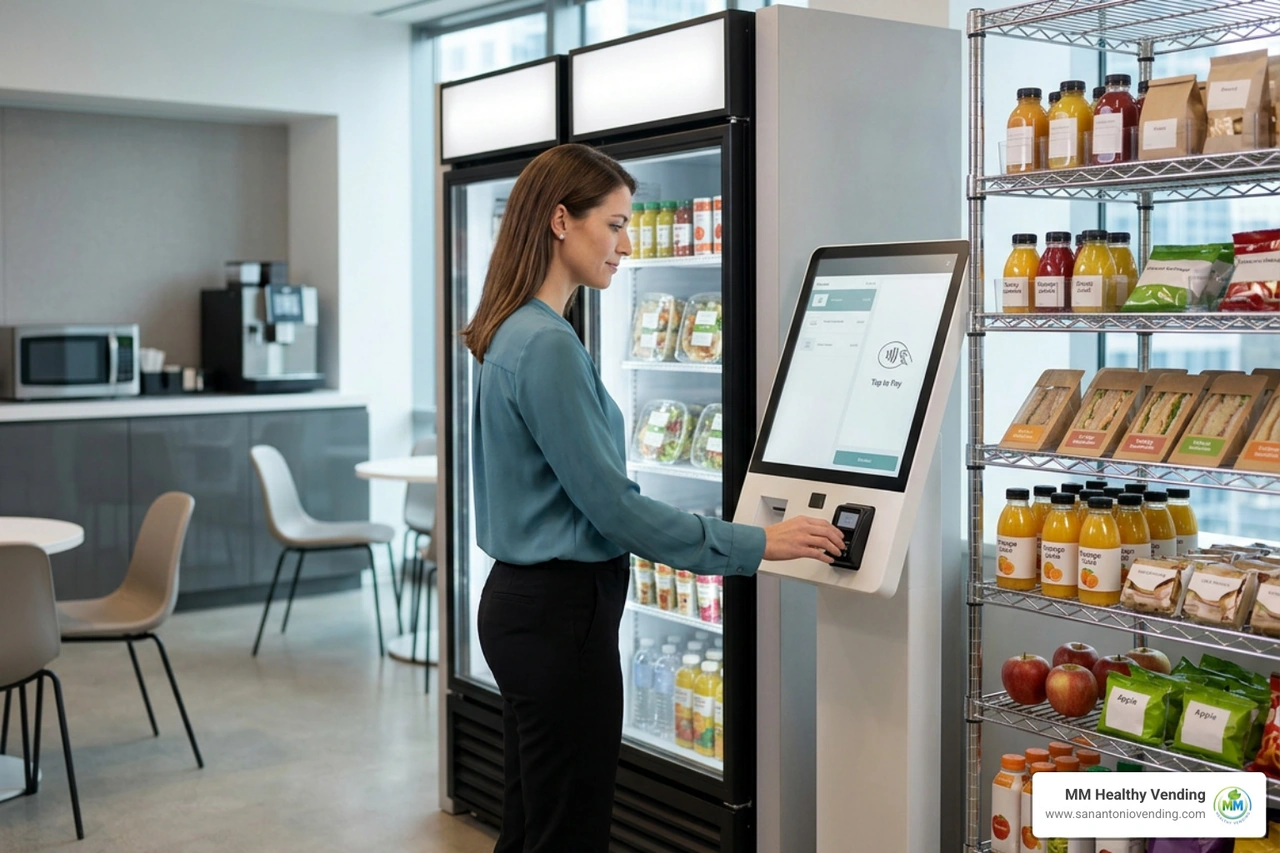
Why San Antonio businesses choose us
Premium service, local expertise, cutting-edge technology
AI-powered smart coolers
Advanced computer vision technology for seamless, cashless transactions. Just grab what you need and go.
cashless
24/7 service
Round-the-clock support with an average 2-hour response time for any issues.
Local & trusted
Family-owned business proudly serving San Antonio since 2024
Ready to upgrade your breakroom?
Join hundreds of San Antonio businesses enjoying free, premium vending soutions