
Sip into High Margins by Finding the Perfect Frozen Drink Machine Supplier
Find the perfect frozen drink machine supplier to boost your beverage margins with our guide on equipment, costs, and service.
Choose a Frozen Drink Machine Supplier That Can Support Your Sales
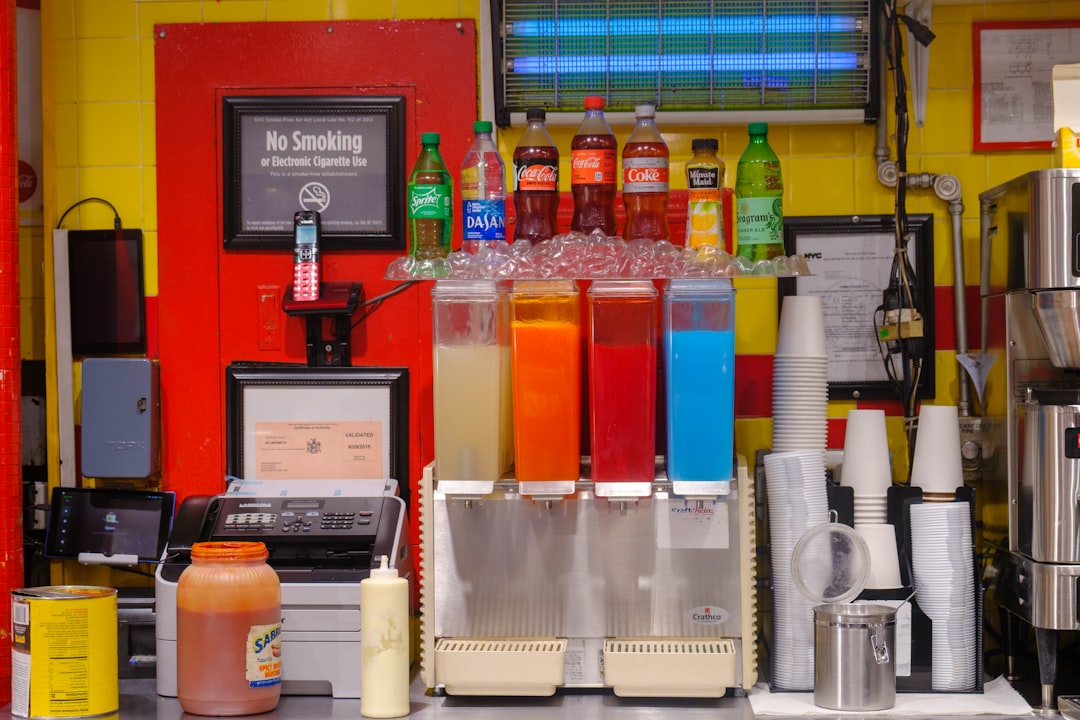
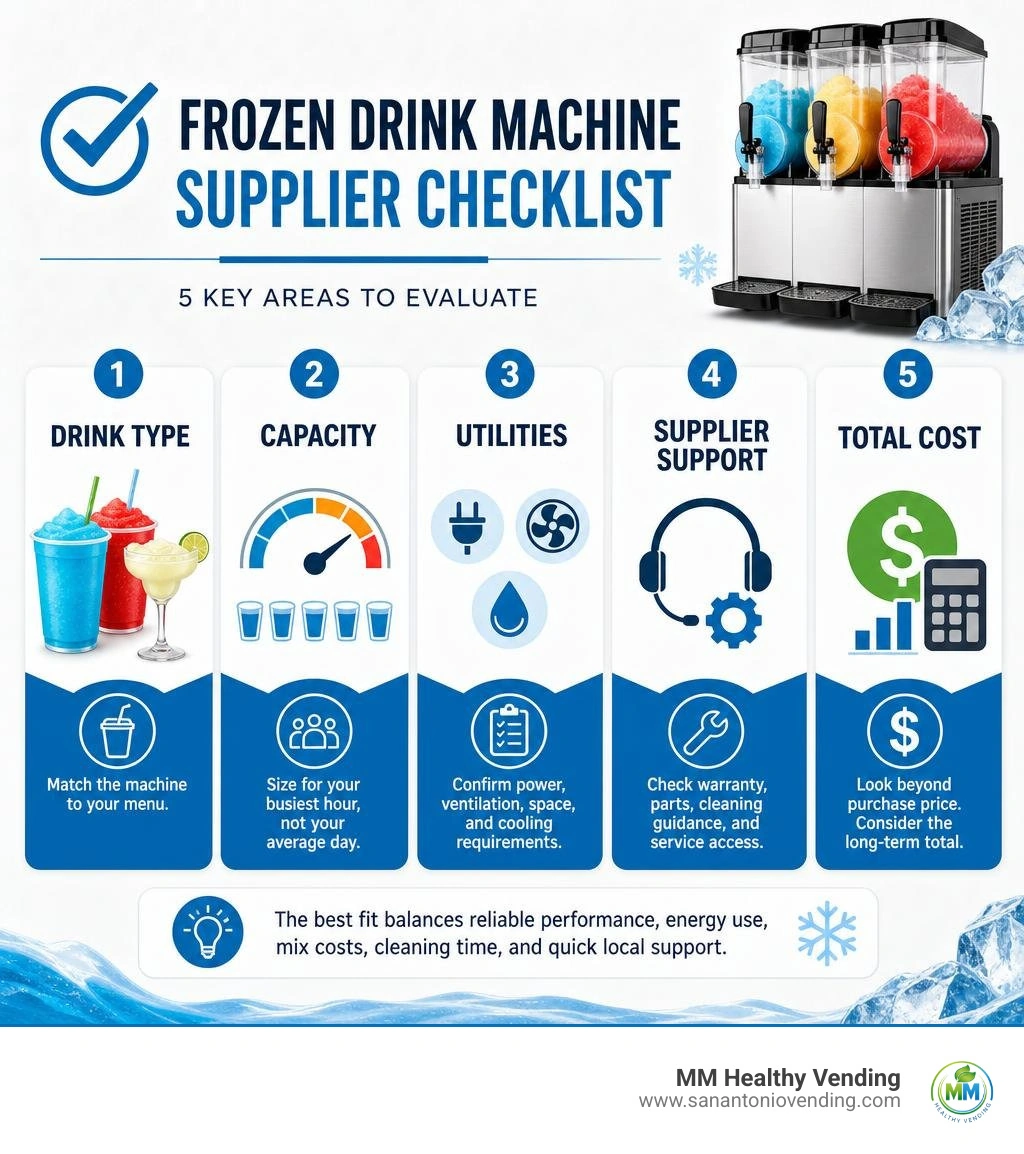
The right frozen drink machine supplier should help you match the equipment to your menu, peak demand, available power, and service needs - not just sell you a machine. Start by confirming four things:
- Drink type: Slushies, granitas, frozen coffees, cocktails, or soft serve each need compatible equipment.
- Peak output: Choose capacity for your busiest hour, not your average day. A high-volume dual-flavor model can produce hundreds of 10-ounce drinks per hour, while a compact single-bowl unit fits lighter demand.
- Installation: Check voltage, ventilation, counter or floor space, and whether air-cooled, water-cooled, or remote cooling makes sense.
- Supplier support: Compare warranty terms, parts availability, cleaning guidance, delivery timing, and access to technicians before signing.
Frozen beverages can add a colorful, fast-moving menu item without taking much selling space. But the lowest purchase price is rarely the lowest long-term cost. The best fit balances reliable freezing performance, energy use, mix costs, cleaning time, and quick local support when equipment needs attention.
I am Manuel Mojica, founder of a seven-figure automated retail operation in San Antonio and an operator who has deployed equipment nationwide. My experience evaluating vendors, equipment uptime, inventory flow, and service response helps businesses assess a frozen drink machine supplier as a long-term operations partner, not simply a product source.
Frozen drink machine supplier definitions:
Types of Commercial Frozen Beverage Equipment
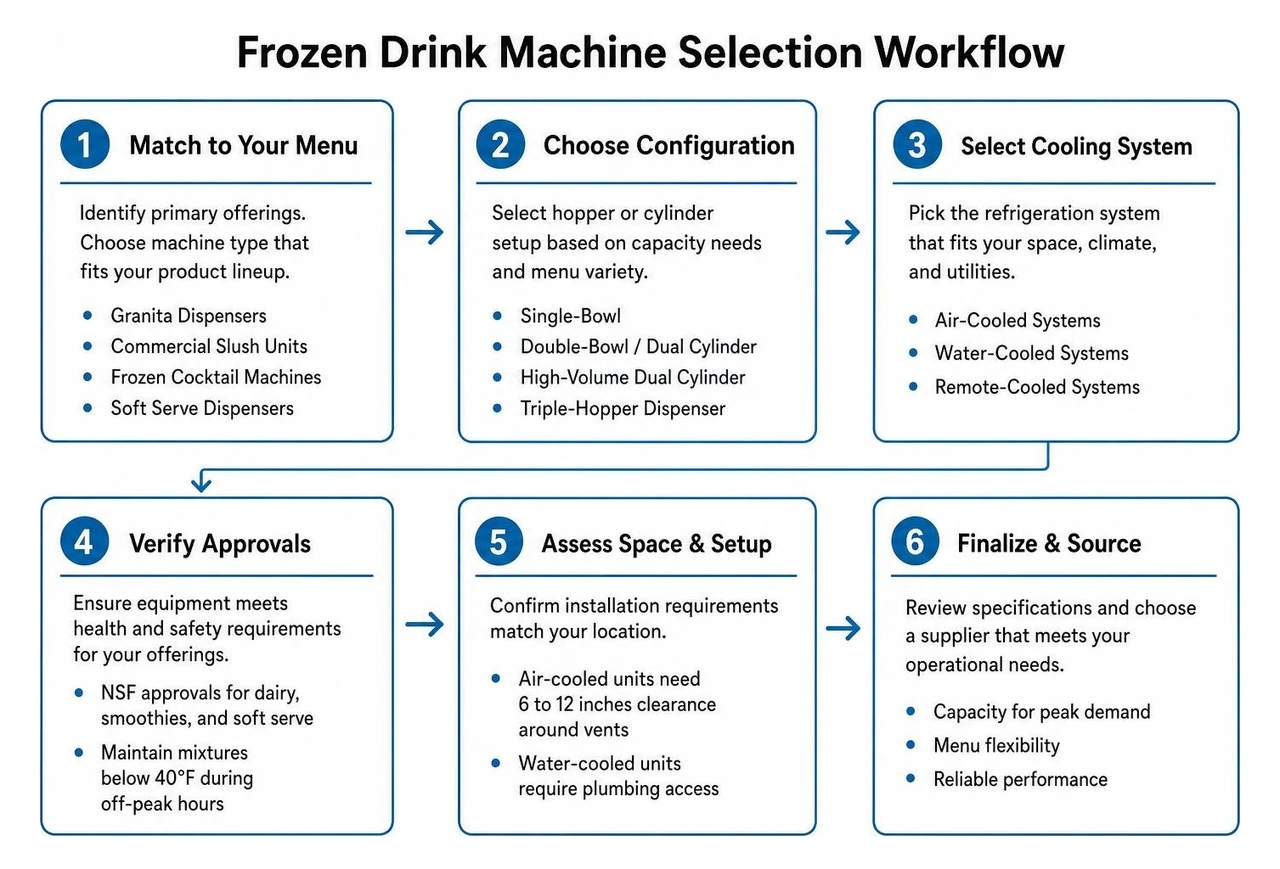
Selecting commercial beverage hardware begins with matching mechanical capabilities to your product lineup. Commercial units generally fall into four core categories: classic granita dispensers, heavy-duty commercial slush units, commercial frozen cocktail machines, and combination soft serve dispensers.

Granita machines utilize external clear bowls with rotating horizontal or vertical augers. These units gently shave ice crystals against a central freezing core, producing a fine, slushy consistency that showcases vibrant beverage colors to drive impulse sales. In contrast, commercial frozen beverage dispensers typically house sealed, pressurized or gravity-fed freezing cylinders capable of rapid continuous freeze cycles.
For operations looking to serve dairy products, smoothies, or soft serve, units with refrigerated hoppers and NSF approvals are required to keep mixtures below 40°F during off-peak hours.
| Machine Category | Primary Applications | Typical Hourly Output | Ideal Commercial Setting |
|---|---|---|---|
| Single-Bowl Granita | Fruit slushes, iced coffees, lemonades | 30–50 servings (10 oz) | Cafes, boutique retail, small lobbies |
| Double-Bowl Slush | Dual fruit flavors, non-alcoholic specialties | 80–140 servings (10 oz) | Convenience stores, corporate breakrooms |
| High-Volume Dual Cylinder | Margaritas, daiquiris, high-sugar mixes | 250–310 servings (10 oz) | Bars, amusement parks, event venues |
| Triple-Hopper Dispenser | High-variety carbonated/uncarbonated slushes | 300–480 servings (250 ml) | High-volume entertainment centers |
Single-Bowl vs. Multi-Bowl Configurations
Hopper capacity directly dictates how many customers you can serve during peak rushes before the machine enters a recovery freeze cycle. Entry-level single-bowl units feature 1.5- to 3.2-gallon reservoirs, serving smaller venues well.
Multi-bowl and multi-cylinder configurations (ranging from 6 to 24 gallons of total capacity) allow businesses to diversify their menus by running contrasting flavors simultaneously—such as a classic strawberry daiquiri alongside a blue raspberry slush. Running a dedicated margarita beverage dispenser alongside a non-alcoholic option ensures you can capture adult beverage sales without turning away families or daytime customers.
Compressor Cooling Systems: Air vs. Water vs. Remote
The refrigeration system is the heart of any frozen beverage program. Choosing between air, water, and remote cooling depends on your physical footprint, ambient building temperatures, and utility access:
- Air-Cooled Systems: The most common and cost-effective design. These machines draw ambient air across an internal condenser. They require no external plumbing lines—making them simple plug-and-play installations—though they need 6 to 12 inches of clearance around side and rear vents to prevent overheating.
- Water-Cooled Systems: These connect directly to an external cold water loop to dissipate heat. They operate independently of room temperature, making them suitable for hot kitchens or humid environments, though they increase continuous water consumption.
- Remote-Cooled Systems: Remote compressors place the condensing unit outside the building or in a separate utility room. This setup eliminates operating noise and excess heat from front-of-house serving areas, allowing high-traffic venues to maintain a quiet, comfortable customer environment. Advanced systems utilizing nickel-plated evaporator technology deliver up to 30% faster heat exchange and superior corrosion resistance over standard aluminum components.
How to Choose the Right Frozen Drink Machine Supplier for Your Business
Finding a reliable partner requires looking beyond sticker prices to examine logistics, parts availability, and technical support. When evaluating suppliers, consider how quickly they can dispatch replacement components and whether their team understands local commercial requirements.
For operations integrating grab-and-go options alongside frozen items, pairing reliable equipment with turnkey chilled drink delivery quench your thirst instantly services helps maintain stocked, continuous refreshment operations without unexpected downtime.
Evaluating a Frozen Drink Machine Supplier on Warranty and Service
A manufacturer's warranty reflects equipment build quality. Commercial-grade machines should feature robust multi-year protection terms:
- Compressor & Evaporator Coverage: Look for 3- to 5-year warranties on the compressor and primary refrigeration components.
- Parts & Labor Protections: Standard commercial terms provide 1-year coverage for mechanical parts and labor.
- Technical Support: Look for suppliers offering extended after-hours technical hotlines to help staff troubleshoot freeze consistency, hardness settings, and error codes during weekend rushes.
Questions to Ask a Frozen Drink Machine Supplier Before Purchasing
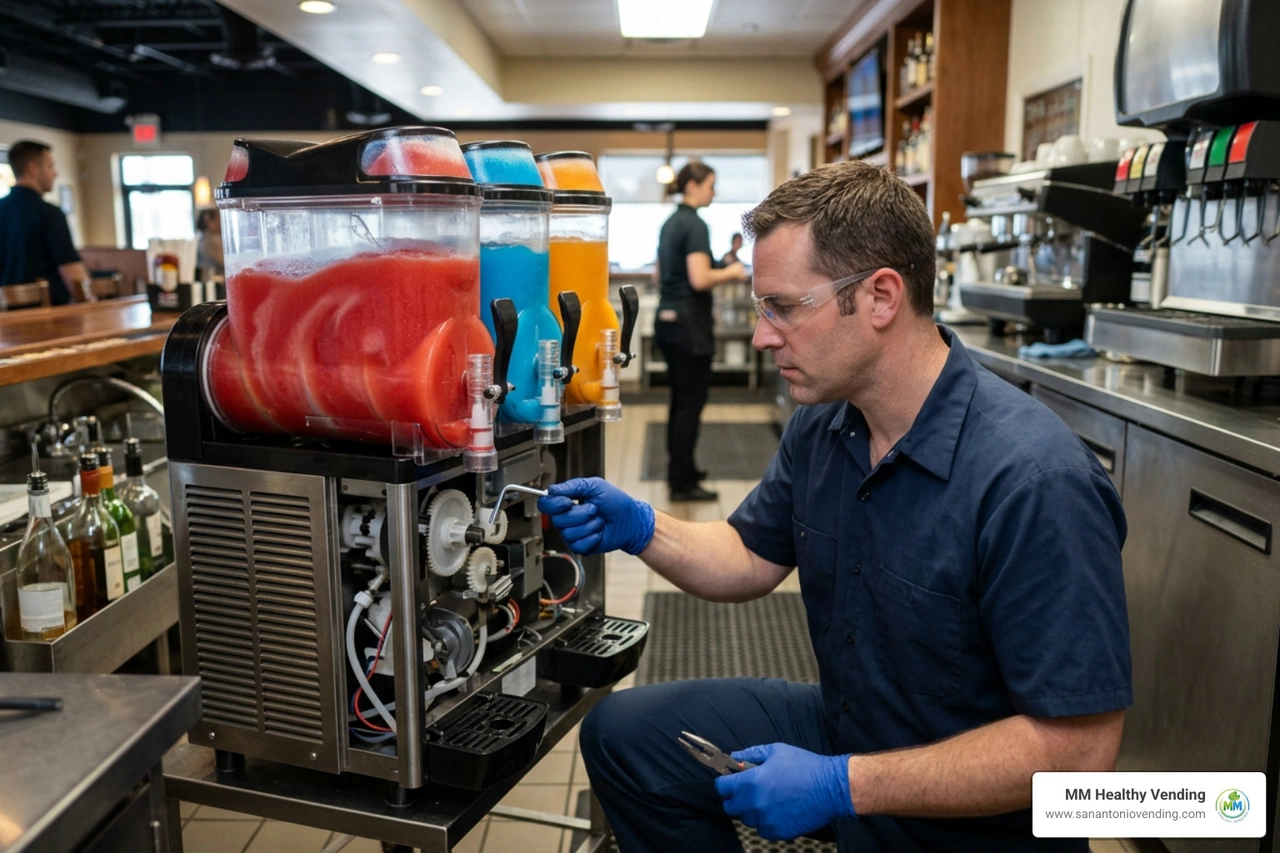
Before committing capital to a vendor, ask the following operational questions:
- What are the shipping lead times and freight policies? Are units stocked in domestic warehouses for delivery within 7 to 10 days, or are they subject to extended international freight schedules?
- What electrical service is required? Does the machine operate on a standard 115V/120V circuit, or does it require a dedicated 208–230V commercial connection?
- Are replacement wear items readily available? Ensure the supplier stocks essential replacement parts—such as silicone beater blades, dispense valves, O-rings, and food-grade lubricants—for rapid dispatch.
- Are these units certified for food safety? Verify ETL, NSF, or UL sanitation certifications to ensure compliance with local health department regulations when deploying high-output beverage dispensing systems.
Operational Capabilities: Handling Cocktails, Dairy, and High Volume
Freezing alcohol presents unique chemical challenges. Pure ethanol has a freezing point of -173°F (-114°C), meaning liquor depresses the freezing temperature of water mixtures. To achieve the perfect slush consistency without ending up with liquid soup or frozen chunks, the mix must maintain a precise sugar-to-alcohol balance—typically measured between 12 and 15 degrees Brix on a refractometer.
High-output cocktail units feature low-temperature evaporator barrels and durable scraper blades that continuously pull frozen product off the cylinder walls. Overnight standby refrigeration modes keep products held safely below 40°F, eliminating the labor of draining, discarding, and reloading mix at the end of each shift.
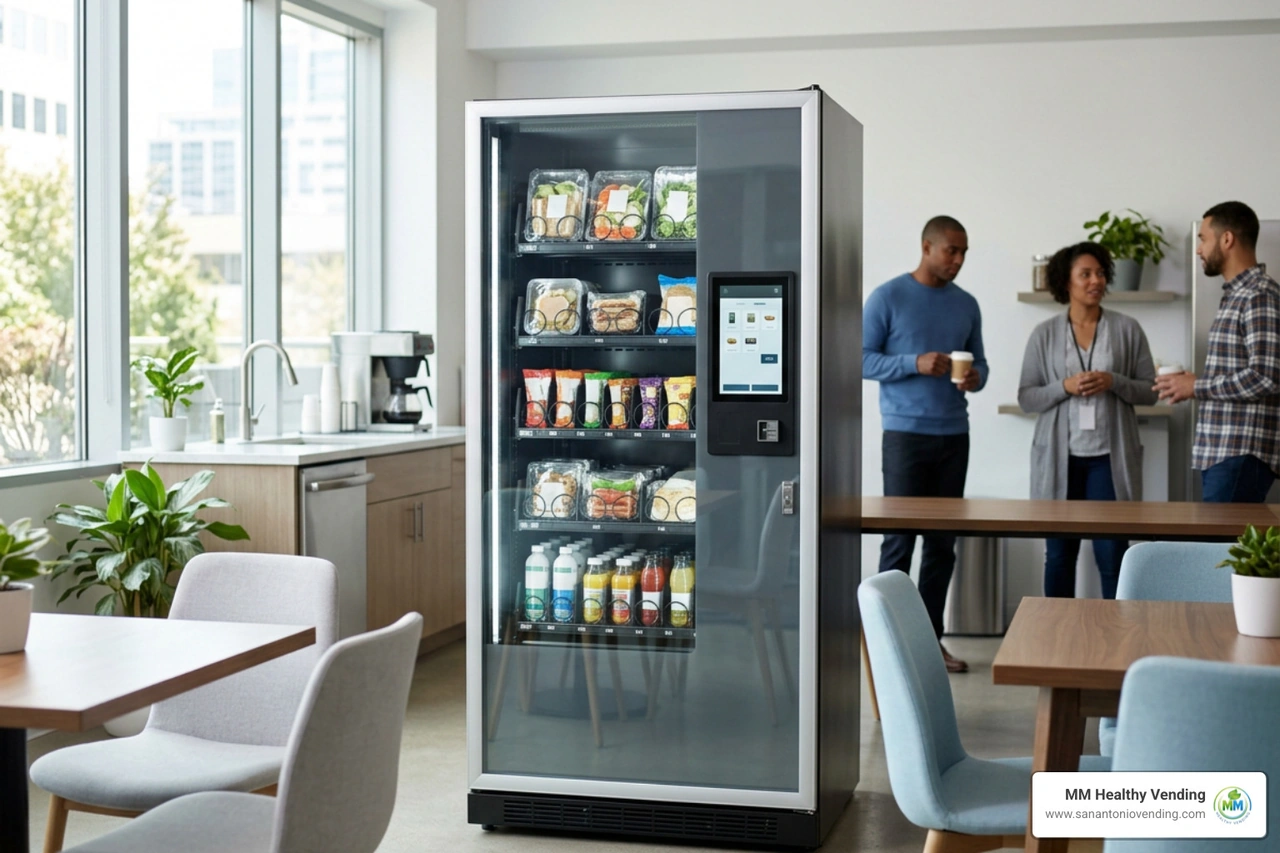
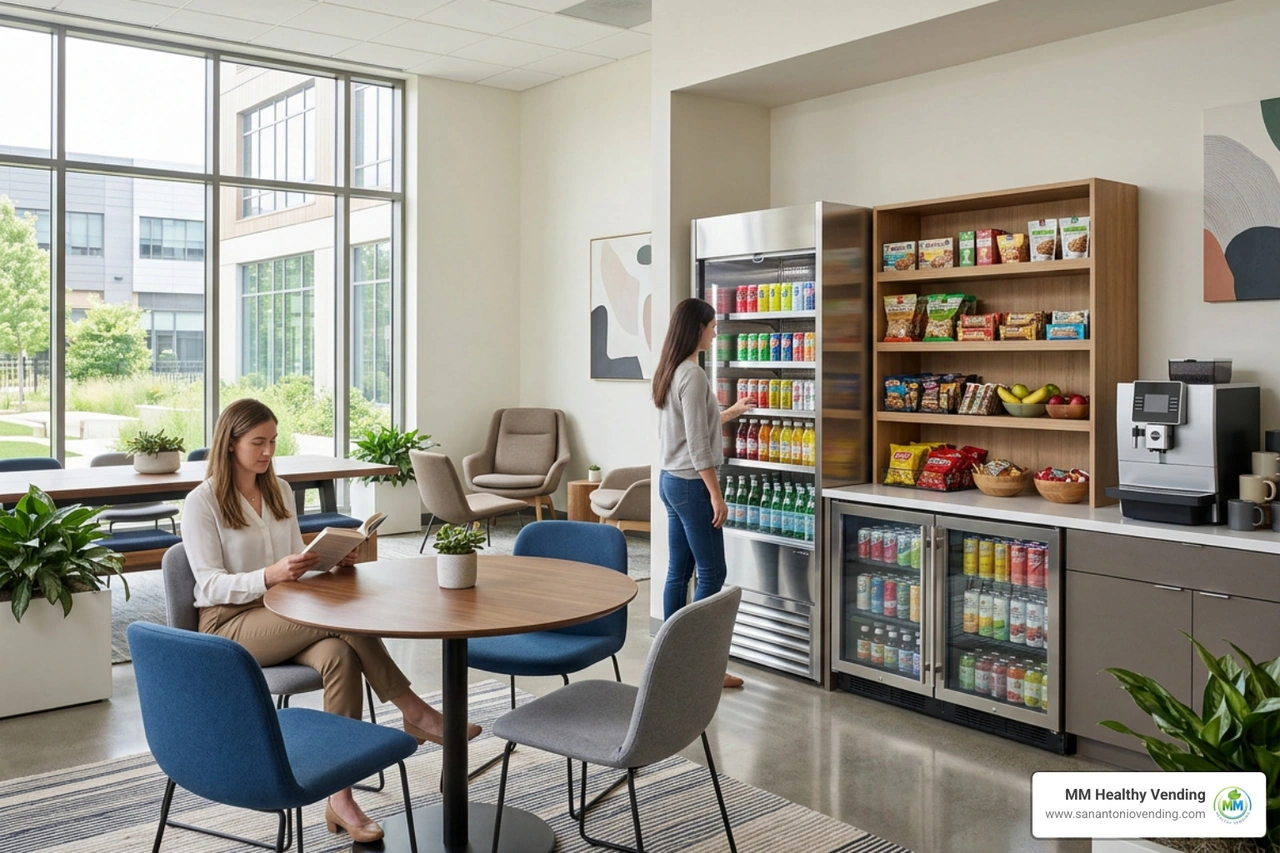
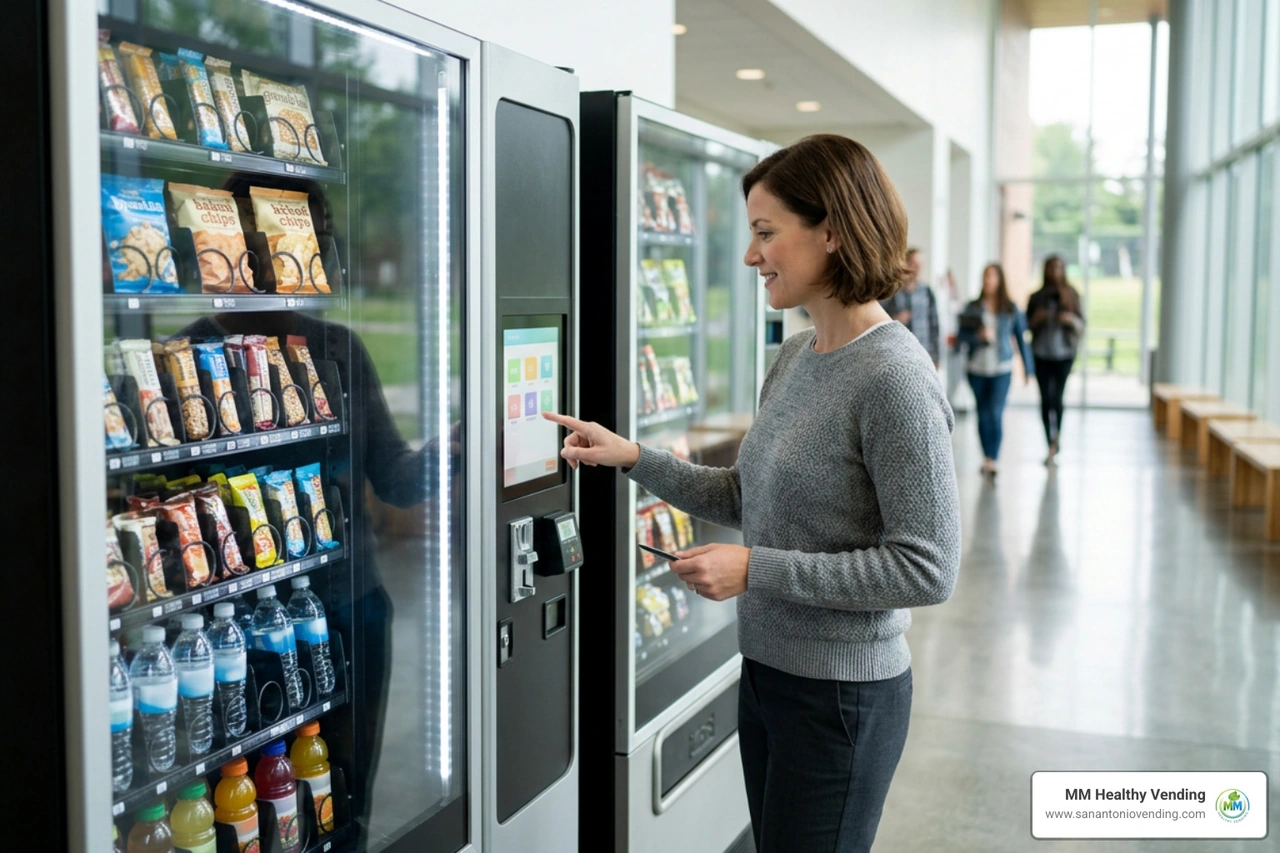
If your facility provides comprehensive breakroom amenities, integrating frozen beverage systems alongside modern snack and drink machines helps build a complete refreshment hub that serves daytime office workers and evening event guests alike.
Total Cost of Ownership, Maintenance, and Financing Options
The true cost of operating a frozen beverage program involves purchase price, utility draw, preventive maintenance, and syrup yields.
Most commercial syrup concentrates use a 1:4.5 or 1:5 mix ratio (one part concentrate to four-and-a-half parts water). A single gallon of commercial concentrate yields approximately 44 sixteen-ounce servings. With syrup costs averaging pennies per ounce, gross profit margins frequently exceed 75% to 85% per pour.
Routine maintenance involves daily flush cycles, weekly component breakdown for sanitation, and monthly lubrication of dynamic rubber seals. Neglecting O-ring lubrication can lead to barrel leaks and motor strain.
For businesses balancing upfront cash flow, many suppliers provide low-interest commercial leasing, deferred payment programs, or rent-to-own agreements where a percentage of monthly payments applies toward the final purchase price. Similar to how businesses deploy self-service vending machines with zero capital outlay, partnering with a full-service refreshment provider can deliver premium drink options without large balance-sheet liabilities.
Frequently Asked Questions About Frozen Beverage Machines
Can commercial slush machines handle alcoholic frozen drinks?
Not all commercial slush machines are equipped to freeze alcohol. Standard granita units designed strictly for sugar-based fruit drinks lack the low-temperature refrigeration systems required to freeze liquor. Always ensure the equipment is rated for frozen cocktails and maintain a Brix level of 12° to 15° to achieve proper ice crystallization.
How often do commercial frozen drink dispensers require cleaning?
Machines serving dairy products or fresh purees must undergo disassembly, cleaning, and sanitization every 3 to 7 days, depending on local health codes. Non-dairy, high-acid fruit slushies can typically operate up to 14 days between full breakdowns if the unit features an overnight refrigeration standby mode that holds product below 40°F.
What electrical and plumbing connections are required?
Compact single- and double-bowl countertop units typically require a dedicated 115V, 15A to 20A commercial circuit. Larger high-volume, floor-standing models and multi-cylinder dispensers often require 208–230V single-phase or three-phase power. Air-cooled units require no permanent water lines, while autofill and water-cooled systems require a dedicated 3/8-inch cold water line and accessible drain.
Conclusion
Expanding into frozen beverages is one of the fastest ways to increase average ticket sizes, delight guests, and generate reliable margins year-round. By partnering with the right equipment supplier—one that prioritizes rapid parts delivery, strong compressor warranties, and tailored capacity recommendations—you ensure your drink program runs smoothly and profitably.
At MM Healthy Vending, we help businesses across San Antonio, Alamo Heights, Boerne, Helotes, New Braunfels, Schertz, Seguin, and Southside Texas elevate their on-site refreshment amenities. Through our zero-cost, fully managed programs backed by 2-hour local service response, we make premium workplace refreshment seamless. Explore our complete range of tailored refreshment and beverage services or contact our local team today to design the perfect drink program for your team and patrons.
You might also like...
More articles like the one you've read to keep you up-to-date on all things vending in San Antonio
Why San Antonio businesses choose us
Premium service, local expertise, cutting-edge technology
AI-powered smart coolers
Advanced computer vision technology for seamless, cashless transactions. Just grab what you need and go.
cashless
24/7 service
Round-the-clock support with an average 2-hour response time for any issues.
Local & trusted
Family-owned business proudly serving San Antonio since 2024
Ready to upgrade your breakroom?
Join hundreds of San Antonio businesses enjoying free, premium vending soutions