
Why Texas Micro Markets Are Outperforming Traditional Vending Machines
Learn why Texas micro markets outperform traditional vending with fresh food, safety, and zero-cost solutions for your workplace.
How Texas Micro Markets Are Changing the Office Breakroom Game
Texas micro markets are unmanned, self-checkout food stations installed in secured commercial spaces like office buildings and corporate campuses — and they're rapidly replacing traditional vending machines across the state.
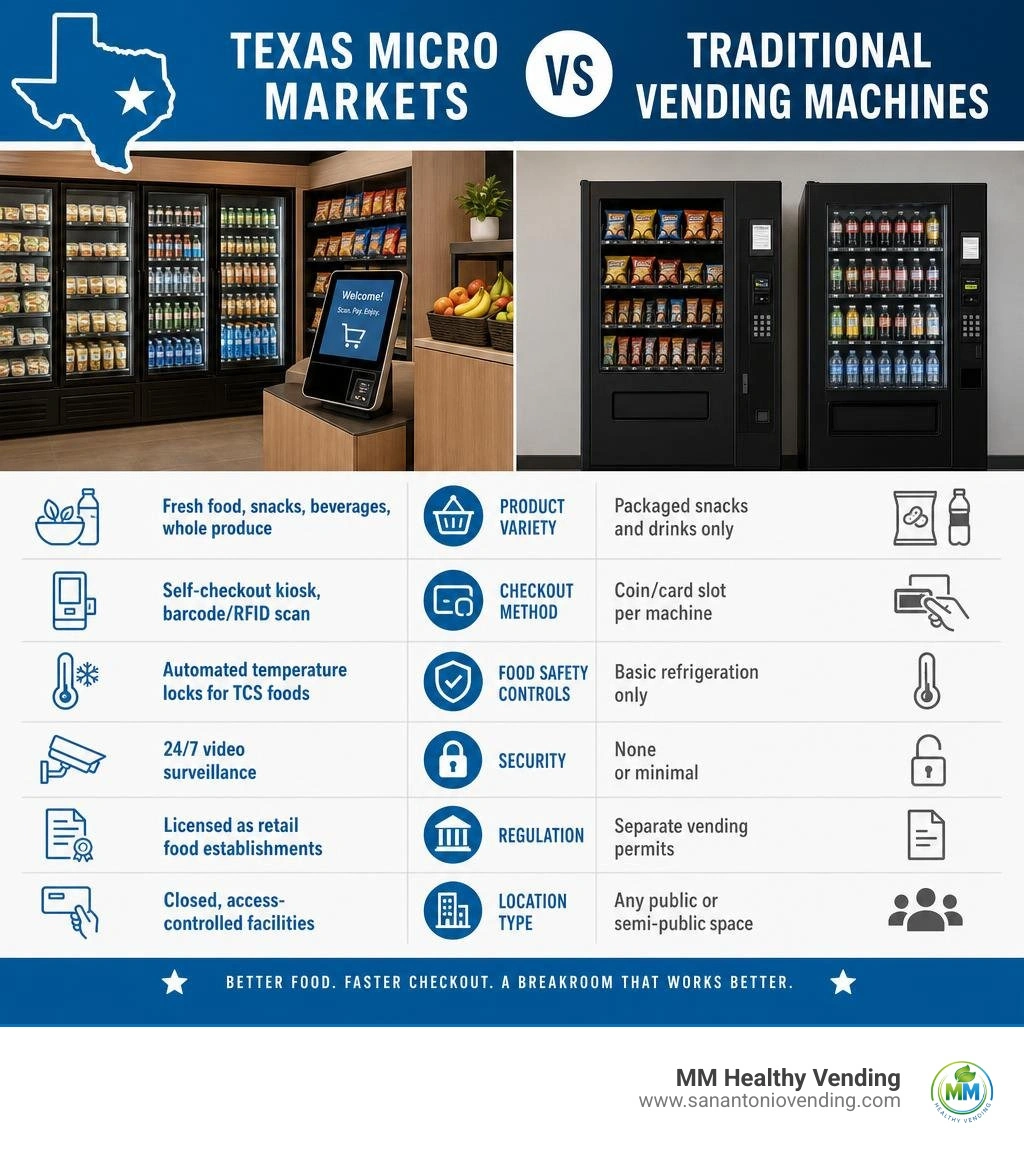
Here's a quick snapshot of what sets them apart:
| Feature | Texas Micro Markets | Traditional Vending Machines |
|---|---|---|
| Product variety | Fresh food, snacks, beverages, whole produce | Packaged snacks and drinks only |
| Checkout method | Self-checkout kiosk, barcode/RFID scan | Coin/card slot per machine |
| Food safety controls | Automated temperature locks for TCS foods | Basic refrigeration only |
| Security | 24/7 video surveillance | None or minimal |
| Regulation | Licensed as retail food establishments | Separate vending permits |
| Location type | Closed, access-controlled facilities | Any public or semi-public space |
Unlike a vending machine that limits you to whatever fits behind a glass panel, a micro market gives employees open-rack browsing, real refrigerated coolers, and a wider selection of fresh options — all without a cashier on site.
The growth is hard to ignore. Corporate offices across Texas are pulling out rows of aging vending machines and replacing them with these open-format markets. The appeal is straightforward: better food, faster checkout, and a breakroom that actually feels like one.
I'm Manuel Mojica, founder of a 7-figure vending, smart cooler, and Texas micro market operation based in San Antonio — and I've watched this shift happen across dozens of commercial accounts. In the sections below, I'll walk you through exactly how these markets work, what Texas regulations require, and why they're outperforming traditional vending on nearly every metric.
Related content about texas micro markets:
Understanding Texas Micro Markets and State Regulations
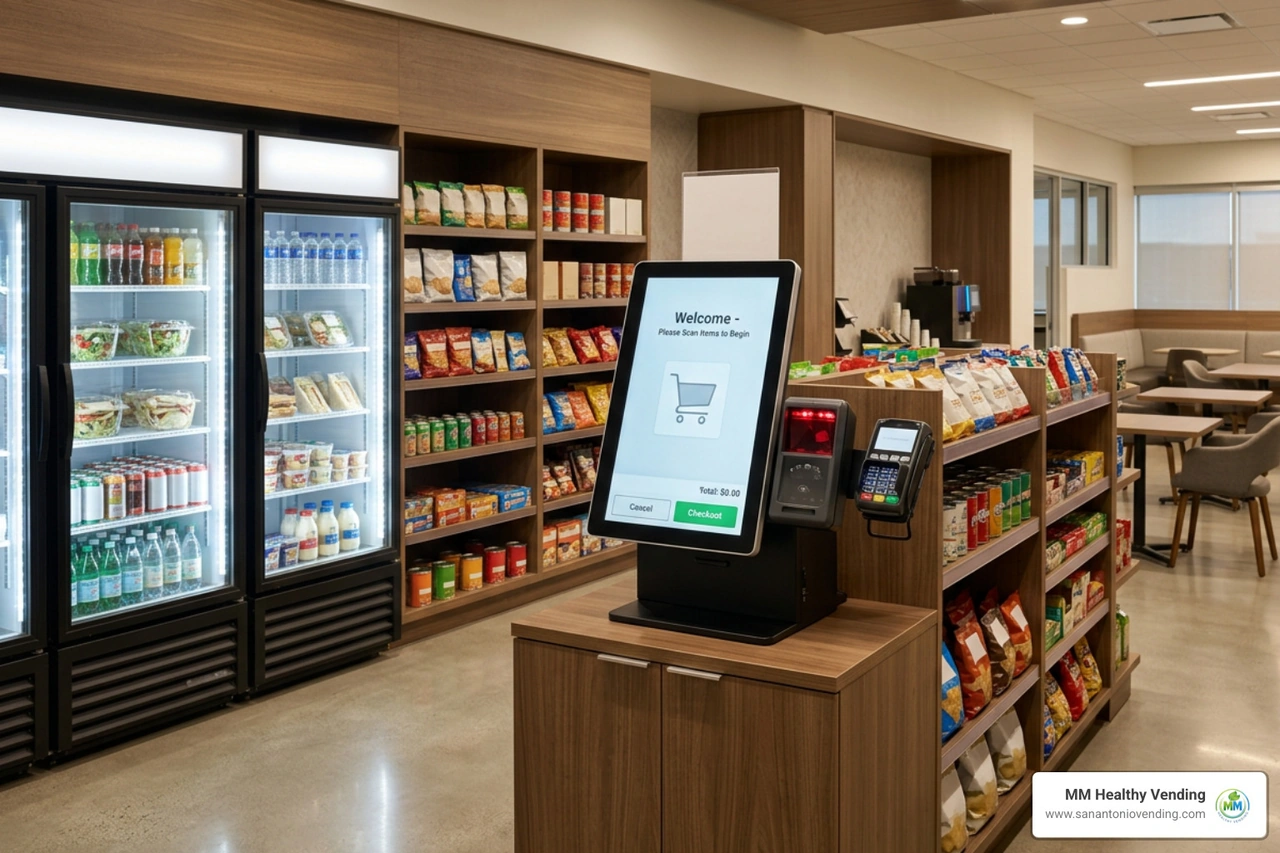
When state regulators look at Texas micro markets, they do not view them as simple vending banks. Officially classified under state public health guidelines as Self-Service Food Markets, these installations operate under the regulatory umbrella of retail food establishments.
Because micro markets feature open shelving, reach-in commercial refrigerators, and self-checkout kiosks without a dedicated cashier on duty, state and local health authority guidelines maintain distinct oversight rules to guarantee public safety.
A primary requirement for operating a micro market in Texas is the "closed location" rule. Under state guidelines, a Self-Service Food Market must be placed inside a restricted, access-controlled facility—such as a corporate office complex in San Antonio, a distribution center in Schertz, or an industrial park in New Braunfels. The market serves a known, predictable group of employees and authorized visitors rather than receiving heavy, unregulated foot traffic from the general public.
By establishing a closed environment, businesses gain the flexibility of open-display food shopping while upholding strict sanitary standards. To explore how these custom installations elevate corporate spaces, check out our dedicated Micro Markets solutions.
What Defines Texas Micro Markets vs Traditional Vending?
Traditional vending machines restrict customer interaction to pressing a button and watching a metal coil drop a bag of chips into a plastic trapdoor. In contrast, Texas micro markets offer an open, convenience-store-style experience right inside the workplace breakroom.
Employees can pick up items, examine nutrition labels, review ingredient lists, and put together complete meals before purchasing everything in a single, fast transaction at a touchscreen self-checkout kiosk.
Key features defining a Texas micro market include:
- Unmanned, automated retail format: No dedicated cashier is required, allowing 24/7 access for day, night, and swing-shift workers.
- Open-display merchandising: Freestanding open racks, baskets, and glass-door reach-in displays replace glass-front locked vending boxes.
- Modern checkout technology: Integrated payment terminals support credit/debit cards, mobile wallets (Apple Pay, Google Pay), stored-value company badge accounts, and barcode/RFID item scanning.
- Curated, fresh product selection: Beyond standard chips and sodas, markets stock fresh salads, gourmet sandwiches, deli wraps, yogurt parfaits, cold brew coffees, and whole fruit.
This shift toward quick, touch-free purchasing aligns directly with modern workplace expectations. For a deeper look at modern purchasing technology, read our guide on Blog: Micro Market Contactless Shopping.
Additionally, the emphasis on offering fresh, wholesome food reflects local community standards seen across central Texas culinary hubs, like the popular New Braunfels Farmers Market.
Licensing, Permits, and Plan Reviews in Texas
Because Texas health authorities classify micro markets as retail food establishments, setting up a location requires adherence to formal permitting processes. Local jurisdictions—whether the San Antonio Metropolitan Health District or county health departments serving Boerne, Seguin, or Helotes—possess the authority to review operational plans and assess applicable licensing fees.
Before installing equipment, a proper plan review submission usually includes:
- Facility layouts: Site drawings showing equipment placement, electrical outlets, access doors, and customer flow pathways within the building.
- Equipment specifications: Detailed manufacturer cut sheets for all reach-in coolers, freezers, self-checkout kiosks, and security monitoring setups.
- Food safety documentation: Specifications detailing automated temperature controls, cut-off switches, and routine servicing procedures.
Because prepackaged, non-TCS (Time/Temperature Control for Safety) snacks and fully sealed TCS items arrive prepared from licensed commercial kitchens or distributors, micro markets generally avoid complex plumbing approvals required by full-service commercial kitchens, streamlining the setup timeline.
Food Safety Protocols and Temperature Lock Control
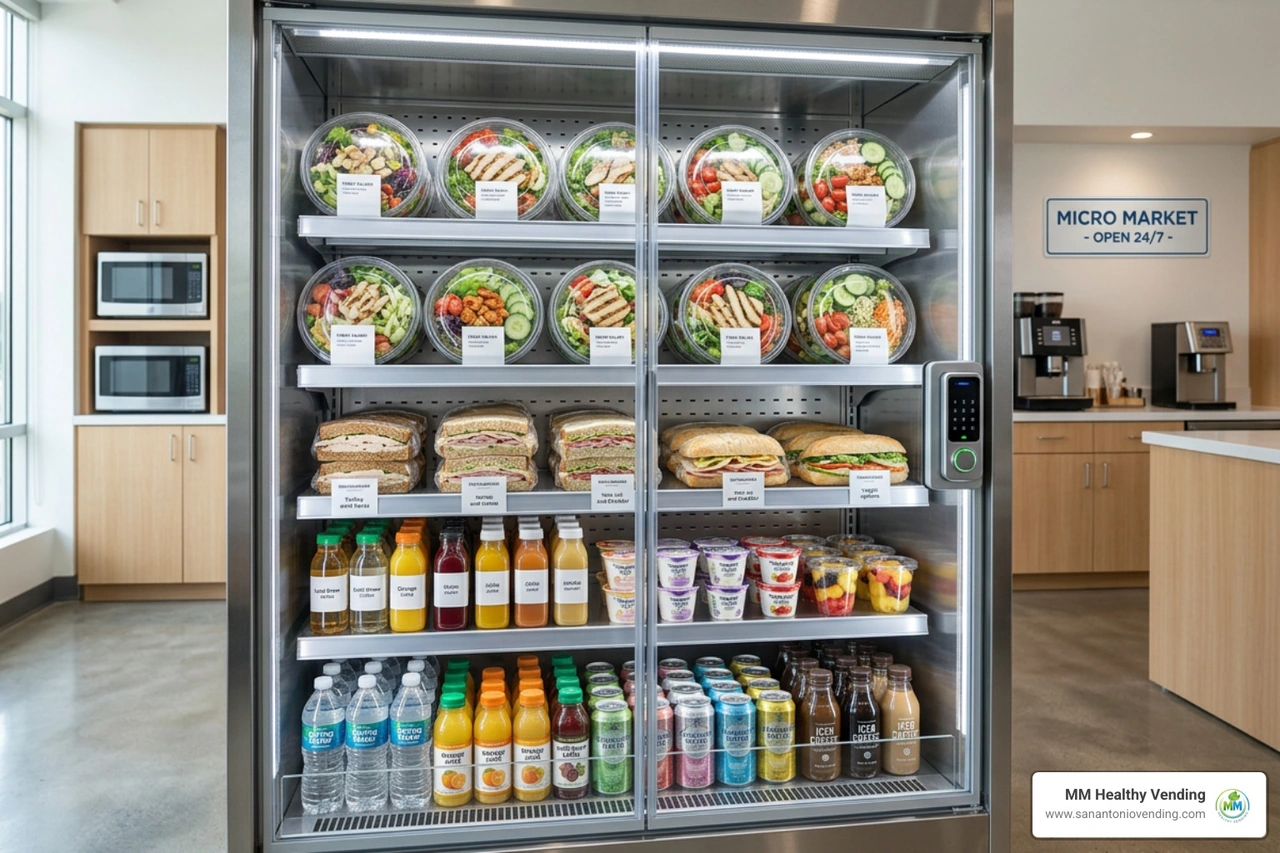
The primary operational question surrounding unmanned food facilities is simple: How do you keep fresh food safe without a human manager constantly checking temperatures?
Texas health standards answer this through automated technical controls integrated into refrigeration equipment.
In a Texas micro market, temperature-sensitive items must reside in specialized smart refrigeration units. If power cuts out or cooling systems fail, these machines automatically lock out shoppers from purchasing potentially unsafe food.
To learn more about high-tech automated refrigeration options, check out our overview on Blog: Zero Cost AI Coolers San Antonio.
How TCS Foods and Fresh Produce Are Managed in Texas Micro Markets
Foods categorized as TCS (Time/Temperature Control for Safety)—such as milk, chicken wraps, cut deli meats, egg salads, and cheese trays—require strict thermal management to prevent bacterial growth. Under Texas health regulations, cold TCS foods must remain continuously held at or below 41°F (5°C).
To meet state food safety standards, micro market refrigeration units feature built-in electronic health switches and continuous temperature sensing mechanisms:
- Automatic Health Lockouts: If a cooler's internal temperature rises above 41°F for more than a brief allowable defrost interval (typically 30 minutes), an internal electronic lock engages automatically.
- Software-Level Transaction Block: Even if a customer physically opens a door during a mechanical failure, the point-of-sale software flags the TCS items as unavailable for purchase, preventing compromised items from being sold.
- System Monitoring Alerts: Modern software alerts our dispatch team immediately, sending a route driver to inspect equipment, check product integrity, and replace malfunctioning hardware.
When it comes to fresh produce, whole, intact fruits with natural protective peels—such as unpeeled oranges, bananas, and whole apples—can be displayed on ambient open racks. However, once fruit is sliced, peeled, or processed (such as cut watermelon or diced fruit bowls), it becomes a TCS food and must immediately enter temperature-controlled, health-locked refrigeration units.
This emphasis on farm-fresh quality echoes regional fresh food initiatives found at events like the Alamo Heights Farmers Market.
Sink Requirements and Facility Standards
In traditional restaurants or commercial kitchens, health codes require extensive plumbing setups, including handwashing sinks, utility mop sinks, and three-compartment warewashing sinks. Micro markets operate under a streamlined set of facility requirements because of how food is handled.
Because items sold in Texas micro markets arrive prepackaged from approved food manufacturers or licensed catering facilities, on-site food preparation, cooking, or open washing is prohibited. As a result:
- Three-Compartment Sinks: Micro markets are exempt from three-compartment sink installations on-site because no food preparation tools, pans, or dishware are washed on premises.
- Hand Sinks: Dedicated plumbing hand sinks within the micro market footprint are generally not required, provided all offered foods remain 100% prepackaged and sealed. Restroom handwashing facilities within the commercial building serve everyday hygiene needs.
- Coffee and Beverage Stations: If a market features automated bulk coffee dispensers or self-serve espresso systems, local health codes may require localized liquid waste drainage or dedicated water line backflow preventers, depending on municipal guidelines in cities like Seguin or Schertz.
Operations, Security, and Route Driver Responsibilities
A high-performing micro market relies heavily on back-end operational logistics and field service protocols. While consumers enjoy an effortless self-checkout routine, continuous behind-the-scenes management keeps the market clean, fully stocked, compliant, and secure.
To discover how continuous management elevates breakroom environments, explore our insights on Blog: Break Room Refreshment Services.
Video Surveillance and Food Security Without an On-Site Manager
Operating an unmanned food store requires robust security and food defense protocols. Texas standards for micro markets emphasize continuous security measures to maintain product integrity and prevent unauthorized handling or tampering.
Key components of micro market security and food defense include:
- 24/7 HD Video Surveillance: High-resolution video cameras record activity around display racks, coolers, and payment terminals around the clock. Cameras act as both a theft deterrent and a verification tool for food defense.
- Prominent Signage: Clear signs inform shoppers that the market area is under continuous video recording and provide contact details for administrative inquiries, support, or emergency reporting.
- Access Control: Placing markets inside restricted corporate workplaces (such as office towers in downtown San Antonio or secured industrial centers in Southside San Antonio) naturally restricts access to verified staff and badged visitors.
- Prominent Contact Postings: Every market features visible customer service signage displaying operating company contacts, phone numbers, and emergency notification routes so users or health inspectors can contact management immediately.
Route Driver Maintenance and Daily Oversight
The route service professional acts as the physical manager of a Texas micro market. Rather than simply dropping off boxes, route technicians carry out strict quality control procedures on every service visit.
Route drivers follow structured operational workflows:
- Inventory Management & Software Syncing: Using cloud-connected handheld software, drivers review real-time sales data before entering the facility, bringing exact replenishment quantities to minimize food waste.
- Product Dating & Rotation: Drivers perform "first-in, first-out" (FIFO) stock management, checking expiration dates on fresh salads, sandwiches, and dairy items. Out-of-date or near-expiration items are immediately removed from sale and logged into accounting systems for warehouse return and disposal.
- Equipment Diagnostics & Cleaning: Drivers inspect refrigeration seals, check digital thermistor readouts, verify automatic health switch functions, wipe down countertops, clean touchscreens, and sanitize open display shelves.
- Kiosk Maintenance: Testing hardware functionality, cash/card readers, scanner lenses, and receipt printer paper ensures checkout experiences remain fast and reliable.
To learn more about route logistics and professional facility maintenance, read our detailed article on Blog: Workplace Refreshment Service.
Comparing Vending Machines and Self-Service Markets
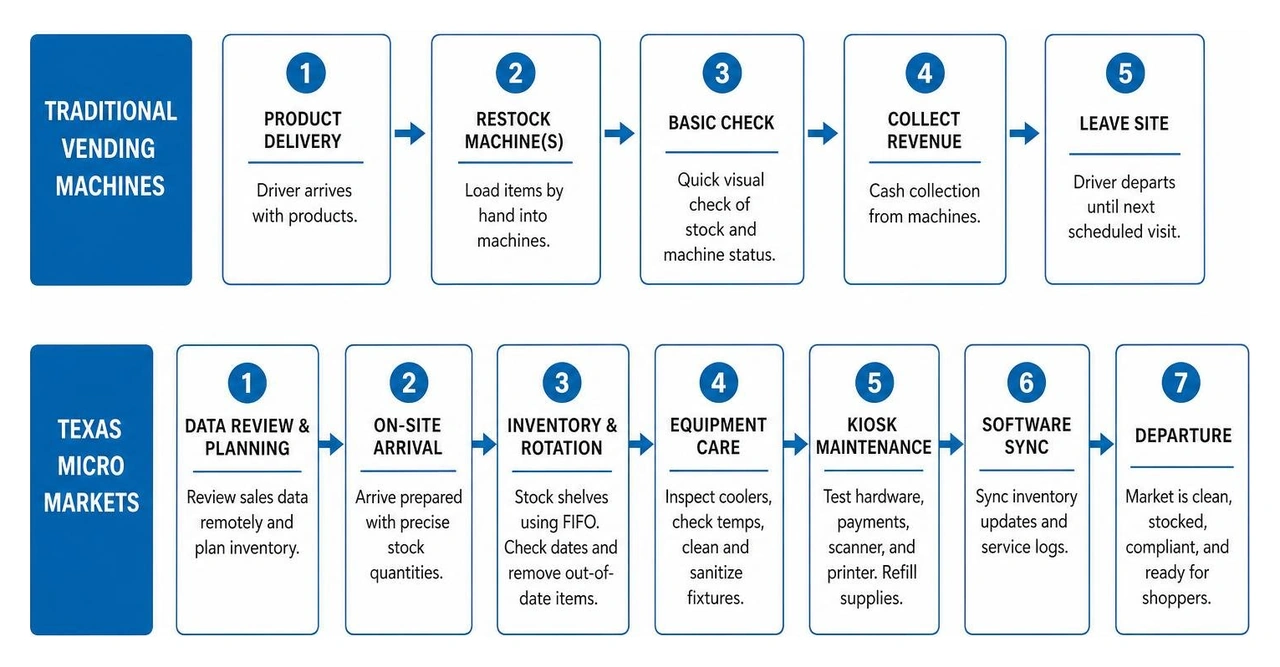
When corporate decision-makers evaluate breakroom upgrades across locations in San Antonio, Boerne, or New Braunfels, comparing classic vending machines against modern micro markets highlights major operational differences.
The following table breaks down how these two refreshment solutions compare across key workplace categories:
| Operational Metric | Traditional Vending Machines | Texas Micro Markets |
|---|---|---|
| Product Capacity & Variety | Restricted to ~30–40 packaged items fitting spiral drop mechanisms. | Expansive open racks & glass coolers holding 150–300+ diverse products. |
| Fresh Food & Meal Capabilities | Very limited; short shelf-life items risk spoilage in drop slots. | Outstanding; accommodates gourmet salads, artisan wraps, fresh fruit, and complete entrees. |
| User Experience & Physical Contact | Rigid choice; item cannot be touched or inspected prior to sale. | Interactive browsing; touch, inspect nutrition labels, and select fresh items freely. |
| Checkout Speed & Payment Options | Single item purchases via bill validators or credit card readers; higher failure rates. | Rapid self-checkout kiosk; scan multiple items in one transaction via card, badge, or mobile wallet. |
| Food Safety Controls | Standard refrigeration; manual tracking during service calls. | Automated electronic health locks that block sales during thermal interruptions. |
| Regulatory Designation | Regulated under individual coin-op vending machine licenses. | Licensed as retail food establishments with standard environmental health guidelines. |
| Employee Satisfaction | Seen as a basic utility amenity. | Viewed as a modern corporate benefit that boosts workplace morale and talent retention. |
Upgrading to an open-market format fundamentally improves how employees view their workplace breakroom. For details on installing these custom formats at no capital expense, read our guide on Blog: Zero Cost Micro Market Solutions.
Frequently Asked Questions About Texas Micro Markets
Can Texas micro markets sell fresh coffee and intact produce?
Yes! Texas health regulations allow micro markets to offer self-serve bean-to-cup coffee stations, premium hot beverage dispensers, and intact produce. Whole, unpeeled, intact fruits like bananas, oranges, and apples can sit safely on ambient display racks.
When fresh coffee equipment is installed, proper backflow prevention devices on water supply lines keep plumbing fully compliant with local health codes across San Antonio, Helotes, and surrounding municipalities.
Local community events across central Texas regularly celebrate fresh produce and local vendors, including popular gathering places like Boerne Market Days, Austin Street Market | Seguin TX, and the Helotes Marketplace | Old Town Helotes.
How are health inspections conducted without an employee present?
Local health department inspectors conduct unannounced inspections of micro markets just as they do with standard brick-and-mortar restaurants.
Because no full-time employee is on site, clear contact signage is posted prominently near the kiosk. Inspectors use posted contact phone numbers to reach the operating company's manager or route supervisor.
Route supervisors can instantly access remote digital temperature logs, inspection records, and surveillance feeds, or meet the inspector on site if physical access to equipment components is required.
What happens to TCS food during a power outage?
If a power outage occurs or a cooler unit fails, the automated health lock system takes over immediately:
- Internal electronic thermistors detect thermal loss within the refrigerated cabinet.
- If temperatures exceed 41°F beyond allowable defrost parameters, an automatic mechanical lock secures the door, or the kiosk software instantly flags every TCS item in that cooler as unpurchaseable.
- When power restores, the lock stays engaged until a trained route driver or service technician inspects the system, verifies thermal safety compliance, discards compromised inventory, and manually resets the equipment.
Conclusion
Texas micro markets represent the evolution of workplace refreshments. By replacing traditional vending banks with open-rack browsing, touchless self-checkout kiosks, gourmet fresh meal options, and automated food safety controls, employers transform standard breakrooms into high-value employee amenities.
At MM Healthy Vending, we deliver fully managed, zero-cost micro market, vending, and smart cooler solutions tailored to businesses across San Antonio, New Braunfels, Boerne, Schertz, Seguin, Helotes, Alamo Heights, and Southside San Antonio.
Our fully managed approach includes free hardware installation, inventory management, dynamic stocking, and responsive 2-hour local service support.
Ready to elevate your workplace refreshment offerings? Explore our complete line of custom breakroom options on our Services page today!
You might also like...
More articles like the one you've read to keep you up-to-date on all things vending in San Antonio

Why San Antonio businesses choose us
Premium service, local expertise, cutting-edge technology
AI-powered smart coolers
Advanced computer vision technology for seamless, cashless transactions. Just grab what you need and go.
cashless
24/7 service
Round-the-clock support with an average 2-hour response time for any issues.
Local & trusted
Family-owned business proudly serving San Antonio since 2024
Ready to upgrade your breakroom?
Join hundreds of San Antonio businesses enjoying free, premium vending soutions