
Finding the Best Healthy Vending Machine Locations for Steady Income
Discover the most profitable healthy vending machine locations for steady income, from offices to gyms, with expert site selection tips.

Where Healthy Vending Machines Work Best in San Antonio
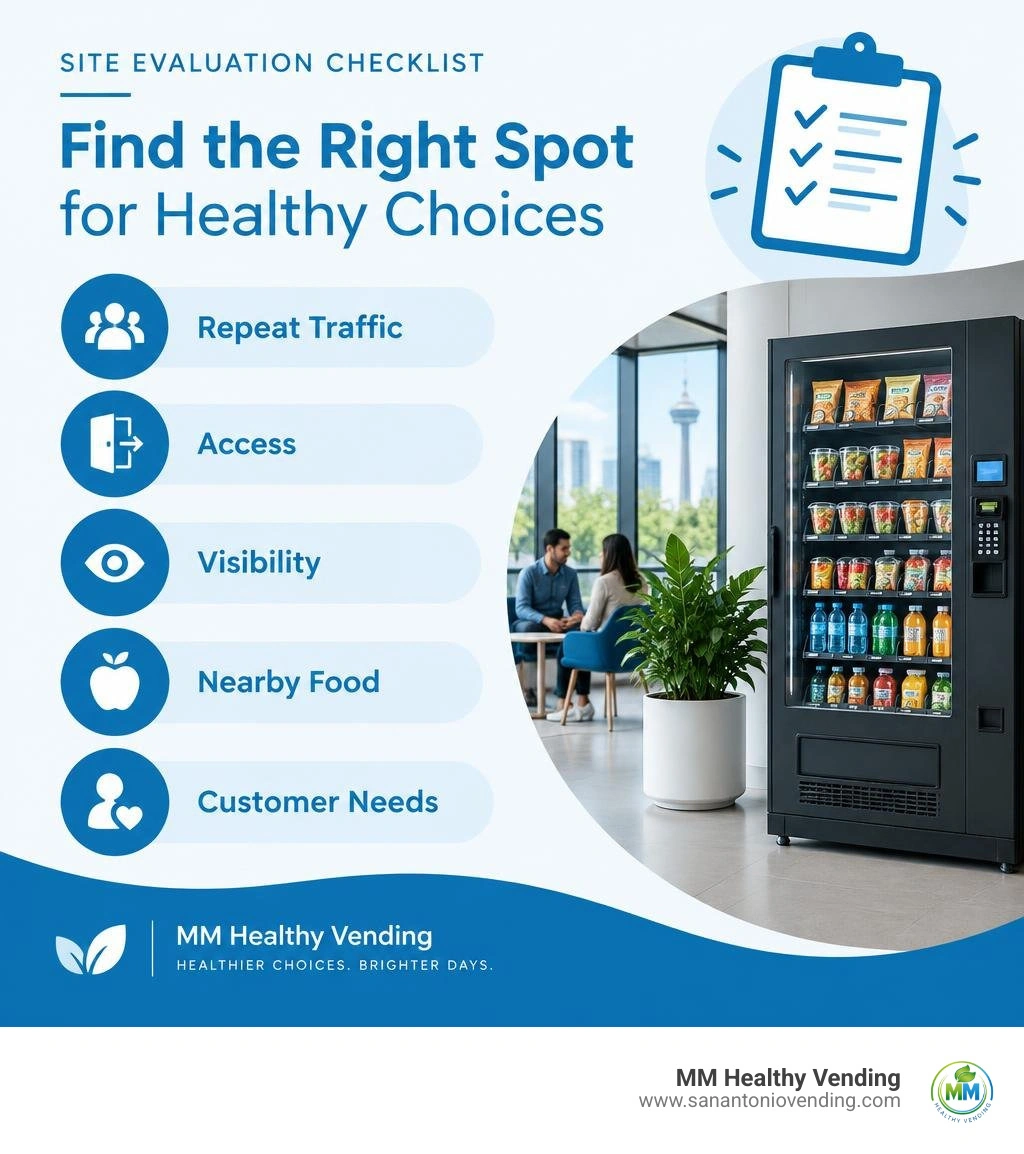
The best healthy vending machine locations in San Antonio are places where people return often and have limited time to leave for food: office breakrooms, gyms, hospitals, campuses, and warehouse break areas. To find a strong spot, count the people who pass the proposed machine each day, check when they can access it, and look at nearby food options. Then match the snacks and drinks to the people who use the space.
A busy building alone is not enough. The machine needs to be easy to see, easy to reach, and stocked for that location's customers.
I'm Manuel Mojica, a San Antonio-based vending operator with experience placing and managing machines across workplaces and schools. I'll use that experience to explain how to evaluate healthy vending machine locations before committing to a site.
Healthy vending machine locations helpful reading:
Most Profitable Healthy Vending Machine Locations
Securing prime real estate is the single most critical factor in automated retail. A machine stocked with organic trail mix and cold-pressed juices will sit untouched in a dark corner, but that exact same equipment can deliver consistent monthly returns when placed in front of a captive audience. When we scout venues across San Antonio, Boerne, Schertz, and New Braunfels, we focus on identifying high-dwell environments where consumers actively seek clean energy throughout their day.
The profitability of an automated retail installation rests on three pillars: consistent pedestrian volume, long dwell times, and an absence of immediate retail competition. High-performing machines typically net between $300 and $800 each month after wholesale inventory and operational expenses. In exceptionally dense environments with constant foot traffic, monthly net margins can surge past $1,500.
| Venue Type | Average Daily Foot Traffic | Typical Dwell Time | Monthly Net Revenue Range | Top Recommended Product Mix |
|---|---|---|---|---|
| Corporate Offices & Tech Hubs | 100–350+ staff | 6–9 hours | $400–$900 | Sparkling water, cold brew, baked crisps, raw nuts |
| Gyms & Athletic Facilities | 150–500+ visitors | 45–90 minutes | $350–$850 | Isolate protein bars, electrolyte drinks, meat sticks |
| Hospitals & Medical Centers | 300–1,000+ staff/guests | 2–12 hours (24/7) | $600–$1,500+ | Balanced meal pots, low-sugar snacks, fruit juices |
| Universities & Campuses | 500–2,000+ students | 1–4 hours | $500–$1,200 | Plant-based chips, organic energy teas, granola bars |
| Industrial & Distribution Hubs | 150–600+ workers | 8–12 hours (Multi-shift) | $450–$1,000 | Jerky, nut butters, sparkling sodas, trail mixes |
Large institutional operators follow this exact model. For example, the Vending Machine Location Map - UT Direct highlights how major university systems strategically scatter hundreds of snack points across academic departments, student recreation facilities, and residence halls to capture foot traffic at every hour.
Corporate Office Buildings and Tech Hubs
Modern corporate campuses and professional business centers represent gold-standard placements. Employees spend an average of eight hours on-site, and between morning strategy sessions and afternoon focus blocks, mental fatigue sets in. Workers look for a midday lift that won't result in a sugar crash at their desks.
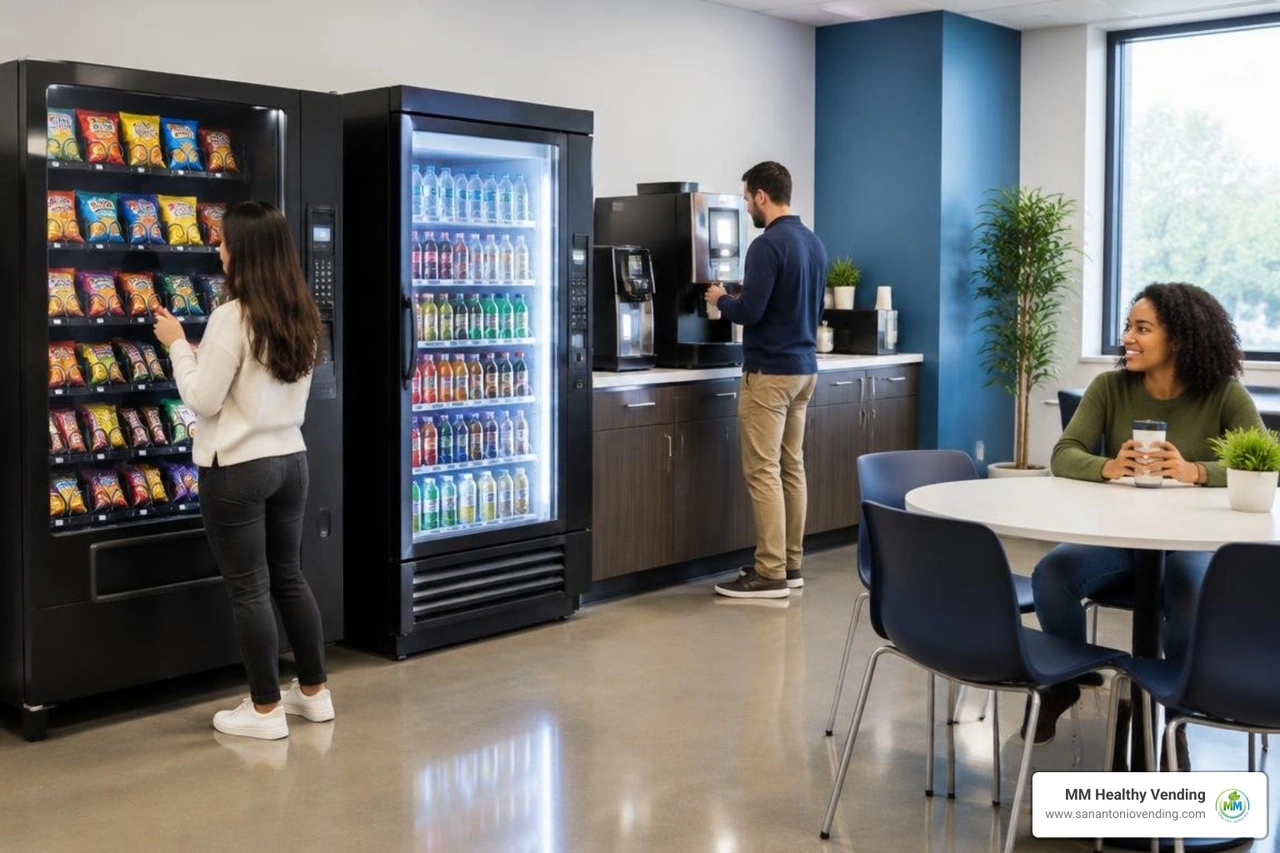
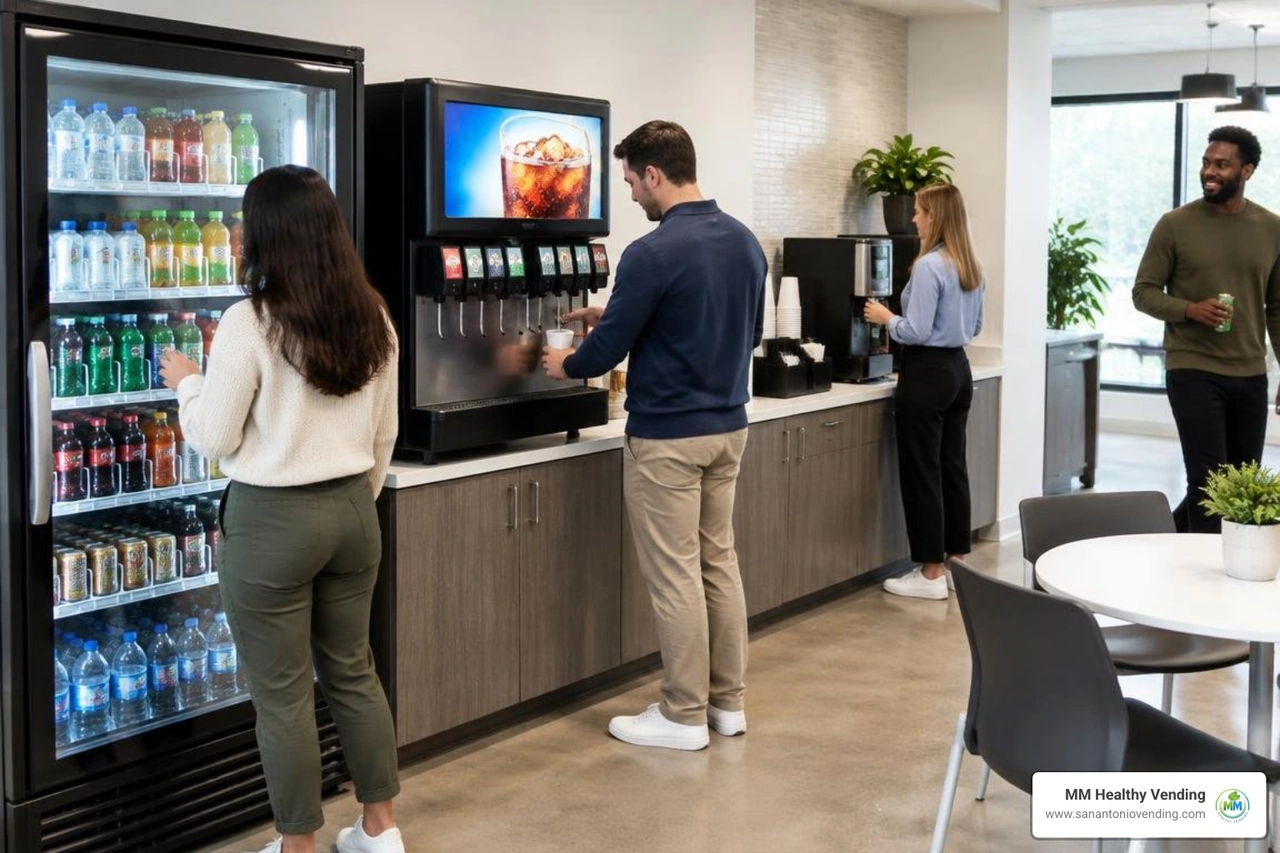
Integrating healthy workplace snacks directly into executive breakrooms supports productivity while serving as an attractive perk. Human resources and facility directors actively seek comprehensive workplace wellness solutions that encourage cleaner lifestyle choices without requiring off-site lunch runs. In corporate settings across Alamo Heights and downtown San Antonio, stock dry snack machines with clean fuel: lightly salted almonds, roasted chickpeas, organic energy bars, and whole-grain crisps.
Gyms, Health Clubs, and Athletic Facilities
Fitness centers, CrossFit boxes, and climbing gyms house the ultimate health-conscious consumer base. People walk through these doors with nutrition already at the top of their minds. Gym-goers regularly forget their post-workout recovery snacks or need a quick pre-workout hydration boost before jumping onto the treadmill.
Stocking refrigerators with vending machine healthy drinks alongside high-protein snacks captures immediate impulse buys. Top-moving items in health clubs include whey and plant protein shakes, branched-chain amino acid (BCAA) recovery beverages, low-sodium beef and turkey jerky, and coconut water. Because members are invested in physical wellness, they willingly pay premium price points for verified clean-label, functional products.
Hospitals and Medical Center Waiting Areas
Hospitals, emergency clinics, and outpatient surgical centers operate on a true 24/7 schedule. Doctors, nursing staff, technicians, and anxious visitors often find themselves hungry at hours when traditional cafeterias and local restaurants are closed.
Placing dependable healthy vending solutions in emergency room waiting lobbies, intensive care family lounges, and staff break rooms serves an essential community need. Shift workers tackling demanding 12-hour overnight rotations appreciate easy access to fresh yogurt parfaits, unsweetened cold teas, nutrient-rich meal bowls, and dried fruit blends.
Universities and Higher Education Campuses
College campuses combine dense foot traffic with young, health-minded demographics. Today's students balance busy schedules between lectures, labs, and study groups, frequently relying on automated retail for quick nourishment between classes.
Consulting a healthy snack vending machine guide helps operators select items that align with formal institutional nutrition standards while remaining budget-friendly for students. Campuses value options that limit empty calories, artificial dyes, and excessive sodium. Setting up machines in commuter lounges, campus libraries, residence hall common rooms, and academic breezeways guarantees heavy daily exposure.
Warehouses and Industrial Manufacturing Centers
Industrial distribution centers, logistics hubs, and manufacturing facilities across Southside San Antonio, Seguin, and Helotes feature large, dedicated workforces working physically demanding shifts. Break times are strictly scheduled, usually lasting 15 to 30 minutes, which leaves workers with zero time to leave the property for food.
Introducing smart snack vending directly into employee lunch areas delivers high-protein, calorie-dense stamina snacks that power teams through long shifts. High-turnover items for industrial accounts include hearty trail mixes, natural nut butter packs, protein-fortified baked goods, zero-sugar energy drinks, and nutrient-dense snack bars.
Essential Criteria for Scouting and Vetting Machine Sites
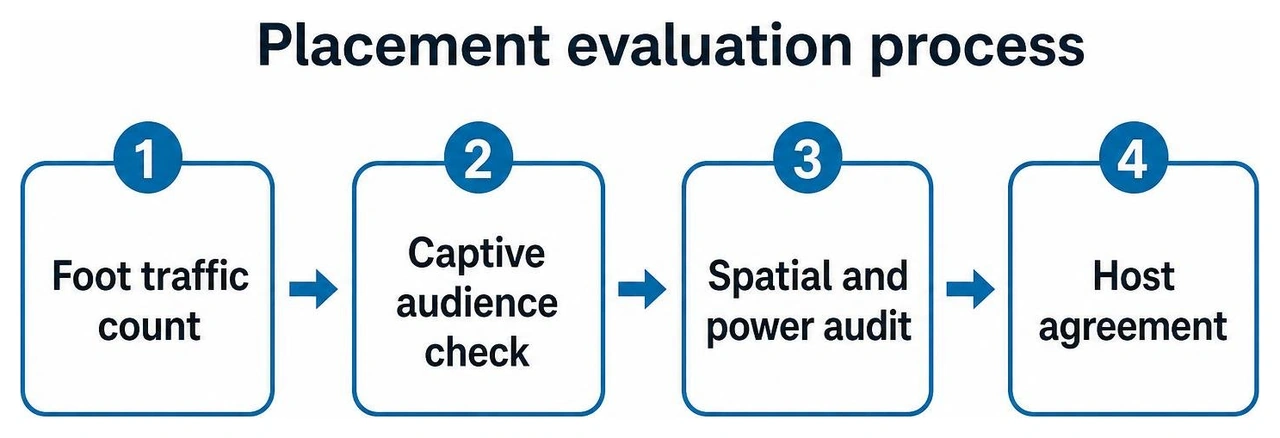
Finding a profitable machine location requires a clear vetting process. We evaluate physical layout, electrical accessibility, foot traffic density, and security before installing equipment.
Vetting Foot Traffic in Healthy Vending Machine Locations
Raw foot traffic volume serves as the primary engine of automated retail profitability. As a general rule of thumb, an installation site must have a minimum daily baseline of 50 to 100 people passing directly past the equipment to remain commercially viable.
When conducting an on-site audit, we observe pedestrian flow patterns. Placing a machine tucked away behind a service elevator drastically reduces sales, whereas positioning it near the main breakroom entrance, next to water refill stations, or along primary hallway intersections maximizes visibility. National placement trends tracked via the vending services directory consistently confirm that visible, unobstructed equipment outperforms hidden units by wide margins.
Matching Location Demographics to Snack Inventory
Stocking a machine without researching who walks past it is a fast track to stale inventory. An operator must build a tailored menu based on the distinct lifestyle habits of the target audience.

Understanding proper smart snacking healthy vending options allows you to build three balanced pricing bands:
- Value Anchors: Budget-conscious basics such as air-popped popcorn, sparkling water, and whole-wheat pretzels.
- Everyday Healthy: Reliable favorites including lightly salted almonds, baked vegetable crisps, and green teas.
- Premium Functional: High-protein meal replacement bars, grass-fed meat sticks, and functional kombuchas.
To prevent decision fatigue and optimize product turns, start a standard dry machine with 9 to 11 carefully curated snack selections, adding 2 to 4 chilled beverage items if using a combo refrigeration unit.
Analyzing Dwell Time and Captive Audiences
A captive audience exists whenever people are physically confined to a location for an extended duration with limited food alternatives. A busy transit stop where commuters rush past in five seconds often yields lower vending conversions than a corporate office or automotive service waiting room where 30 customers sit idle for 45 minutes.
Evaluate the surrounding retail ecosystem:
- Are there fast-casual dining spots within a 2-minute walking distance?
- Does the facility operate on a closed-campus policy where staff cannot leave during breaks?
- Does the business support multi-shift operations spanning evenings and weekends?
When off-site food options are inconvenient, well-merchandised automated machines become the immediate first choice for quick refreshments.
Securing Host Agreements and Maximizing Placement ROI
Turning a prospective location into an active revenue-generating placement requires professional contract negotiations, clear operational responsibilities, and modern retail technology.
Regulatory and Permit Rules for Healthy Vending Machine Locations
Regulatory requirements differ significantly depending on whether equipment sits on private commercial property or in a public municipal space. Operating on private commercial grounds—such as an office building, manufacturing warehouse, or private gym—is straightforward. The placement is governed entirely by a standard private property agreement between the vendor and the property manager.
Conversely, placing equipment in open public parks, transit hubs, or city buildings often requires general vendor licensing, municipal permits, and local health department inspections for perishable items. Market dynamics documented in directories like the NYC commercial vending market data emphasize that private corporate placements offer faster deployment timelines, simpler compliance, and more consistent day-to-day repeat customer volume.
Negotiating Placement Contracts and Revenue Splits
When presenting a placement proposal to a property manager or business owner, highlight host benefits rather than just equipment features. Modern employers are eager to upgrade breakroom amenities to support employee retention and workplace wellness.
Many operators structure partnerships through free healthy vending placement, where the host location receives state-of-the-art machines, regular restocking, and ongoing technical maintenance at zero upfront cost. In high-traffic venues where property managers request compensation for floor space and utility usage, standard commercial agreements offer a modest commission split—typically 10% to 20% of gross sales—after reaching baseline operational thresholds.
Deploying Cashless Telemetry and Micro Markets
Relying on old-fashioned coin mechanisms and bill acceptors severely caps revenue. Today's consumers carry smartphones, smartwatches, and contactless cards. Upgrading equipment to smart cashless payment terminals consistently produces a 30% to 40% revenue lift compared to cash-only units.
Furthermore, integrating cloud-based remote telemetry lets operators track product inventory, identify fast-moving SKUs, and monitor internal cooler temperatures from a central dashboard. For expansive corporate facilities with over 150 daily employees, introducing open-concept micro market workplace wellness systems and smart AI coolers provides self-checkout access to fresh salads, wraps, fresh fruit, and specialty drinks.
Frequently Asked Questions About Placement and Profitability
How much revenue does a healthy vending machine generate monthly?
A standard, well-situated machine typically nets between $300 and $800 each month after wholesale product costs and operational overhead. High-traffic placements in facilities like hospitals, large corporate headquarters, or active athletic complexes can generate net profits exceeding $1,500 monthly.
Investing in reliable modern equipment pays off quickly. For example, a $4,000 smart combo machine netting $600 per month pays for itself in roughly 6 to 7 months, with high-volume accounts achieving complete payback in as little as 4 to 5 months.
What minimum foot traffic is required to sustain a healthy machine?
A commercial venue generally needs a consistent flow of at least 50 to 100 people per day to support a healthy vending machine. In captive environments like distribution centers or corporate offices where workers spend entire shifts on-site, a stable base of 75 to 100 employees delivers outstanding sales volume. In open retail or fitness environments with shorter visit durations, daily foot traffic counts of 200 to 500+ visitors ensure strong turnover.
How do private site agreements differ from public space permits?
Private site agreements are straightforward commercial contracts executed directly between the equipment operator and the private business or property owner. These agreements establish machine placement locations, utility access, maintenance schedules, and any optional commission splits without requiring city council approvals.
Public space placements (such as city sidewalks, public transportation terminals, or municipal administration centers) require formal municipal bidding, local business permits, and recurring health department compliance certifications.
Conclusion
Securing the best healthy vending machine locations requires matching reliable foot traffic and captive audiences with modern merchandising and smart payment technology. Whether managing corporate offices in Alamo Heights, active health clubs in Boerne, or distribution centers across Schertz and New Braunfels, matching your snack selections to local customer demographics builds a dependable, recurring revenue stream.
At MM Healthy Vending, we make upgrading workplace refreshments simple. We provide premium vending machines, open-concept micro markets, and smart AI coolers to San Antonio area businesses at zero upfront cost. Our fully managed refreshment services include regular restocking, curated healthy selections, and responsive 2-hour local support to keep your breakroom running smoothly.
Explore our complete San Antonio workplace refreshment services to see how easy it is to bring healthy, automated dining options directly to your team.
You might also like...
More articles like the one you've read to keep you up-to-date on all things vending in San Antonio
Why San Antonio businesses choose us
Premium service, local expertise, cutting-edge technology
AI-powered smart coolers
Advanced computer vision technology for seamless, cashless transactions. Just grab what you need and go.
cashless
24/7 service
Round-the-clock support with an average 2-hour response time for any issues.
Local & trusted
Family-owned business proudly serving San Antonio since 2024
Ready to upgrade your breakroom?
Join hundreds of San Antonio businesses enjoying free, premium vending soutions