
Decoding DEX: What Every Vending Operator Needs to Know
Learn how a DEX vending machine streamlines route accounting, real-time data, and inventory control for modern vending operators.
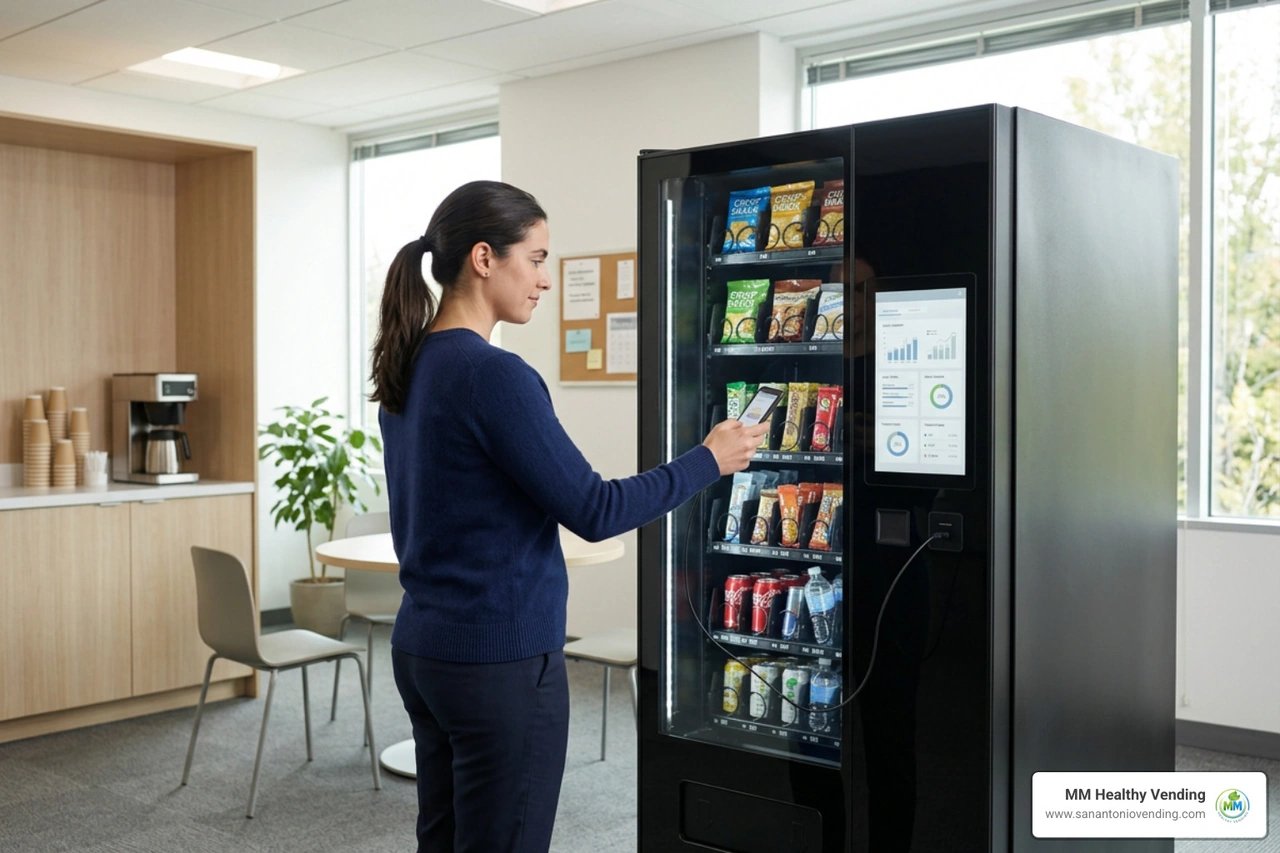
What Is a DEX Vending Machine — and Why It Matters for Your Facility
A DEX vending machine uses a standardized communication protocol called Digital Exchange (DEX) to automatically transmit real-time sales, inventory, and diagnostic data from the machine directly to a management system.
Here's what that means in plain terms:
- DEX = Digital Exchange, the protocol that reads and exports data from inside the machine
- What it tracks = cash in/out, product selections, pricing, and machine errors
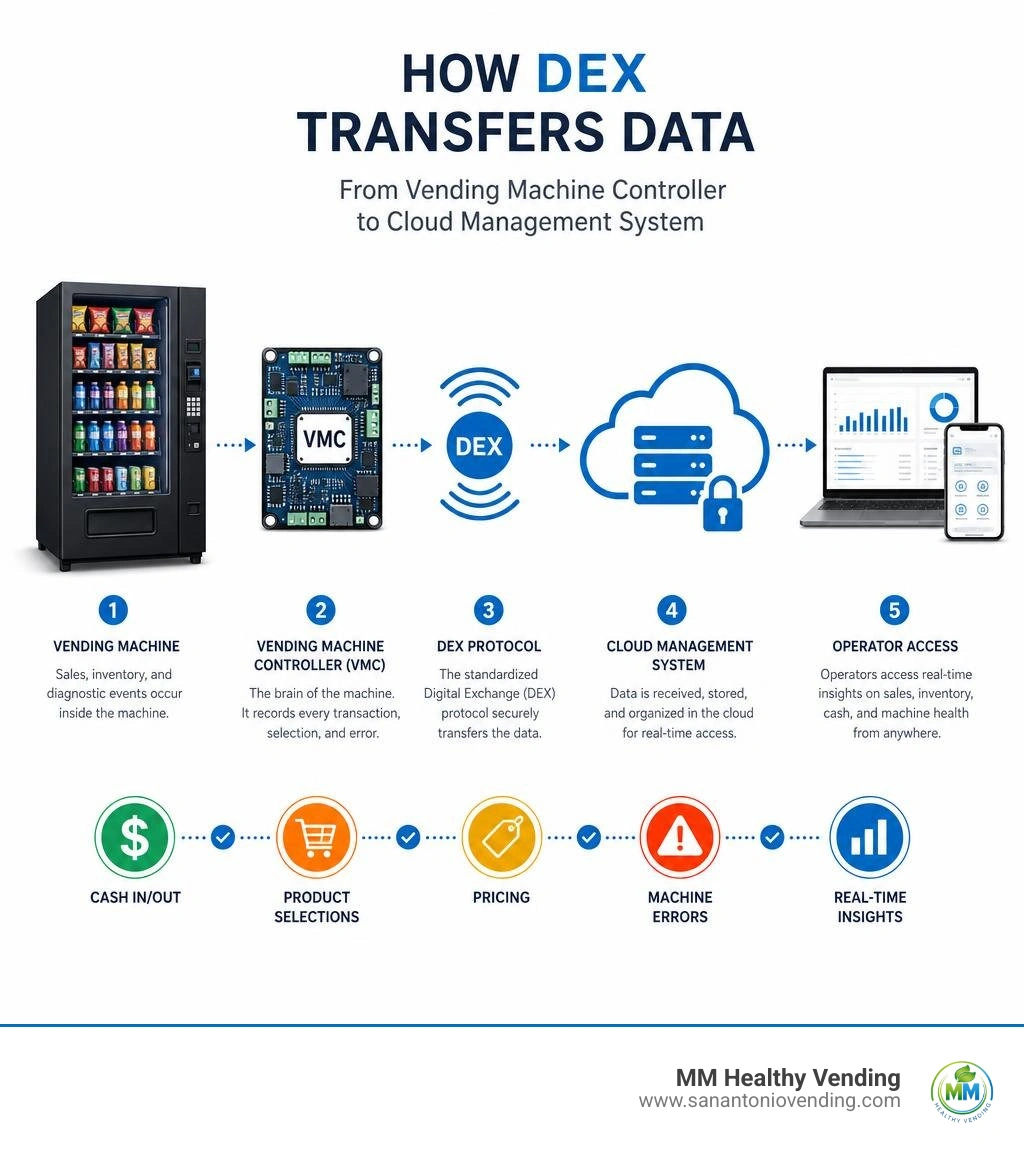
- How it works = the Vending Machine Controller (VMC) generates the data; DEX moves it to whoever needs it
- Why it matters = operators can monitor stock levels, catch problems, and verify sales without physically visiting the machine
This is the backbone of how modern vending operations stay efficient at scale.
Most facility managers never hear the word "DEX" — but every time a vending operator knows your machine is out of stock before you do, DEX is why.
The vending industry moves slowly. DEX was introduced in the late 1980s and it is still the de facto standard in 2026. That tells you how foundational it really is.
I'm Manuel Mojica, founder of a 7-figure vending and micro-market operation based in San Antonio, and I've built my entire route management system around understanding how DEX vending machine data drives smarter restocking, fewer service failures, and better location performance. Everything in this guide comes from real operational experience — not theory.
Understanding the DEX Vending Machine Protocol
At its core, Digital Exchange (DEX) is an electronic data protocol designed to extract internal audit files from a vending machine's central computer, known as the Vending Machine Controller (VMC). Think of the VMC as the brain of the vending machine. Every single time a quarter rolls through the coin mechanism, a dollar bill passes through the validator, or a user taps their credit card for a healthy snack, the VMC registers the event.
Without DEX, that cash and inventory data remains trapped inside the physical machine until someone manually opens the cabinet with a key and counts the bill box or logs inventory on a clipboard. DEX serves as the digital bridge, exporting structured audit records that record:
- Cash in and cash out records (exact counts of coin box contents, bill stacker totals, and change given)
- Cashless sales figures (credit, debit, and mobile wallet transactions)
- Product sales by lane (which specific spiraled coils or shelves dispensed products)
- Price points (verifying that items sold at the authorized price)
- Diagnostic events (coin jams, bill validator bill rejections, drop sensor errors, or cooling compressor cycles)
In international and modern European standards, DEX aligns closely with the EVA-DTS (European Vending Association Data Transfer Standard). Regardless of geographic naming quirks, the protocol ensures that whether you operate a cold drink vendor in Alamo Heights or a fresh food machine in New Braunfels, the machine speaks the exact same mathematical language as your enterprise software.
History and Adoption by NAMA
To understand why every DEX vending machine operates the way it does today, we have to look back to the late 1980s. During this era, major beverage bottlers and distributors faced a monumental auditing nightmare. Thousands of soda and snack machines were deployed across North America, but tracking physical cash and inventory movement depended entirely on route driver honesty and paper delivery receipts.
To solve this, major bottling companies developed an electronic data exchange standard to audit machines automatically upon driver arrival. Recognizing the immense value of a universal protocol, the National Automatic Merchandising Association (NAMA) formally incorporated DEX into its Vending Data Initiative (VDI) Version 1.0 release in 2009.
This official standardization cemented DEX as the undisputed universal language of automated retail audit data. Over thirty-five years after its initial inception, DEX remains mandatory on virtually every new commercial vending machine logic board and aftermarket telemetry unit manufactured today.
DEX vs. MDB: Understanding the Difference
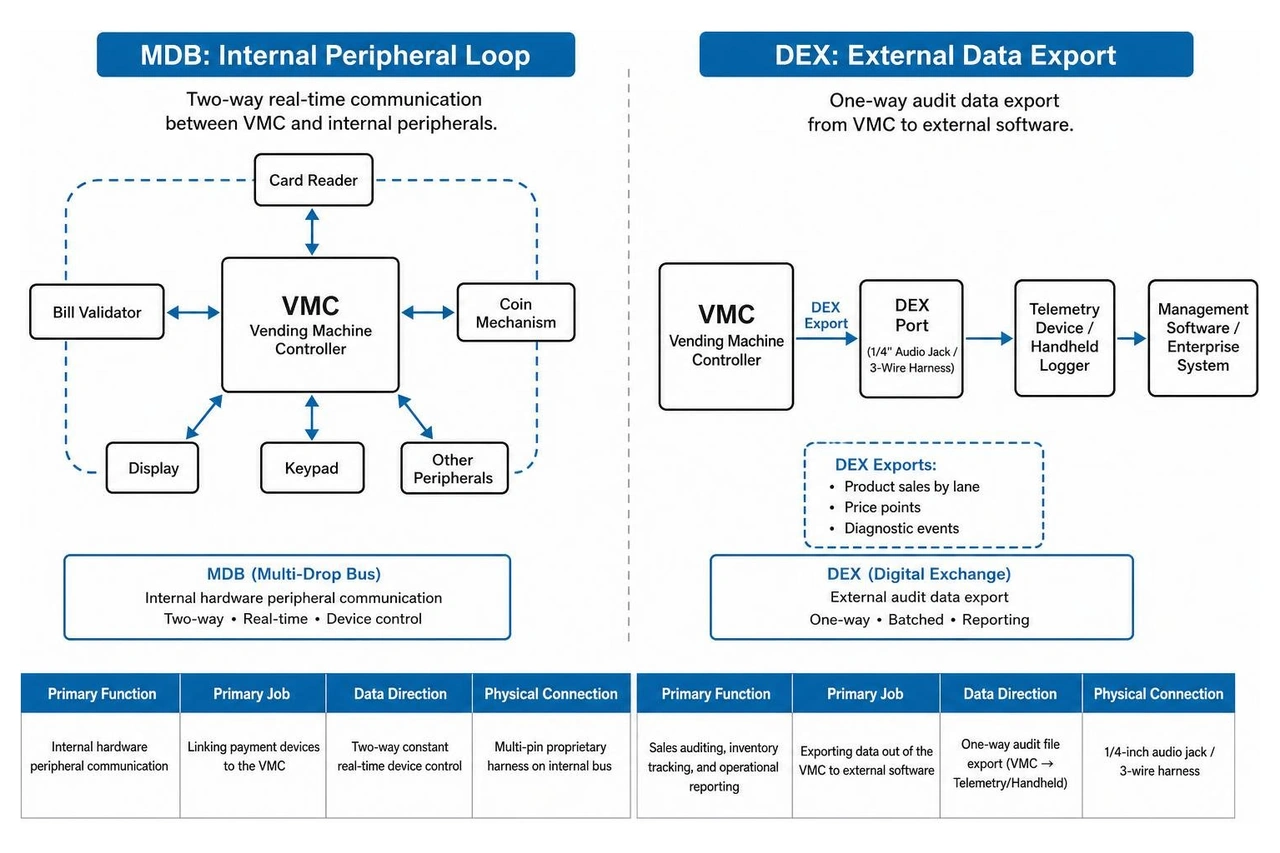
In the vending hardware world, acronyms can quickly become confusing. Operators and facility managers often hear "DEX" and "MDB" used in the same sentence, but they perform two completely separate, complementary roles inside the equipment cabinet.
Here is a clear comparison breakdown:
| Feature / Aspect | DEX (Digital Exchange) | MDB (Multi-Drop Bus) |
|---|---|---|
| Primary Function | Sales auditing, inventory tracking, and operational reporting | Internal hardware peripheral communication |
| Primary Job | Exporting data out of the VMC to external software | Linking payment devices (coin, bill, card readers) to the VMC |
| Data Direction | One-way audit file export (VMC $\rightarrow$ Telemetry/Handheld) | Two-way constant real-time device control |
| Physical Connection | 1/4-inch audio jack / 3-wire harness | Multi-pin proprietary harness on internal bus |
| Industry Role | De facto audit data standard | De facto payment peripheral standard |
To put it simply: MDB is how the coin mechanism tells the vending machine controller, "The customer just inserted $2.00." DEX is how the vending machine controller tells your management software, "Item A1 was purchased for $2.00 at 2:15 PM, leaving 4 items remaining in stock."
Operational Benefits: Real-Time Data and Route Accounting
Implementing DEX vending machine reporting transforms route management from guessing into a precise science. In traditional vending operations, route drivers loaded trucks based on static schedules—visiting locations whether the machines were empty or full. With DEX data, operations become entirely demand-driven.
Streamlining Route Accounting and Direct Store Delivery
For large commercial locations, office buildings, and retail environments in areas like Schertz, Seguin, or Boerne, route accounting must align with Direct Store Delivery (DSD) standards. DEX connects store-level receiving docks directly to corporate supply chain systems using Uniform Communication Standard (UCS) transaction sets—specifically UCS 894 (Delivery/Return Base Record) and UCS 895 (Delivery/Return Acknowledgment).
When a driver arrives at a facility dock or central distribution center:
- The driver plugs a handheld terminal into the DEX port or syncs via Bluetooth telemetry.
- The DEX system generates an instant audit file reconcilable with the delivery manifest.
- UCS 894 data transfers directly to the facility's inventory platform, auto-reconciling invoices without manual data entry.
- Electronic credit memos and adjustments process automatically on the spot.
This eliminates administrative back-and-forth, prevents invoicing disputes, and guarantees 100% accounting transparency for audit trails.
Remote Monitoring and Data Analytics
When DEX data streams through wireless telemetry modems to cloud-based Vending Management Software (VMS), operators gain bird's-eye visibility over their entire machine portfolio. Key analytics unlocked by DEX include:
- Velocity tracking and item popularity: Identify high-performing healthy snacks versus slow-moving items to optimize planograms.
- Dynamic pre-kitting: Route drivers pack trucks with the exact products required to fill machines back to 100% capacity before leaving the warehouse, eliminating excess truck weight and wasted trips.
- Cash box reconciliation: Compare exact cash collected from the bill stacker and coin box against DEX financial records to detect theft, miscounts, or machine mechanical loss instantly.
- Inventory turnover velocity: Calculate localized shelf life for fresh items to prevent product spoilage and waste.
DEX Hardware, Telemetry, and System Architecture
While DEX is fundamentally a software data format, it relies on simple physical hardware to transmit files out of the machine cabinet.
Wiring Requirements for a DEX Vending Machine
The hardware setup for a DEX connection is remarkably simple and durable. Every standard vending machine logic board includes a specialized DEX port, which routes to an external access jack using a dedicated cable assembly.
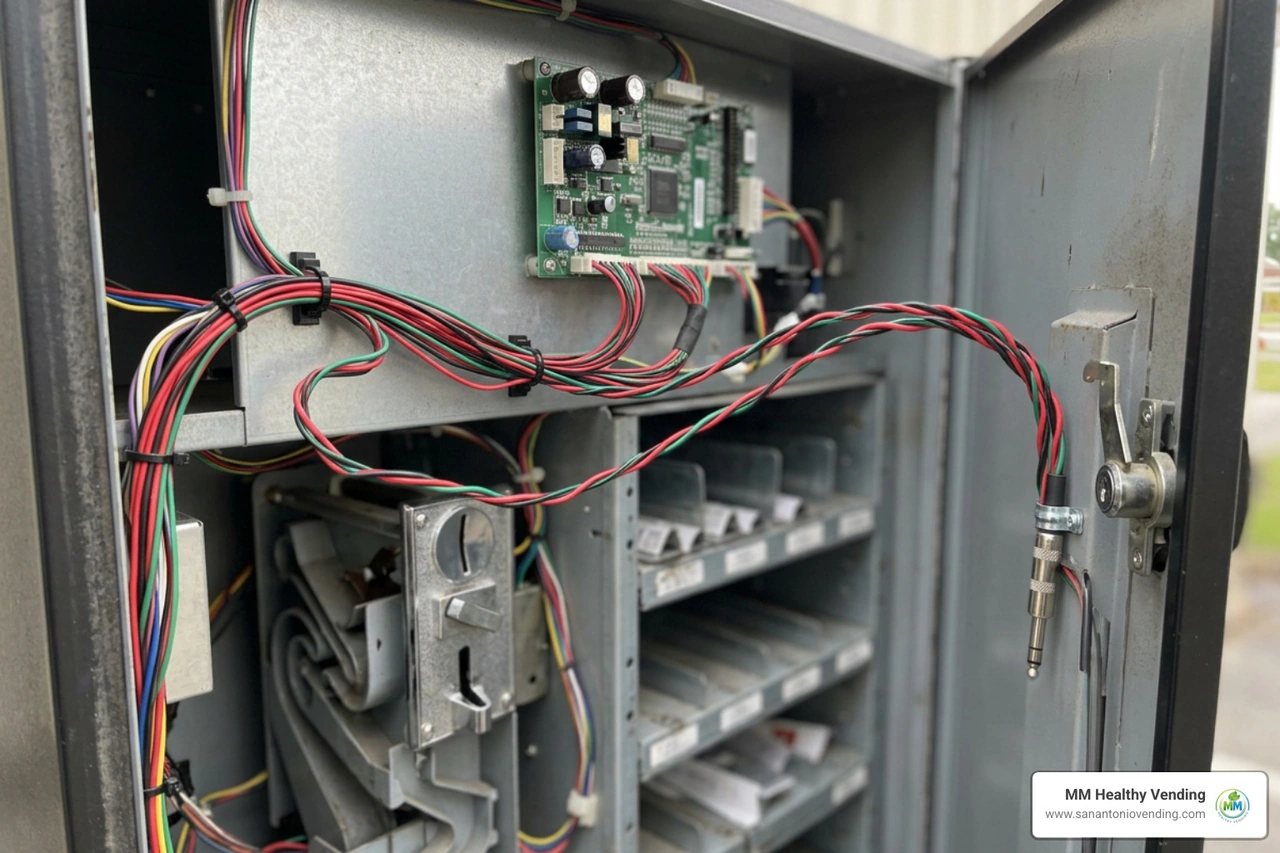
A standard DEX data extraction harness features specific physical characteristics:
- Wire Configuration: A 3-wire system comprising red, black, and green/red insulated conductors.
- Harness Length: Standardized at 9.5 inches to extend comfortably from the logic board to the door frame or port opening.
- Weight and Size: Ultra-lightweight at approximately 0.0325 lbs, designed to fit cleanly inside tight conduit paths without interfering with mechanical drop chutes.
- Interface Plug: Features a standard 1/4-inch (6.35mm) female stereo jack port—similar to an audio headphone jack—mounted near the lock assembly or coin insertion plate.
Operators looking for replacement hardware or retrofit harness assemblies often turn to trusted components like those provided by D & S Vending Inc - Blu-DEX, which allow route drivers or telemetry units to plug directly into the controller board.
Telemetry Integration and Cloud Services
In early vending days, drivers plugged physical handheld computers directly into the 1/4-inch DEX jack during routine visits. Today, modern operations connect small cellular telemetry devices (often bundled inside credit card readers) directly to the DEX harness permanently inside the cabinet.
These telemetry modems draw minimal power and transmit DEX audit files across multi-network connections—including 4G LTE cellular, Wi-Fi, and wired LAN Ethernet. Cloud servers poll the machine automatically multiple times per day (or immediately following a sales transaction), pushing critical inventory data straight to desktop and mobile dashboards.
Advanced Features and Practical Industry Applications
Modern vending machines are no longer simple mechanical boxes—they are smart automated micro-stores capable of selling delicate fresh meals, apparel, electronics, and specialty goods.
Fresh Food and Specialty DEX Vending Machine Deployments
When deploying specialized hardware—such as a modern DEX System Fresh Food Vending Machines or a heavy-duty DEX System Gym Vending Machine—DEX integration is essential to safeguard health and inventory integrity.
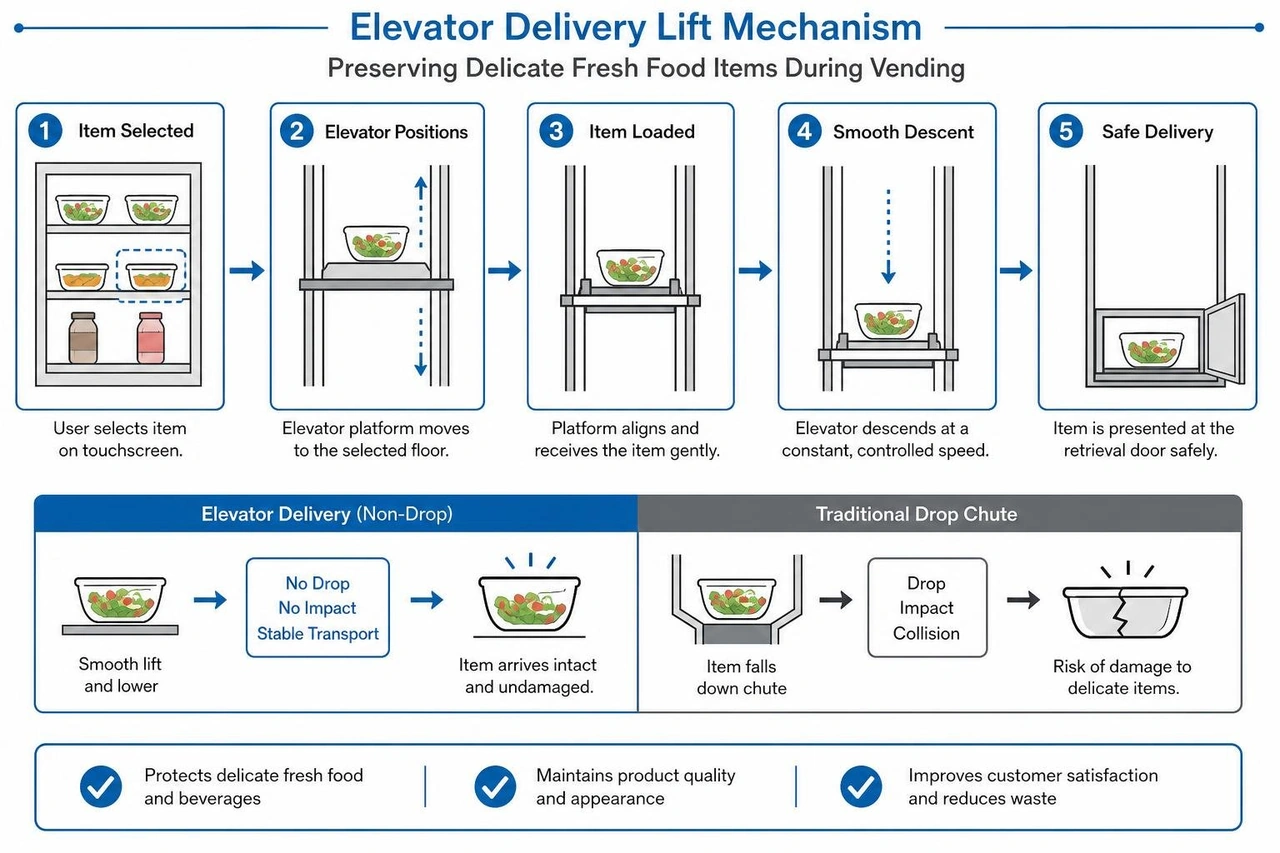
Specialized high-capacity machines carry impressive physical specifications that depend heavily on DEX telemetry monitoring:
- Net Weight & Power: Units typically feature a 250 kg net weight (approx. 0.25T) with heavy-duty insulation, drawing around 300W during standard operation (or up to 1800W when running high-efficiency refrigeration units).
- Cargo Lane Setup: Standard configurations include 54 distinct cargo lanes spread across 6 adjustable floors (9 lanes per floor), holding anywhere from 120 to 150 total items like gym apparel, protein shakes, or pre-packaged meals.
- Elevator Non-Drop Delivery: Fresh food units utilize constant-velocity elevator platforms rather than standard drop chutes, ensuring fragile containers or glass bottles land safely without damage.
Diagnostic Error Tracking and Remote Control
Beyond counting quarters and candy bars, a DEX vending machine functions as an intelligent diagnostic system. If a mechanical issue occurs, the VMC registers the event in the DEX log and alerts the remote operator immediately via cloud telemetry.
Key remote diagnostic capabilities include:
- Coin Jam & Bill Acceptor Errors: Instant notifications when cash mechanism jams occur, allowing dispatch of a technician before sales drop.
- Drop Sensor Failures: Detects if optical drop sensors fail to confirm product delivery, helping prevent cash losses or customer frustration.
- Health Switch & Remote Temperature Control: For fresh food machines operating between -5°C and 25°C, DEX logs internal temperature continuously. If power fails and temperatures rise above safety thresholds, the controller automatically triggers a "Health Lockout," disabling sales of perishable goods to protect public safety.
Challenges, Limitations, and Future Outlook of DEX Protocol
While DEX is the undisputed backbone of vending telemetry, it is not without its limitations.

- Error Reporting Latency: Traditional non-telemetry DEX setups only report data when physically polled by a driver, meaning a jam that occurs on Monday morning might go unnoticed until Thursday's scheduled restock.
- Legacy Logic Board Compatibility: Older legacy machines manufactured prior to the late 1990s often lack native DEX ports or require costly control board retrofits to generate compatible audit files.
- Extremely Long Machine Lifespans: Vending machines routinely remain in commercial service for 20 to 30 years. Because equipment lasts so long, operators cannot upgrade technology overnight, forcing the industry to move at a gradual, cautious pace.
Despite emerging modern web APIs and cloud-native communications, DEX will remain deeply entrenched well past 2030. Because every major Vending Management Software (VMS) platform, card reader provider, and logic board manufacturer worldwide relies on DEX structure, it remains the gold standard for automated retail data auditing.
Frequently Asked Questions about DEX Vending Systems
What is the purpose of DEX in a vending machine?
DEX (Digital Exchange) provides a standardized, error-free electronic audit record of everything happening inside a vending machine. It logs physical cash collected, card payments processed, items sold per inventory coil, exact pricing data, and internal hardware faults—eliminating manual paper tracking and human counting errors.
How does DEX differ from MDB in vending hardware?
DEX is an audit data extraction protocol that moves reporting data from the machine controller out to central management software. MDB (Multi-Drop Bus) is an internal communication bus that allows payment peripherals—such as coin mechanisms, bill acceptors, and credit card readers—to talk directly to the machine's central computer.
Why hasn't cloud API technology completely replaced DEX?
Commercial vending machines have an extraordinary operational service life of 20 to 30 years. Because millions of machines with DEX controller boards are currently deployed across workplaces, schools, and hospitals, replacing DEX entirely would require discarding billions of dollars in functional equipment. Telemetry modems simply wrap around existing DEX protocols to stream data to modern cloud platforms.
Conclusion
Understanding how a DEX vending machine captures, verifies, and transmits data reveals why modern automated refreshment services operate so seamlessly. By bridging machine controllers to cloud analytics, DEX eliminates stockouts, prevents mechanical downtime, guarantees cash accountability, and keeps breakroom snacks fully stocked.
At MM Healthy Vending, we leverage advanced telemetry and real-time monitoring across our entire fleet of state-of-the-art smart vending machines, micro-markets, and smart AI coolers.
We provide zero-cost, fully managed refreshment solutions tailored specifically for workplaces, industrial facilities, healthcare centers, and educational sites throughout San Antonio, New Braunfels, Boerne, Schertz, Seguin, Helotes, Alamo Heights, and Southside TX.
When you partner with us, you get premium equipment, custom healthy snack selections, zero financial commitment, and rapid 2-hour local support whenever you need assistance.
Ready to upgrade your breakroom experience with smart, hassle-free vending solutions? Explore our complete range of fully managed San Antonio vending services today or reach out to our local team to request your free location analysis!
You might also like...
More articles like the one you've read to keep you up-to-date on all things vending in San Antonio

Why San Antonio businesses choose us
Premium service, local expertise, cutting-edge technology
AI-powered smart coolers
Advanced computer vision technology for seamless, cashless transactions. Just grab what you need and go.
cashless
24/7 service
Round-the-clock support with an average 2-hour response time for any issues.
Local & trusted
Family-owned business proudly serving San Antonio since 2024
Ready to upgrade your breakroom?
Join hundreds of San Antonio businesses enjoying free, premium vending soutions