Why Your Team Deserves a Better Office Coffee and Tea Machine
Upgrade your breakroom with a coffee tea vending machine for office to boost morale and productivity. Compare top models, features, and managed services.
Choosing a Coffee and Tea Vending Machine for Your Office
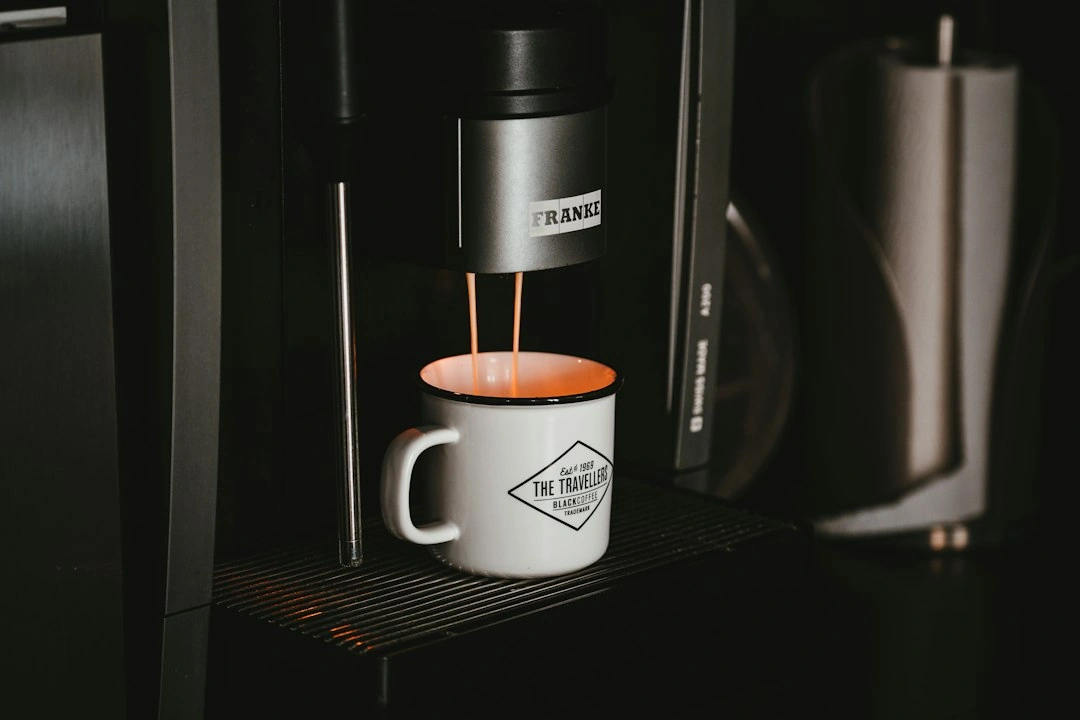
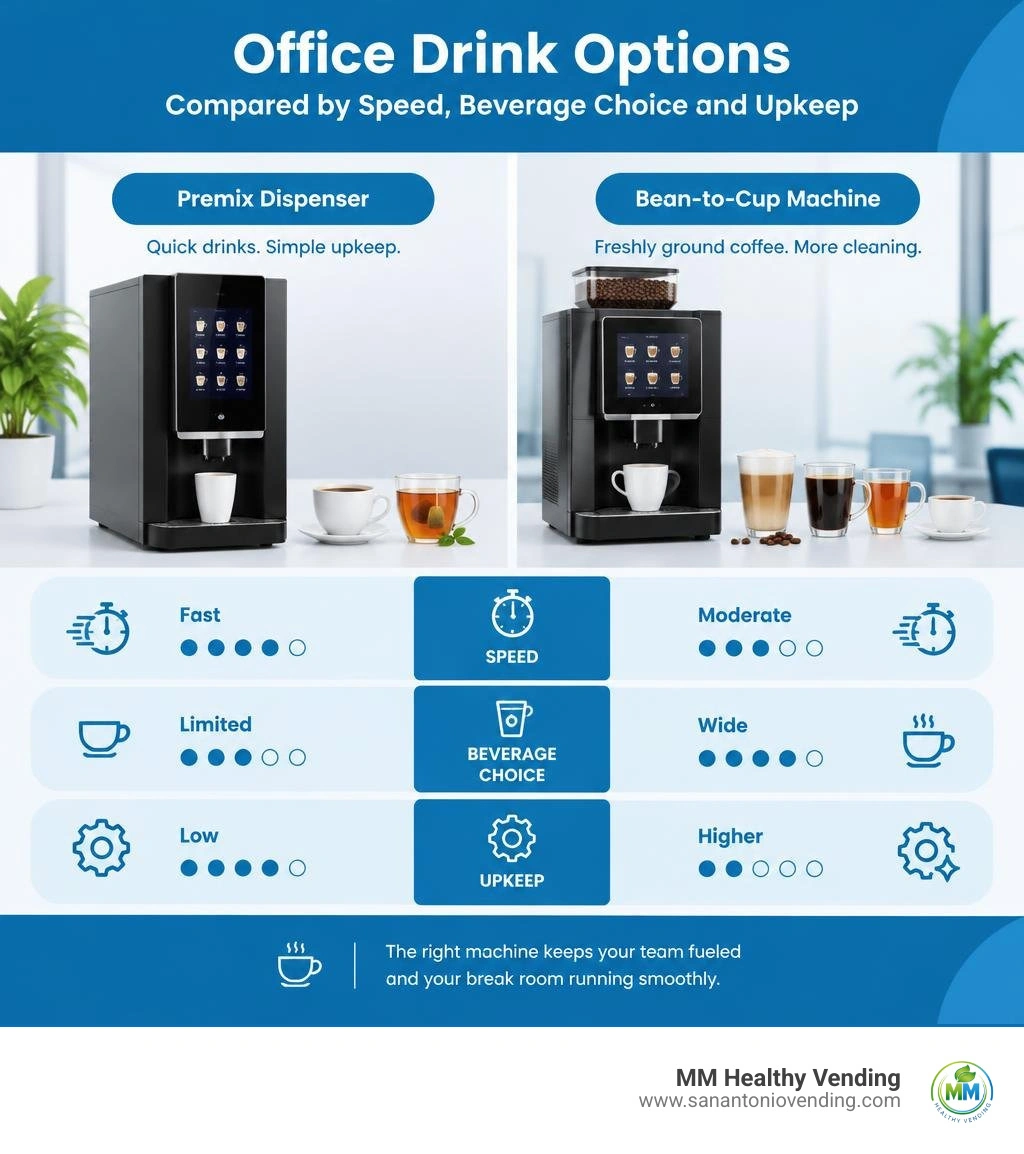
Choose for your busiest break, not just your daily cup count. A compact premix dispenser is a practical choice when your team wants quick tea and coffee with simple upkeep. A bean-to-cup machine offers freshly ground coffee but needs more cleaning. For a busy break room, look for enough dispensing capacity to keep queues short, plus a service plan that covers refills and repairs.
I'm Manuel Mojica, a commercial vending operator who has built a seven-figure business and deployed machines nationwide. My experience with placement, restocking, and maintenance shapes how I evaluate a coffee tea vending machine for office use.
Coffee tea vending machine for office terms to remember:
Key Benefits of a Coffee Tea Vending Machine for Office Workplaces
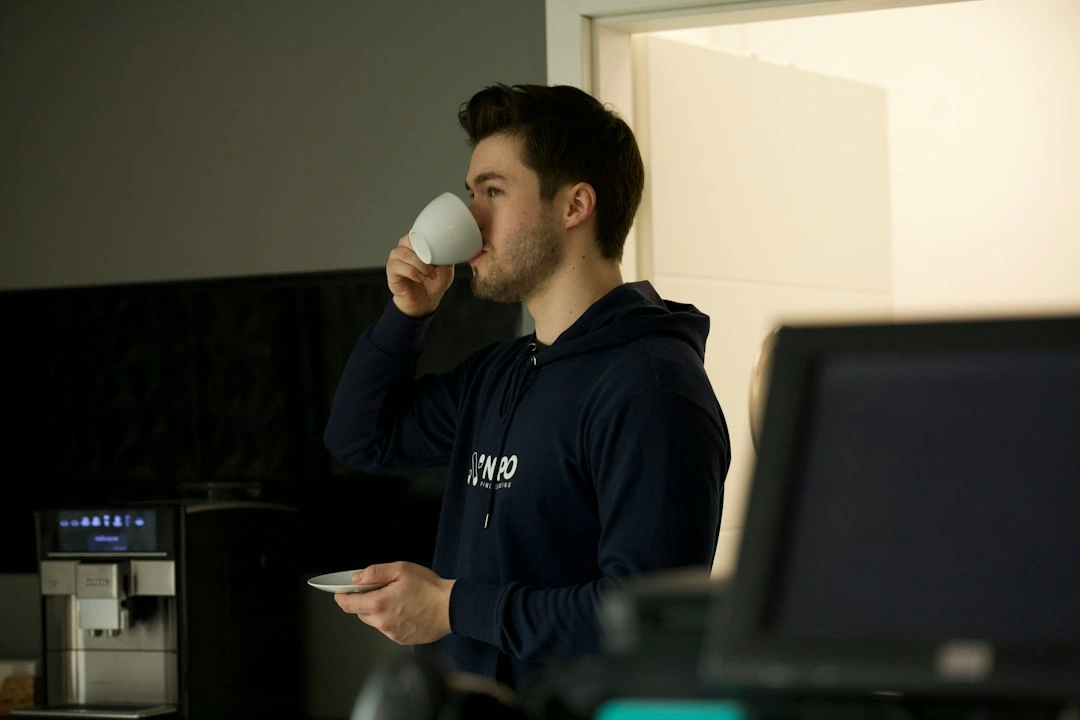
Upgrading your break room with a dedicated hot drink dispenser is one of the most effective ways to boost team morale and streamline daily operations. When workers have access to hot espresso, creamy lattes, and comforting teas right down the hall, they spend less time leaving the building for mid-morning coffee runs and more time collaborating on key projects.
- Instant Brewing and Massive Time Savings: Manual drip brewers and kettle setups take several minutes per serving. Automated dispensers brew a fresh 150ml cup in roughly 12 to 30 seconds, preventing break room bottlenecks during morning rush hours.
- Direct Pantry Cost Reduction: Consolidating your pantry supplies into automated canisters eliminates spilled sugar bags, spoiled milk cartons, and half-used coffee containers. Many businesses reduce pantry inventory waste by up to 15% within the first few months.
- Unmatched Taste Consistency: Every cup delivers the exact proportion of water, heat, and powder or espresso extract. Whether someone presses the button at 8:00 AM or 8:00 PM, their beverage tastes identical.
- 24/7 Refreshment Access: For teams working extended shifts or flexible schedules, hot drinks remain available around the clock without requiring kitchen staff or catering oversight.
- A Natural Social Hub: A well-equipped break room encourages spontaneous cross-department conversations. When team members meet around a quality beverage station, communication flows more naturally across projects.
To see how modern hot beverage systems fit into a complete break room strategy, explore our comprehensive workplace refreshment guide.
Top Categories of Office Beverage Dispensers Compared
Choosing the right commercial unit requires balancing dispensing speed, bean quality, ingredient formats, and daily cleaning requirements. Review this side-by-side comparison of the three primary machine categories:
| Feature / Metric | Compact Multi-Lane Premix | Fresh Milk Bean-to-Cup | Smart High-Capacity Multi-Station |
|---|---|---|---|
| Primary Ingredient Format | Soluble Powders (Tea, Coffee, Whitener) | Whole Roasted Beans + Liquid Milk | Whole Beans or Powders + Concentrates |
| Dispensing Speed | 3 to 5 cups per minute | 1 to 2 cups per minute | 2 to 3 cups per minute (Dual Spout) |
| Hourly Output Capacity | 100 to 120 cups/hour | 60 to 80 cups/hour | Up to 100 cups/hour |
| Recommended Daily Volume | 100 to 200 cups/day | 150 to 300 cups/day | 300 to 450+ cups/day |
| Beverage Selection Range | 2 to 4 options + Hot Water | 6 to 8 espresso-based options | 8 to 15+ hot beverages & soups |
| Daily Upkeep Required | Low (5-minute rinse & tray empty) | Medium-High (Milk line sanitation) | Medium (Automated flushing cycle) |
| Typical Power Rating | 1.5 kW to 2.2 kW | 2.5 kW to 3.0 kW | 3.0 kW (Dedicated 16A Circuit) |
Businesses looking for an artisanal experience can also evaluate gourmet coffee service options alongside automated equipment.
Compact Multi-Lane Premix Machines
Compact multi-lane systems rely on sealed canisters filled with instant coffee, freeze-dried tea, cardamom blends, dairy whiteners, and sweetened cocoa. These units mix hot water and premix powder inside individual whipping chambers right before dispensing into the cup.
Configured in 2-lane, 3-lane, or 4-lane layouts, compact dispensers churn out 100 to 120 cups per hour at speeds reaching 5 cups per minute. Because they do not use liquid milk, you avoid spoilage risks and complex sanitation routines. They occupy minimal counter space, making them ideal for satellite pantries, small professional suites, and manufacturing break stations.
Fresh Milk Bean-to-Cup Dispensers
Bean-to-cup machines are designed for teams that demand authentic espresso crema and micro-foamed milk. These machines hold whole roasted coffee beans in transparent hoppers, grinding each dose on demand before pulling espresso shots under high pump pressure.
Many commercial models integrate with compact under-counter or side-mounted refrigerators that keep UHT or fresh milk below 8°C (46°F). With serving capacities of roughly 300 cups per day, these machines produce cappuccinos, cafe lattes, and flat whites comparable to local coffee shops. They require daily milk line flushes to keep dairy pathways clean.
Smart High-Capacity Multi-Beverage Stations
High-capacity beverage stations handle enterprise headquarters, call centers, and large corporate floors. Equipped with twin dispensing nozzles and large 7-liter boilers, these systems can pour up to 450 cups per day without losing water temperature.
These units offer extensive menus featuring 8 to 15 selections, including black coffee, mochaccino, spiced chai, green tea, hot chocolate, and tomato soup. Integrated digital telemetry tracks internal ingredient levels in real time, alerting facility managers when canisters run low.
Critical Features to Evaluate Before Choosing a Machine
Before selecting an office beverage machine, evaluate how your hardware choices match your company's daily workflow. Reviewing these factors alongside professional break room refreshment solutions ensures you get dependable equipment tailored to your team.
Selecting the Right Machine for Office Size and Foot Traffic
Start by calculating your peak-hour demand rather than just your total daily head count. If 60 employees take their morning break between 8:45 AM and 9:15 AM, a machine dispensing 1 cup every 90 seconds will create frustrating delays. In high-traffic break rooms, prioritize fast 2-to-5-cup-per-minute units with swift boiler recovery times.
Water sourcing is equally important:
- Direct Plumbed Line: Connects straight to your municipal water supply through commercial filtration cartridges, eliminating manual refills.
- Inverted Bottle (Bubble Top): Uses standard 20-liter water bottles seated on top of the machine, ideal for historic buildings or leased suites where running plumbing lines is difficult.
- Submersible Pump Kits: Draws water from a hidden 20-liter bottle stored inside a base cabinet beneath the counter.
Hygiene Standards, Self-Cleaning, and Milk Refrigeration Systems
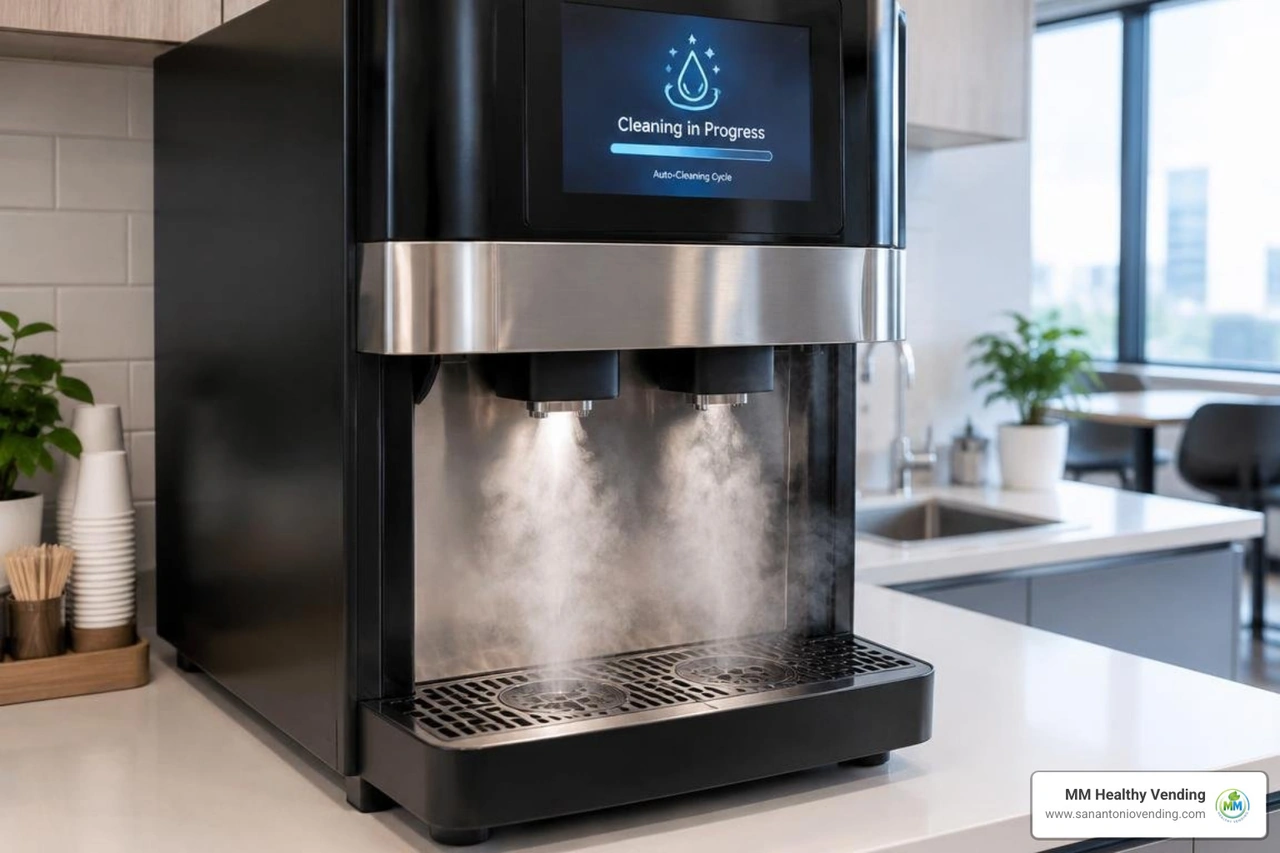
Beverage machine hygiene directly impacts taste quality and workplace safety:
- Automated Flushing Cycles: High-end machines feature programmed rinse cycles that flush internal mixing bowls and dispensing tubes with near-boiling water after idle periods.
- Auto-Lock Safety Protocols: If the boiler drops below safe brewing temperatures or the internal milk reservoir exceeds 8°C (46°F), smart units automatically lock dispensing to prevent contaminated drinks.
- UHT Milk Integration: Ultra-High Temperature milk undergoes rigorous processing to eliminate active bacteria, keeping liquid dairy safe when paired with dedicated refrigeration units.
- Removable Waste Trays: Deep drip trays with internal float sensors make daily emptying and washing simple for your custodial staff.
Digital Payments, IoT Telemetry, and Contactless Dispensing
Modern workplace amenities should be as convenient and touch-free as possible. Many current commercial dispensers incorporate infrared touchless sensors that detect a user's finger hovering an inch away from the selection panel.
For cafeterias, shared business centers, or co-working spaces, integrated QR code payment gateways and RFID badge readers allow employees to buy specialty drinks or log subsidized allowances without handling cash. Check out contactless dispensing demonstrations to see how infrared interfaces and mobile apps make modern break room machines completely touch-free.
Installation, Power, and Routine Maintenance Requirements
Installing a commercial beverage machine requires proper utility planning to ensure safe, long-term operation:
- Electrical Capacity: Most commercial dispensers run on standard 230V AC / 50-60Hz power, drawing between 1.5 kW and 3.0 kW during active heating. High-capacity units often require a dedicated 16-amp breaker.
- Counter Footprint: Measure both width and vertical clearance. A standard 4-canister dispenser measures roughly 330mm wide, 570mm deep, and 650mm high. If your setup includes an external milk refrigerator, add at least 260mm of counter width.
- Water Filtration: Hard water scale is the leading cause of solenoid valve failures and heating element burnouts. Always install an inline sediment and carbon scale-inhibiting water filter.
- Preventive Maintenance Schedule: Daily upkeep takes less than five minutes for drip tray clearing and hot water flushes. Monthly maintenance includes canister cleaning, mixer seal checks, and descaling.
Companies wanting a hands-off approach often bundle equipment with managed office coffee and water services.
Maximizing Value with a Managed Placement Model
Purchasing commercial hot drink dispensers outright can cost anywhere from $800 for basic 2-lane premix units to over $4,500 for fully automatic bean-to-cup systems. Ongoing costs—including coffee beans, specialty teas, dairy whitener, cups, stirrers, filter replacements, and service visits—can strain internal office budgets.
A managed placement model removes these upfront capital expenses. Under this arrangement, our team handles delivery, installation, weekly restocking, water filter changes, and technical maintenance at zero capital cost to your business.
With guaranteed 2-hour local dispatch windows across San Antonio, New Braunfels, Boerne, Schertz, Seguin, Helotes, Alamo Heights, and Southside, our fully managed program keeps your pantry running smoothly without unexpected repair bills.
Frequently Asked Questions About Office Beverage Machines
What is the standard cup-per-minute dispensing capacity for office hot beverage dispensers?
Most commercial office dispensers pour between 2 and 5 cups per minute for standard 150ml servings. Compact multi-lane premix units are the fastest, dispensing hot tea or coffee in about 12 seconds (5 cups per minute). Bean-to-cup machines take 30 to 45 seconds per cup because they grind whole beans and froth milk for each order.
How do premix systems differ from fresh milk and bean-to-cup machines?
Premix machines use instant soluble powders stored in dry internal canisters, mixing each drink with hot water inside sealed whipping bowls. They are fast, reliable, and easy to clean. Bean-to-cup systems grind whole coffee beans on demand and froth fresh or UHT milk for authentic cafe drinks, requiring daily cleaning of the milk lines and grinder chutes.
Are contactless dispensing and digital payments standard in modern office beverage machines?
Yes, modern commercial machines offer touchless infrared sensors, smartphone QR scanning, and RFID badge readers. These digital tools allow employees to select drinks and complete purchases without touching shared buttons, keeping break rooms cleaner and more hygienic.
Conclusion
Upgrading your break room with a dependable hot beverage dispenser is an investment in team productivity, wellness, and company culture. Providing quality coffee, soothing herbal teas, and specialty hot drinks right in the office keeps employees refreshed and energized throughout the workday.
At MM Healthy Vending, we provide free vending machines, micro markets, and smart beverage stations to businesses throughout San Antonio, New Braunfels, Boerne, Schertz, Seguin, Helotes, Alamo Heights, and Southside. Our zero-cost, fully managed programs include prompt local service, complete restocking, and fast 2-hour technical support.
Contact us today to explore our traditional vending and workplace refreshment services and build the ideal break room setup for your team.
You might also like...
More articles like the one you've read to keep you up-to-date on all things vending in San Antonio

Why San Antonio businesses choose us
Premium service, local expertise, cutting-edge technology
AI-powered smart coolers
Advanced computer vision technology for seamless, cashless transactions. Just grab what you need and go.
cashless
24/7 service
Round-the-clock support with an average 2-hour response time for any issues.
Local & trusted
Family-owned business proudly serving San Antonio since 2024
Ready to upgrade your breakroom?
Join hundreds of San Antonio businesses enjoying free, premium vending soutions