What Companies Need to Know About Beverage Vending for Businesses
Explore costs, machine types, and placement strategies for beverage vending for businesses to boost workplace satisfaction and revenue.
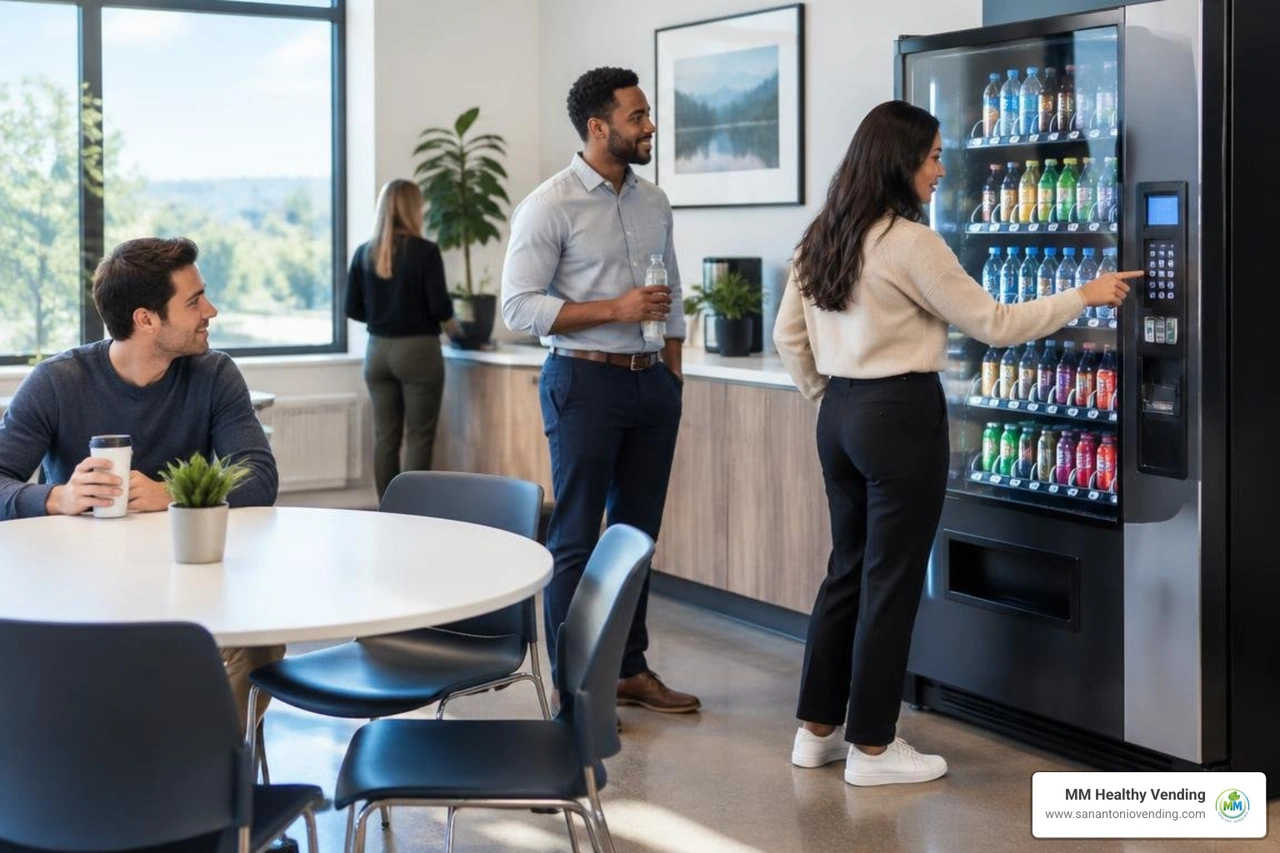
Choosing Beverage Vending for Your San Antonio Business
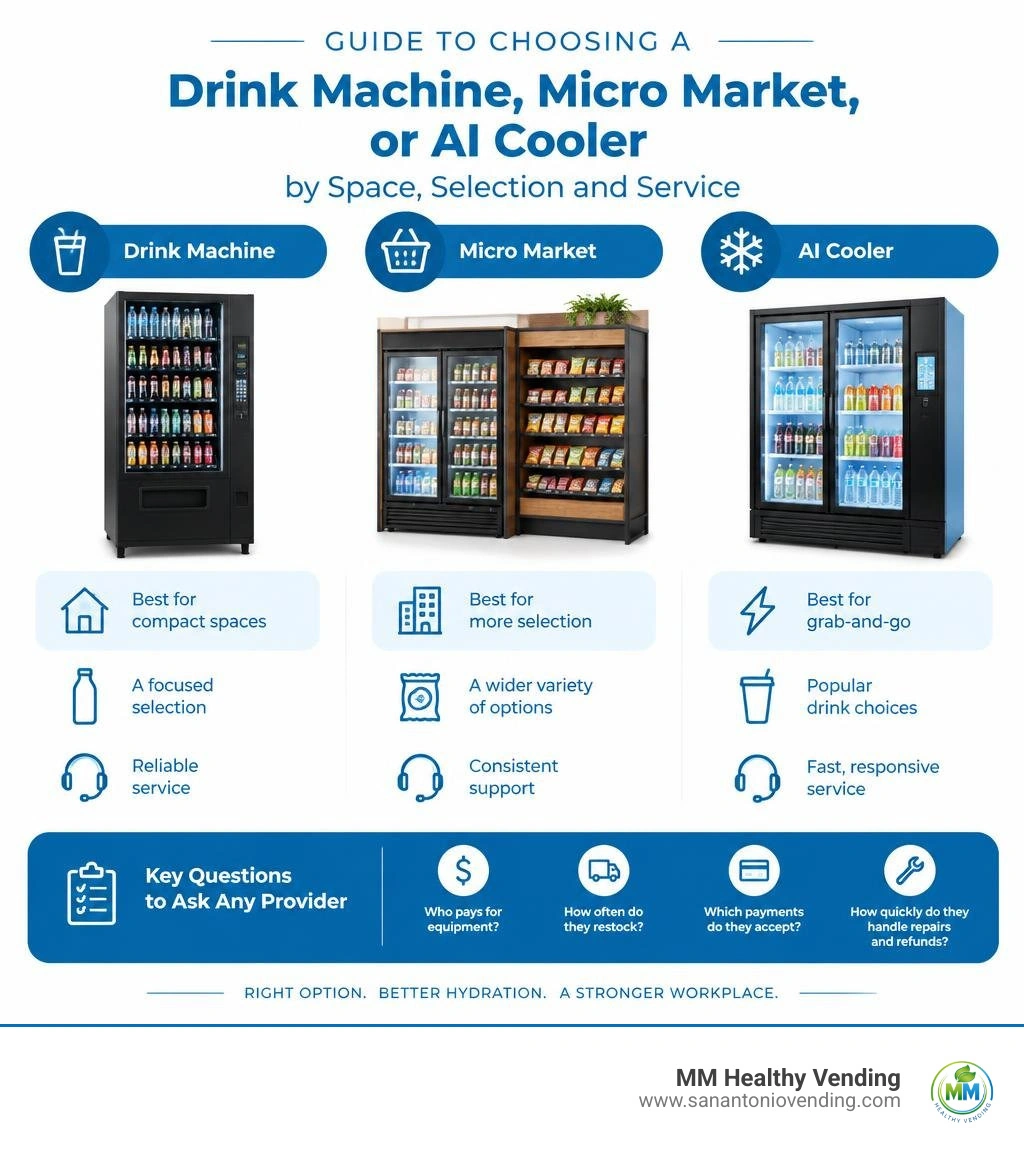
To choose beverage vending for businesses, start with your space and the people who use it. A drink vending machine suits a compact breakroom. A micro market offers more choice where staff have room to browse. An AI cooler makes grab-and-go drinks easy. Ask each provider who pays for equipment, how often they restock, which payments they accept, and how quickly they handle repairs and refunds.
MM Healthy Vending offers San Antonio businesses all three options through a zero-cost, fully managed program with 2-hour local support.
I'm Manuel Mojica, and I've built a San Antonio-based vending and micro-market operation with deployments nationwide. In this guide, I'll use that hands-on experience with beverage vending for businesses to help you weigh the options, costs, and service details that matter.
Learn more about beverage vending for businesses:
Types of Beverage Vending for Businesses: Machines, Micro Markets, and Smart Coolers
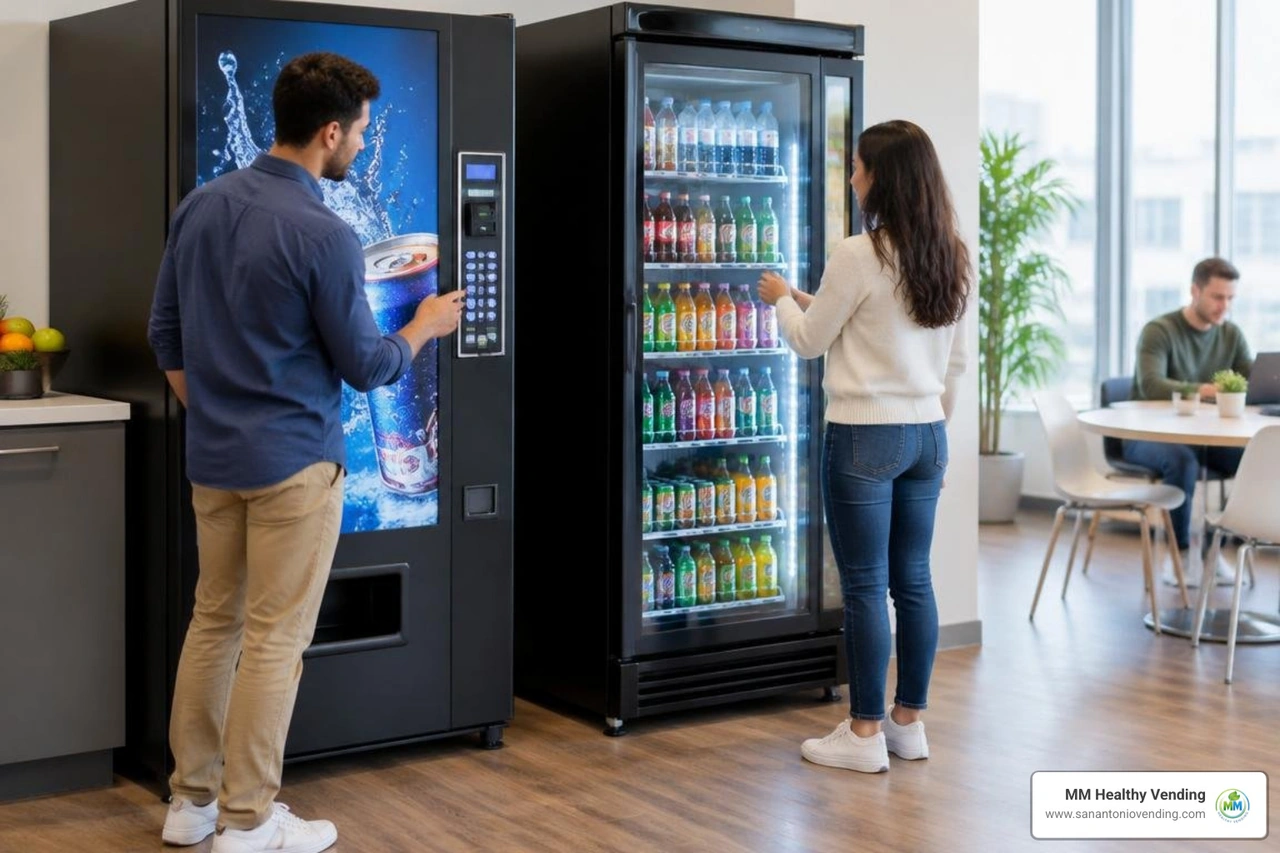
When establishing an on-site refreshment station, selecting the right equipment format directly influences employee satisfaction and daily usage. A single closed-front machine requires roughly 10 to 12 square feet of floor space, while open-format kiosks require dedicated wall dimensions and power drops. To understand specific mechanical setups and column configurations, exploring our comprehensive commercial drink vending machine guide provides deep technical clarity.
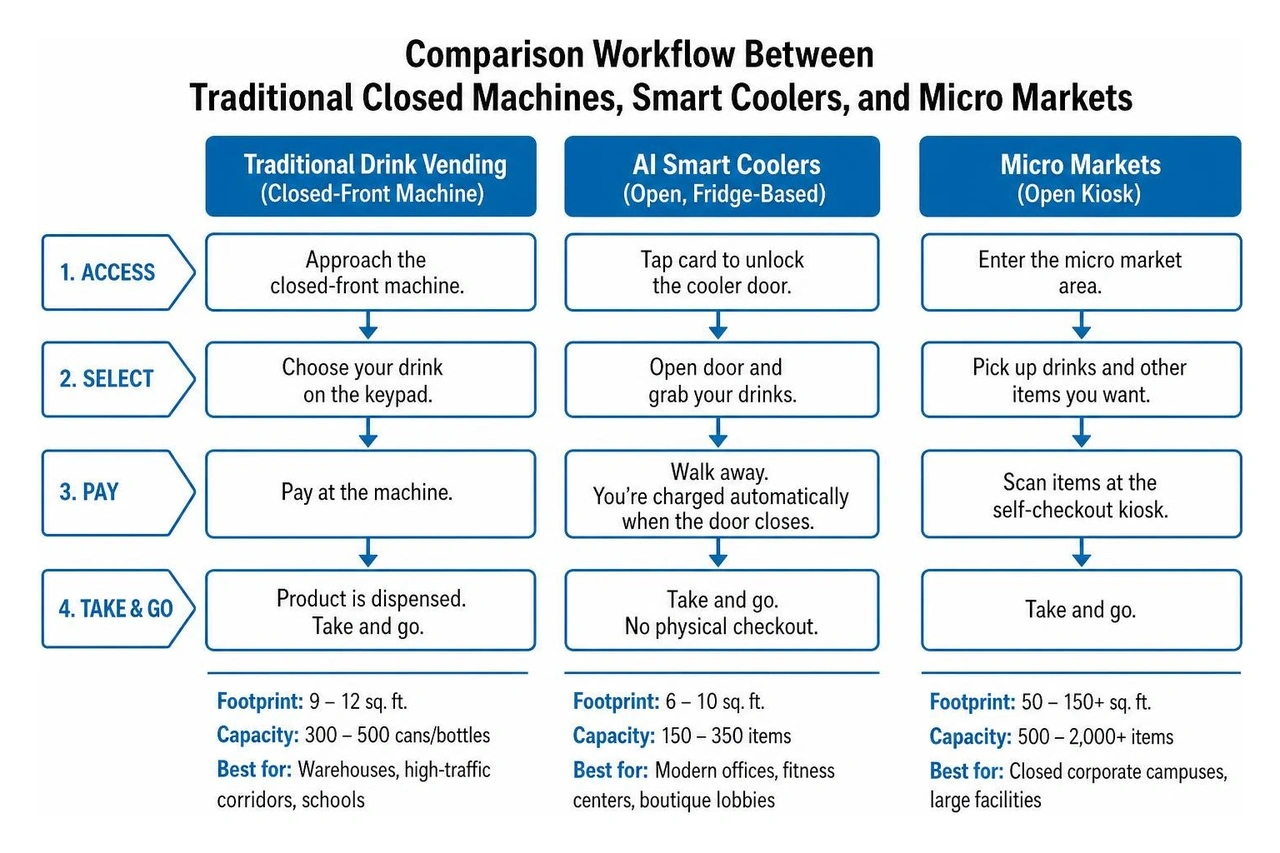
| Solution Type | Footprint Required | Product Capacity | Best Suited Environment |
|---|---|---|---|
| Traditional Drink Vending | 9 – 12 sq. ft. | 300 – 500 cans/bottles | Warehouses, high-traffic corridors, schools |
| Micro Markets | 50 – 150+ sq. ft. | 500 – 2,000+ items | Closed corporate campuses, large facilities |
| AI Smart Coolers | 6 – 10 sq. ft. | 150 – 350 items | Modern offices, fitness centers, boutique lobbies |
Traditional Drink Vending vs. Micro Markets
Traditional beverage machines utilize drop-sensor technology and insulated steel cabinetry to secure inventory. These closed-front units dispense chilled sodas, water bottles, and juices only after a confirmed payment. Choosing traditional vending protects products completely in semi-public areas where loss prevention is essential.
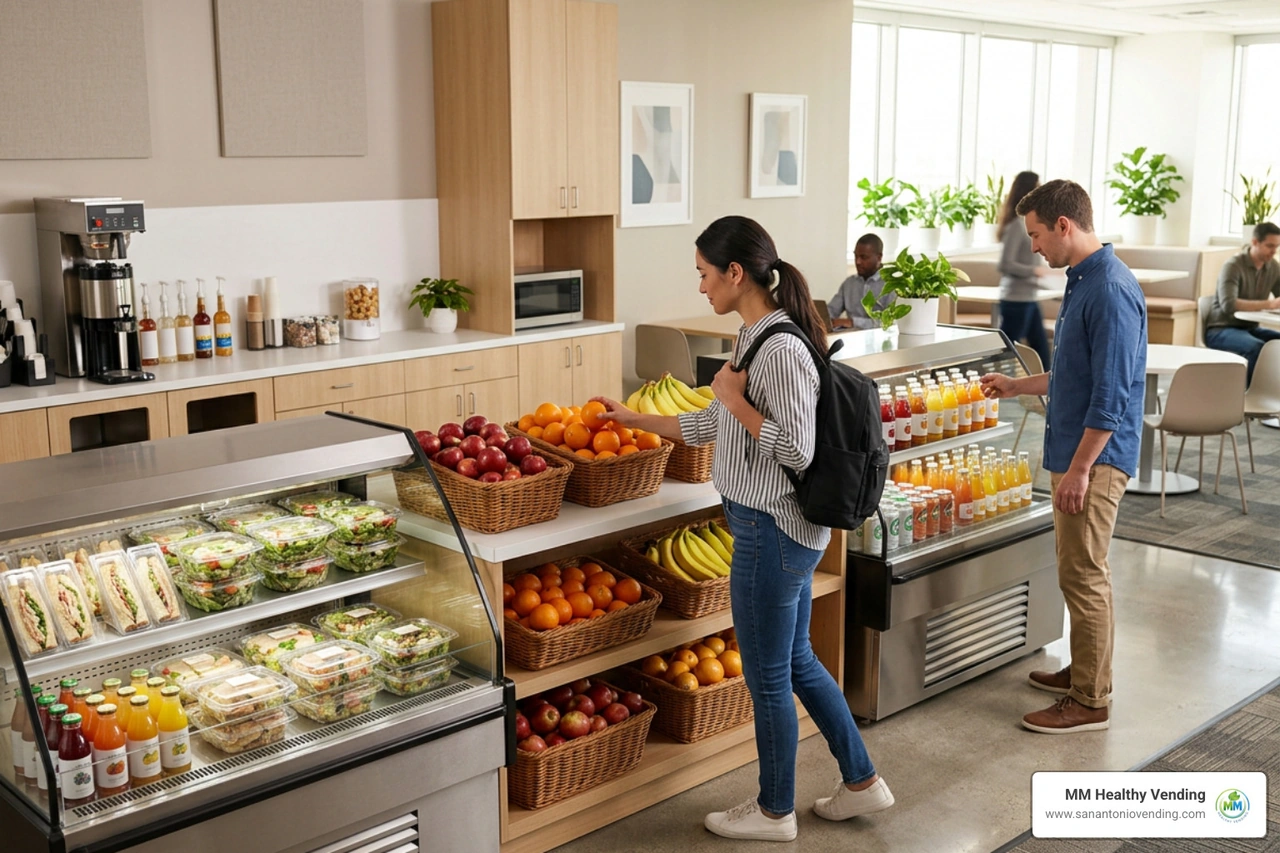
In contrast, micro market solutions transform standard breakrooms into open mini-convenience stores. Employees can pick up items, read nutritional panels, and scan selections at a centralized touchscreen kiosk. Micro markets allow for an expanded beverage menu, incorporating cold-pressed juices, kombuchas, and iced coffees alongside standard canned beverages.
The Rise of AI Smart Coolers in Beverage Vending for Businesses
AI-powered refrigerated units represent the modern evolution of automated retail. By combining computer vision cameras and weight-sensing internal shelves, AI smart coolers allow customers to tap a payment card, open the glass door, grab their desired drinks, and simply walk away. The internal tracking algorithms bill the customer automatically as the door latches shut, delivering a rapid grab-and-go experience with zero physical checkout bottlenecks.
Costs, Profitability, and Placement Models for Commercial Drink Vending
Operating an automated refreshment program involves analyzing capital requirements, machine depreciation, and weekly transaction volumes. Across the industry, vending equipment generates consistent recurring cash flow when matched with adequate foot traffic.

Startup Expenses, Equipment Pricing, and Break-Even Timelines
For organizations purchasing equipment outright, a refurbished machine generally costs around $2,000, which includes baseline inventory setup. Commercial-grade new units typically range from $4,000 to $10,000 depending on refrigeration specs and payment hardware. Reviewing our drink machine pricing details how capacity and glass-front designs alter upfront expenditures.
An average machine typically yields between $20 and $50 in weekly profit, whereas well-positioned units in high-traffic hubs frequently generate hundreds of dollars per week. For direct purchasers, break-even timelines range between 12 and 24 months, considering product cost of goods sold, power consumption, and routine sanitization.
Zero-Cost Full-Service Programs vs. Buying Equipment
Purchasing equipment requires a business to assume liability for cooling failures, coin-mechanism jams, routine inventory procurement, and component replacements. Conversely, partnering with a full-service route provider eliminates all upfront capital demands.
Through a zero-cost vending program, your company receives commercial-grade beverage dispensers or smart coolers installed, insured, restocked, and repaired entirely for free. The operator handles supply-chain logistics, while the property host provides dedicated square footage and an electrical outlet.
Location Strategy and Maximizing Product Margins
Maximizing beverage throughput depends on foot traffic volume and dwell time. Positioning equipment near shared gathering hubs ensures high visibility during peak break hours.
Choosing the Best On-Site Foot Traffic Zones
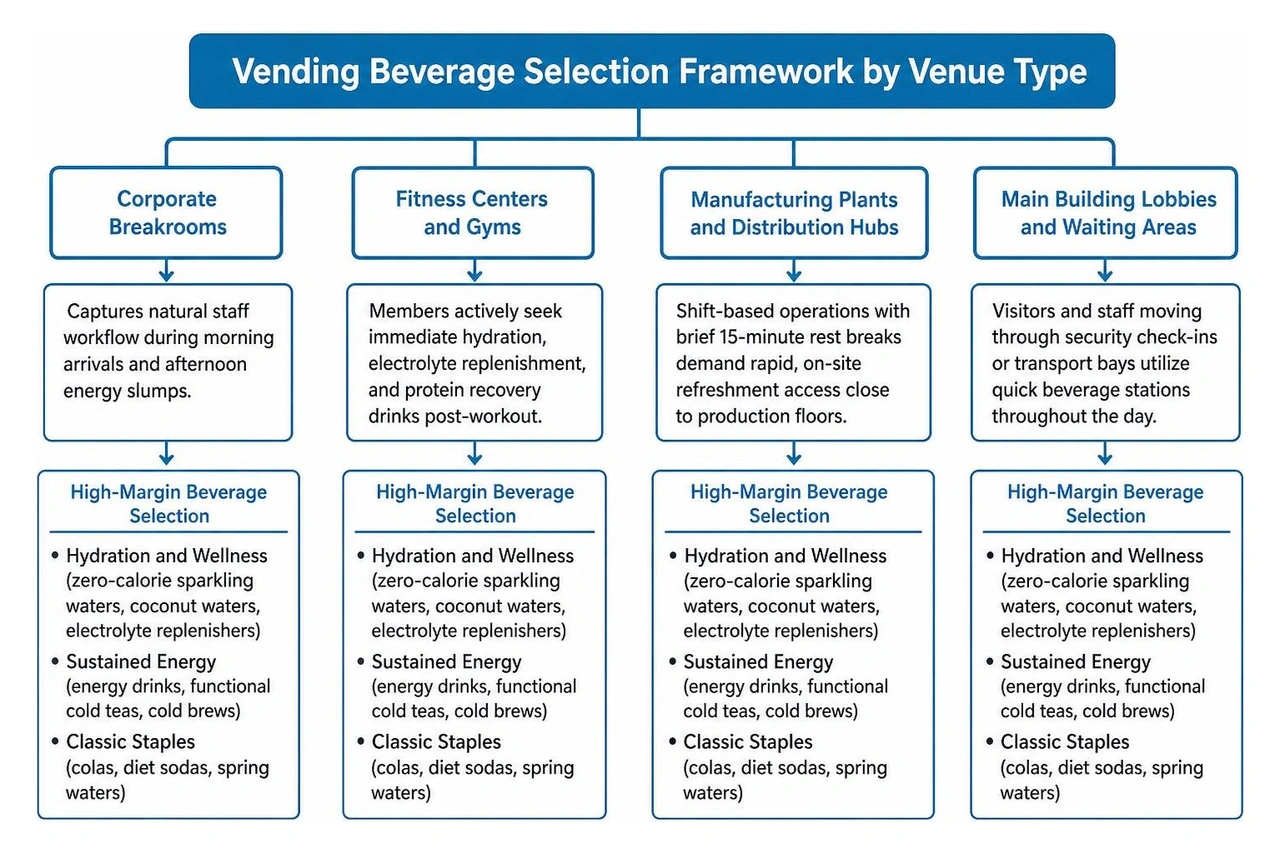
- Corporate Breakrooms: Placing equipment inside an office breakroom vending service zone captures natural staff workflow during morning arrivals and afternoon energy slumps.
- Fitness Centers and Gyms: Members actively seek immediate hydration, electrolyte replenishment, and protein recovery drinks post-workout.
- Manufacturing Plants and Distribution Hubs: Shift-based operations with brief 15-minute rest breaks demand rapid, on-site refreshment access close to production floors.
- Main Building Lobbies and Waiting Areas: Visitors and staff moving through security check-ins or transport bays utilize quick beverage stations throughout the day.
High-Margin Beverage Selection for Different Business Environments
Product curation should align with specific on-site demographic preferences to sustain steady turnover:
- Hydration and Wellness: Offering healthy vending machine drinks like zero-calorie flavored sparkling waters, coconut waters, and electrolyte replenishers fits professional offices and fitness spaces.
- Sustained Energy: High-caffeine energy drinks, functional cold teas, and canned cold brews drive high margins in technology firms, call centers, and logistics facilities.
- Classic Staples: Brand-name colas, diet sodas, and spring waters maintain dependable sales volume across industrial worksites and multi-tenant commercial properties.
Operational Requirements: Technology, Maintenance, and Compliance
Reliable automated beverage retail relies on telemetry integration, scheduled sanitation, and adherence to commercial accessibility standards.
Cashless Payment Readers and Telemetry Systems
Modern consumers rarely carry paper currency. Equipping smart vending systems with NFC tap-to-pay readers accommodates credit cards, Apple Pay, and Google Pay. Modern cashless drink transactions average under 30 seconds, keeping breakroom lines moving smoothly. Telemetry units continuously transmit sales and internal temperature data over cellular networks, notifying restocking drivers before columns run out.
Accessibility Standards, Bottle Deposit Laws, and Regulations in Beverage Vending for Businesses
All public-facing beverage equipment must satisfy ADA (Americans with Disabilities Act) regulations. Operable parts—including touchscreens, coin inserts, and bill acceptors—must remain within reach ranges between 15 and 48 inches from the floor, with unobstructed forward approach clearances for wheelchair users.
Operators must also maintain compliance with health and food safety standards outlined by the FDA Retail and Food Service Codes. While roughly ten U.S. states mandate container deposit laws (bottle bills) that add a refundable 5- to 10-cent deposit per can, Texas operations simply handle standard local sales tax filings and applicable municipal vending decals.
Routine Servicing, Rapid Repairs, and Customer Refund Protocols
Refrigeration condenser coils require quarterly vacuuming to prevent compressor burnout, while dispense drop chutes need regular cleaning to maintain hygiene standards. When mechanical issues emerge, fast dispatch protocols prevent extended downtime.
Working with an operator experienced in local vending machine repair ensures equipment is restored quickly. Placing high-visibility QR codes on the machine face allows users to report an issue or process an automated instant refund through their mobile browser in seconds.
Frequently Asked Questions About Beverage Vending
How much revenue does a commercial beverage vending machine generate weekly?
On average, a standard beverage machine yields between $20 and $50 in weekly profit in moderate-traffic settings. In high-traffic environments—such as busy fulfillment centers, multi-shift production plants, or large corporate campuses—a well-stocked unit can generate hundreds of dollars in weekly gross revenue.
What is the most cost-effective way to bring drink vending to an office?
The most cost-effective method is a fully managed, zero-cost placement agreement. Under this model, an independent operator supplies the commercial machine, covers installation expenses, manages automated inventory replenishment, and provides all maintenance without capital investment from your company.
How are machine malfunctions and refund requests handled?
Modern cloud-connected machines use telemetry to detect drop-chute jams and compressor errors automatically, dispatching field technicians directly. For occasional failed dispenses, customers scan a front-facing QR code on the unit to receive immediate digital refunds via Apple Pay, card reversal, or digital credit.
Conclusion
Elevating your workplace with modern refreshment infrastructure improves daily productivity, supports team well-being, and keeps employees refreshed throughout the day. Whether your facility is best served by a space-efficient closed-front machine, an advanced grab-and-go AI cooler, or an extensive breakroom market, reliable execution depends on dependable operational support.
MM Healthy Vending delivers zero-cost, fully managed beverage solutions backed by our dedicated 2-hour local support window across San Antonio, New Braunfels, Boerne, Schertz, Seguin, Helotes, Alamo Heights, and the Southside area. Explore our full range of turnkey workplace refreshment services today to upgrade your on-site beverage experience.
You might also like...
More articles like the one you've read to keep you up-to-date on all things vending in San Antonio
Why San Antonio businesses choose us
Premium service, local expertise, cutting-edge technology
AI-powered smart coolers
Advanced computer vision technology for seamless, cashless transactions. Just grab what you need and go.
cashless
24/7 service
Round-the-clock support with an average 2-hour response time for any issues.
Local & trusted
Family-owned business proudly serving San Antonio since 2024
Ready to upgrade your breakroom?
Join hundreds of San Antonio businesses enjoying free, premium vending soutions